Background: The Wars of the Roses
The Wars of the Roses were a protracted conflict between two rival branches of the royal House of Plantagenet: the House of Lancaster (symbolized by a red rose) and the House of York (symbolized by a white rose). The conflict stemmed from a disputed succession to the English throne, weak kings and ambitious noble families. By 1485, the Yorkist King Richard III was on the throne. He had ascended in 1483 after the mysterious disappearance (and presumed murder) of his young nephews, the "Princes in the Tower," which greatly damaged his reputation and led to widespread unpopularity. Henry Tudor, a distant Lancastrian claimant to the throne, had been living in exile in Brittany and France for many years. He saw his opportunity to return and challenge Richard. He gathered support from disaffected Lancastrians and even some disgruntled Yorkists who had grown wary of Richard's rule.The Combatants:
• Royalist Army (House of York): Led by King Richard III. His army was numerically superior, estimated to be between 10,000 and 15,000 men. • Rebel Army (House of Lancaster/Tudor): Led by Henry Tudor, Earl of Richmond (the future King Henry VII). His force was smaller, around 5,000 men, supplemented by French mercenaries. • The Stanley Brothers: Crucially, the allegiance of Lord Thomas Stanley and his brother Sir William Stanley was uncertain. They commanded a powerful private army of 5,000 to 8,000 men, strategically positioned between the two main forces. Lord Stanley was Henry Tudor's stepfather, but he also had to be careful not to openly defy Richard III, who held his son, Lord Strange, hostage.The Battle:
The battle took place near Ambion Hill, south of Market Bosworth, in Leicestershire, England (the exact site has been a subject of historical debate, but recent archaeological findings have shed more light on the likely location). • Initial Deployment: Richard deployed his army on high ground. Henry's forces, led effectively by the experienced John de Vere, Earl of Oxford, were positioned below. • Artillery and Skirmishing: The battle likely began with an exchange of artillery and arrows. • Richard's Vulnerability: As the main battle raged, the loyalty of the Stanley brothers remained critical. They held their forces back, waiting to see how the battle unfolded. • Richard's Bold Charge: Seeing Henry Tudor with a relatively small retinue separate from his main force, Richard III, known for his personal courage, decided on a desperate gamble. He launched a daring cavalry charge directly at Henry, hoping to kill the claimant and end the battle swiftly. Richard fought fiercely, reportedly un horsing Henry's standard-bearer and getting frustratingly close to Henry himself. • Stanley's Intervention: At this crucial moment, Sir William Stanley made his move. He ordered his contingent to join the battle on Henry Tudor's side. This sudden intervention caught Richard's charging force in the flank and rear. • Death of Richard III: Surrounded and overwhelmed, Richard III was un horsed and killed in the thick of the fighting. He was the last English king to die in battle. His body was reportedly stripped and carried ignominiously to Leicester. • Rout and Surrender: With their king dead, the Royalist forces collapsed and fled. Many of Richard's key supporters were killed or captured.Outcome and Significance:
• Decisive Tudor Victory: The Battle of Bosworth Field was a complete victory for Henry Tudor. • End of the Wars of the Roses: The death of Richard III effectively ended the long and bloody Wars of the Roses. • Accession of the Tudor Dynasty: Henry Tudor was immediately crowned King Henry VII on the battlefield (legend says his battle coronet, found in a hawthorn bush, was placed on his head), establishing the powerful and influential Tudor dynasty. This family would rule England for over a century, including famous monarchs like Henry VIII and Elizabeth I. • Unification and Stability: Henry VII's subsequent marriage to Elizabeth of York (daughter of Edward IV and niece of Richard III) symbolically united the Houses of Lancaster and York, represented by the creation of the Tudor Rose emblem. This helped bring a period of much-needed peace and stability to England after decades of civil strife. • Historical Legacy: The Battle of Bosworth Field is considered a defining moment in English history, often cited as marking the end of the Middle Ages in England and the beginning of the early modern period. Its dramatic conclusion, with the death of a king in battle and the rise of a new dynasty, has captured the imagination of historians and writers, most notably William Shakespeare in his play Richard III.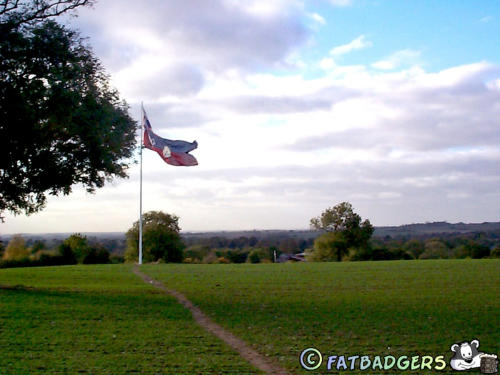
The Battle of Bosworth Field, fought on August 22, 1485, was the last significant battle of the Wars of the Roses, the series of dynastic
civil wars that plagued England in the latter half of the 15th century. It famously ended the reign of the Plantagenet dynasty and ushered in
the Tudor era.
Battle of Bosworth Field





 Pubs
Pubs Open Map in New Window
 England
 Scotland
 Wales
Wales Ireland
 County Map
 About Britain
 Pubs
Pubs British Beer
 Perfect Pint
 Beer Glasses
 The Barren Years
 Real Fires
 Breweries
 Brewing
 British Food
 Recipes
 Pub Interiors
 Dog Friendly
 Pub Games
 Strange Pub Names
 Visitor Information
 Oldest Pub
 Pub Signs
 Micropubs
 Buildings
 Cathedrals
 Stately Homes
 Castles
 Listed Buildings
 Scheduled Monuments
 Oak Framing
 Architecture
 Thatching
 Waterways
 Sailing
 Shipbuilding
 Boatbuilding
  Shipping Forecast
 Britain's Coastline
 Coastal Locations
 Piers
Piers Lighthouses
 Harbours
 Beach Safety
 British Beaches
 Canals
 Rivers
 Islands
 Lakes
Lakes Waterfalls
 Historical
 Famous People
 Kings & Queens
 Kings of England
 History of Britain
 Industrial Revolution
 Act of Union
 Beaufort Scale
 British Firsts
 World Heritage Sites
 Historical Periods
 Historical Boundaries
 Tradition & Culture
 Morris Dancing
 Film & Television
 Television
 Calendar of Events
 British Sport
 Scottish Highlands
 Money
Money Dry Stone Walling
 British Wildlife
 Class System
 Geographical
 Pub Boundaries
 Facts 'n' Figures
 British Isles
 Other Areas
 Place Name Origins
 Topography
 Suggest an Inn
 Explanation of symbols
 Why Us?
 Places to Visit
 Long Distance Paths
 National Parks
 Areas of Outstanding Natural Beauty
 Coastal Locations
 Other areas of Britain
 Maps
Maps Our Favourite Locations
 Search
 Focus On...
 News
News Contact
 About Us
 Our History
 Donate