
In search of the Holy Grail
The perfect pint of British beer is more than just the liquid in the glass; it's a multi-sensory experience deeply rooted in tradition and meticulous care. While the specific details can vary depending on the beer style, a consensus exists on the key elements that define a truly great pint. The way beer is served varies around the UK, generally in the South, ales are served ‘flat’ with no or very little ‘head’ or froth on the top of the pint. As you move through the Midlands to the North, the head on the beer tends to get bigger.The Beer Itself: Cask Ale
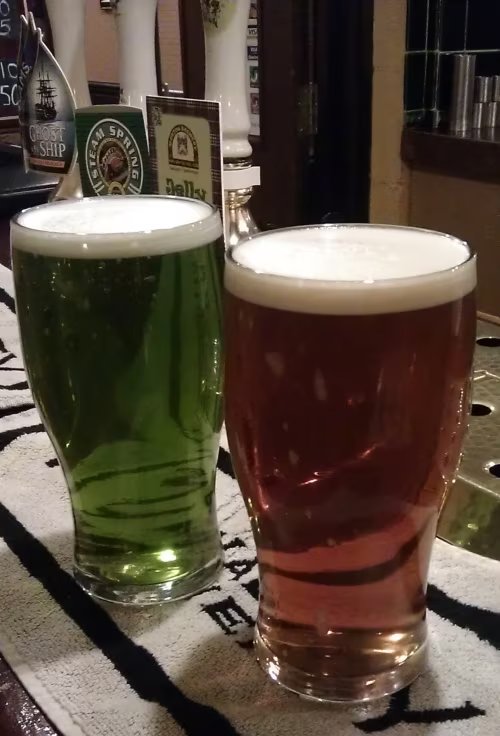
For many, the quintessential British beer is a cask ale, also known as "real ale." This beer is unfiltered, unpasteurised, and undergoes a secondary fermentation in the cask from which it's served. This living beer lacks artificial carbonation, resulting in a smoother, less fizzy texture. The flavour profile is complex and subtle, with notes that are fully revealed at the correct serving temperature. It is becoming more and more common to flavour ales with weird and wonderful ingredients rather than relying on the hops to flavour the ale. Flavourings can be added at various stages of the brewing process, depending on the desired outcome and the type of flavouring. Common additions include the kettle (boil), fermenter (during primary or secondary) and at packaging. The stage of addition impacts how the flavour integrates with the beer and how intensely it's perceived. Spices and some fruit (like pasteurised fruit purees) can be added towards the end of the boil for sanitization and flavour integration. Flavours that blend well with malt and yeast, like vanilla or caramel, can be added early on, though some intensity might be lost due to fermentation. Late additions, like honey, chocolate, or herbal infusions, offer the most control over flavour intensity and allow for experimentation. Flavours such as plum, mango and peach are common and you may be lucky to find a pint of ‘Purest Green’ flavoured with nettles!Temperature is Everything
A common misconception is that British beer is served "warm." This isn't true; a perfect pint is served at "cellar temperature," which is a cool but not cold 10-14°C (50-57°F). Serving it too cold, like a lager, would numb the taste buds and mask the intricate flavours and aromas the brewer intended. If it's too warm, the beer can become hazy and taste "off" or vinegary. It used to be said that ale should be served at ‘room temperature’ however this was probably first said at a time when room temperatures were colder than they are now, before central heating. It is true however, that if you find a pint that is closer to your own body temperature, you can take a first sip to see if you like the taste only to find you’ve downed half a pint without realising.The Presentation: A Clean Glass and a Proper Head
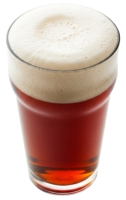
A perfect pint is served in a clean, cool, dry glass, preferably one that is branded for the specific beer. A dirty glass can cause the head to collapse prematurely, leaving the beer flat and lifeless. The head is a crucial, if sometimes debated, component. A survey of British beer lovers found the ideal head on a pint of ale to be around 9mm (just under a centimetre) deep. This head should be a tight, creamy foam that traps the beer's aromas, enhancing the overall sensory experience. Pouring techniques, such as using a "sparkler" on the pump, can be used to create this head. A sparkler is a small, perforated plastic nozzle that is attached to the end of a beer engine's spout (the handpump). Its primary purpose is to aerate the beer as it is poured, which fundamentally changes the beer's appearance, texture and taste. The beer is forced through a series of tiny holes in the sparkler, which agitates the dissolved carbon dioxide (CO²). This agitation "knocks" the gas out of the beer and into the glass as a dense, foamy head, giving it a creamy texture similar to a pint of Guinness. The use of a sparkler is a strong point of contention and a key cultural difference in British pub culture. It is overwhelmingly favoured in the North and Midlands of England, where a thick head is considered the sign of a perfect pint. In the South of England, however, it is often avoided. Southern drinkers prefer their beer served without a sparkler, resulting in a looser, thinner head or no head at all, arguing that this preserves the beer's natural carbonation and the brewer's intended flavour profile.The Pouring Process
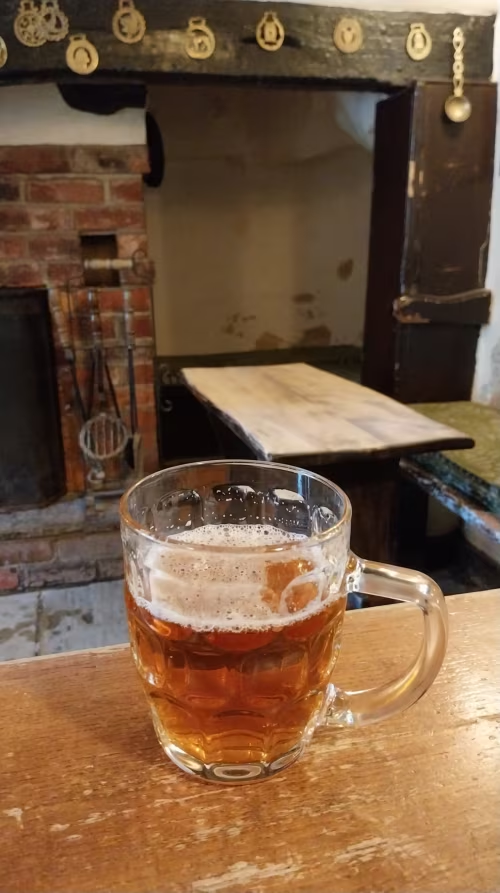
The final act of serving the beer is a craft in itself. A perfect pint is the result of a cellarman's dedication to cleanliness and quality. The beer lines must be meticulously clean to prevent off-tastes. When pouring, the bartender ensures the tap doesn't touch the beer, holding the glass vertically under the spout with the sparkler touching the bottom. The pump is pulled with a smooth, fluid action to avoid over-oxidizing the beer, which can give it a taste of wet cardboard. After the initial pour, the beer is allowed to settle before being topped up to achieve the ideal head. For those that prefer a flat pint, finding a pub that serves ale straight from the cask is difficult but when you do, you can expect a sensational pint of ale. The glass is held directly under the tap from the cask (not barrel - barrel is a size of cask specifically 36 gallons. Most casks used in pubs are Firkins which hold 9 gallons of beer). There is no sparkler used for beer served by gravity so the beer will have little or no head.The Setting and Experience
Beyond the physical beer, the perfect pint is defined by its context. According to a study, the ideal setting is a traditional country pub with a beer garden. It should be enjoyed with good company, like a partner or good friends, with mobile phones out of sight. A perfect pint is often accompanied by a simple, classic pub snack like a packet of crisps or pork scratchings. Ultimately, the perfect pint is a testament to quality, tradition and the social experience of enjoying a well-kept beer in a proper pub.Our Favourites
We have a number of Fat Badgers based around the UK so naturally we have differing opinions on whether there should be no head, a small head or a thick creamy layer that sticks to your top lip. Thankfully we only have one Fat Badger that drinks more lager than ale and he spends most of his time either on a boat or a golf course so we don’t get many new pub recommendations from him. The general consensus of opinions from the rest of us is that we prefer ale to be how it used to be served originally, i.e. before electricity, central heating and co² dispensers, so a good pint of ‘warm’ ale with little or no head. Although we can be quite partial to a flavoured ale, Titanic’s Plum Porter is fabulous, we mostly agree that Batham’s Bitter from the Delph Brewery in Brierley Hill in the Midlands is hard to beat. Batham’s only own twelve pubs around the Black Country area although there are around 25 places that have Batham’s Bitter on permanently following long standing relationships with the brewer. As the brewery is pretty much at capacity will no room to expand, it’s very difficult for other pubs to get a supply so it’s rarely seen outside the midlands area. Opinions can also get swayed by location - a perfectly decent pint can seem that bit better if the view from your seat is spectacular. Pubs located on top of hills, in picturesque wooded valleys or next to / part of attractions such as pubs on steam railway platforms are all fantastic but there’s surely nothing better than a pub that overlooks a stretch of water, this may be a delightful canalside setting, by the banks of a lovely river, loch or lake but a pub that overlooks a view of the sea can’t be beaten. We have a list of pubs close to water which include many that have spectacular gardens where you can watch the world go by whilst enjoying a fabulous pint of real ale. Where a pub brews it’s own beer we will award a cask symbol. We will often also include pubs that serve beer on Gravity - from the cask and also breweries that have a brewery tap on site as these drinking establishments will almost always serve top quality beer.




The Perfect Pint
The British Isles has some superb inns in outstanding locations but not all serve the best beer. Our favourite beer pubs often change as
and when we find a new one or one sadly closes. The perfect pint will obviously be different to everyone - some people even prefer to drink
a pint of Carling lager or ‘Girlie’ as the Peyton Arms in Stoke Lyne likes to label it.















 Pubs
Pubs Open Map in New Window
 England
 Scotland
 Wales
Wales Ireland
 County Map
 About Britain
 Pubs
Pubs British Beer
 Perfect Pint
 Beer Glasses
 The Barren Years
 Real Fires
 Breweries
 Brewing
 British Food
 Recipes
 Pub Interiors
 Dog Friendly
 Pub Games
 Strange Pub Names
 Visitor Information
 Oldest Pub
 Pub Signs
 Micropubs
 Buildings
 Cathedrals
 Stately Homes
 Castles
 Listed Buildings
 Scheduled Monuments
 Oak Framing
 Architecture
 Thatching
 Waterways
 Sailing
 Shipbuilding
 Boatbuilding
  Shipping Forecast
 Britain's Coastline
 Coastal Locations
 Piers
Piers Lighthouses
 Harbours
 Beach Safety
 British Beaches
 Canals
 Rivers
 Islands
 Lakes
Lakes Waterfalls
 Historical
 Famous People
 Kings & Queens
 Kings of England
 History of Britain
 Industrial Revolution
 Act of Union
 Beaufort Scale
 British Firsts
 World Heritage Sites
 Historical Periods
 Historical Boundaries
 Tradition & Culture
 Morris Dancing
 Film & Television
 Television
 Calendar of Events
 British Sport
 Scottish Highlands
 Money
Money Dry Stone Walling
 British Wildlife
 Class System
 Geographical
 Pub Boundaries
 Facts 'n' Figures
 British Isles
 Other Areas
 Place Name Origins
 Topography
 Suggest an Inn
 Explanation of symbols
 Why Us?
 Places to Visit
 Long Distance Paths
 National Parks
 Areas of Outstanding Natural Beauty
 Coastal Locations
 Other areas of Britain
 Maps
Maps Our Favourite Locations
 Search
 Focus On...
 News
News Contact
 About Us
 Our History
 Donate