The British Isles
With a number of different names for ‘Old Blighty’ or ‘The Albion’ it can get confusing for some over what constitutes Great Britain. Blighty is a slang term dating
back to the 1800’s and Albion is the ancient term used for the nation possibly coming from the White chalky Cliffs of Dover looking like Alabaster - Roman author
and philosopher Pliny the Elder is known to have referred to Great Britain as ‘The Albion’
The British Isles refers to the large group of islands in the North Atlantic Ocean off the north-western coast
of continental Europe, consisting of the islands of Great Britain, Ireland, the Isle of Man, the Inner and
Outer Hebrides, the Northern Isles (Orkney and Shetland), and over six thousand smaller islands.
They have a total area of 121,684 square miles (315,159 km²)
The Channel Islands off the north coast of France, are part of the British Isles even though geographically
they do not form part of the archipelago.
The United Kingdom of Great Britain and
Northern Ireland, commonly known as the
United Kingdom (UK) or Britain, comprises
just England, Scotland, Wales, and Northern
Ireland.
The UK includes the island of Great Britain,
the north-eastern part of the island of Ireland,
and most of the smaller islands within the
British Isles.
Northern Ireland shares a land border with the Republic of Ireland; otherwise, the United Kingdom
is surrounded by the Atlantic Ocean, the North Sea, the English Channel, the Celtic Sea, and the
Irish Sea.
The total area of the United Kingdom is 94,354 square miles (244,376 km²)
England was originally made up from seven areas, Wessex, Sussex, Kent, Essex, Mercia, East
Anglia and Northumbria with Cumbria then part of Strathclyde. These all had their own rulers and
Edward the Elder was King of the Anglo Saxons until his son Æthelstan then unified England in
927 and became King of the English.
The Highlands of Scotland was know as Pictland in 802 and ruled by different Clans until being
unified by the King of the Picts, Kenneth MacAlpin who became Kenneth I of Scotland in 848
In 1707, the Kingdom of England (which included Wales) and the Kingdom of Scotland united
under the Treaty of Union to create the Kingdom of Great Britain under Anne, Queen of Great
Britain.
The Acts of Union 1800 incorporated the Kingdom of Ireland to create the United Kingdom of Great
Britain and Ireland in 1801.
Most of Ireland seceded from the UK in 1922 as the Irish Free State, and the Royal and
Parliamentary Titles Act 1927 created the present name, the United Kingdom of Great Britain and
Northern Ireland.
The Architecture of the countries differ due to the availability of natural resources that could be
found locally. Most buildings would have been built with timber before techniques evolved.
Scotland and the North of England is predominantly stone buildings with the Midlands and South of
England having more clay so brick buildings are much more common with East Anglia having many flint buildings.
The Welsh geology includes a large amount of excellent quality slate so many buildings are built from a mixture of brick and stone but mostly with slates on the
roof.
Much of Ireland is stone or painted render although Northern Ireland resembles more of an English Midlands look.
The Fat Badgers guide mostly covers the UK as we don’t have a resident Badger in Southern Ireland however we look upon our cousins in Ireland fondly as
family who we occasionally get to see at weddings and funerals.
The Countries
Each country of the British Isles has it’s own distinctive character with different languages, accents and customs but all five nations share a love of good pubs, good friends and a good drink!
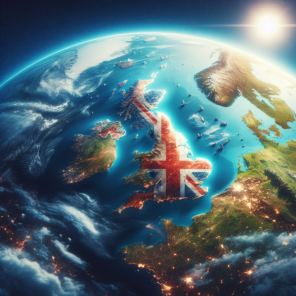


In no particular order (apart from alphabetical) we have:
England
England became inhabited more than 800,000 years ago when the land
was still connected to continental Europe and Mesolithic hunter-gatherers
occupied Doggerland. Dogger Bank still exists today as a shallow area
under the North Sea recognised by many as it gets a regular mention in
the British Shipping Forecast.
Around 10,000 years ago Stone Age humans didn’t put out their re-
cycling causing the glaciers to melt and flood Doggerland creating the
Dogger Islands and further climate change finally covered them cutting
mainland Britain off from the continent before Maggie Thatcher dug a sett
across to France in 1994.
Ale and beer have been consumed in the UK for centuries, with the first
recorded instance of ale production dating back to the 8th century along
with records also dating the earliest inns to the 8th Century.
It is believed that monks were the first to produce ale using malted barley,
water, and yeast. Ale was a staple drink in the medieval era, as it was
safer than water, which was often contaminated.
As trade routes expanded in the 16th and 17th centuries, hops were introduced to the brewing process, giving the beer its characteristic bitter flavour. This new
beer style quickly became popular, and it was soon that commercial breweries began to emerge across the country.
English beer styles include bitter, mild, brown ale, old ale, Stout, porter and India pale ale.
Throughout the 18th and 19th centuries, the brewing industry in the UK continued to grow, with beer
becoming an essential part of the country's economy. The Industrial Revolution brought about new
technologies that made brewing more efficient, and mass production of beer became the norm. It wasn’t
uncommon for small industrial villages that specialised in industries such as nail making or coal mining to be
home to huge numbers of pubs such as Gornal in the Black Country
In the 20th century, the brewing industry in the UK underwent significant changes. Consolidation and
mergers resulted in a small number of large breweries dominating the market, and many traditional
breweries were forced to close resulting in the last four remaining Home Brew pubs in the 1970’s.
Englishness used to be seen as wearing bowler hats, a strong sense of fair play and politeness, however
England has long had a history of immigration and there is now a mixture of cultures and classes and could
perhaps now lack a ‘Typical Englishman’.
Generally though, despite the view that the legacy media put out, there are still strong feelings of pride
amongst the English, the history of discovery, invention, sport and engineering is still strong and traditions
such as Morris Dancing can still be found in the summer months, particularly around country pubs.
Edmund I introduced 'Hundreds' to England, this was a division of the shire - an administrative unit or in other words a way of organising taking taxes from the
people. In the Midlands (Mercia) it was generally the equivalent of 100 'hides' - a hide being an English unit of land measurement originally intended to represent
the amount of land sufficient to support a household. It was traditionally taken to be 120 acres.
Hundreds are now not used but another term 'Ward' is still used when voting in the political system.
The Saxons had already established the districts that became the historic counties of England, calling them shires. Over the years successive governments have
amended the county boundaries to suit their needs and some counties have dropped the 'shire' from their name such as Devonshire and Somersetshire.
The Local Government Act 1972 added a number of ‘Metropolitan’ Counties creating such places as ‘The West Midlands’ and ‘Greater
Manchester’ - YUK!
No politician is splitting old uncle Trufflehunter from his distant cousin Bill Badger by sticking a West Midlands sign through their sett.
One thing is certain Fat Badger Kilo was born in Streetly, STAFFORDSHIRE and NOT the West Midlands as Mr Prime Minister would
have us believe - Fat Badger Kilo has NEVER listed his address as the West Midlands and NEVER will.
There is no truth in the rumour that this is a tax avoidance scheme
Ireland
Ireland is separated from Great Britain to its east by the North Channel,
the Irish Sea, and St George's Channel.
Ireland is the second-largest island of the British Isles, the third-largest in
Europe and the twentieth largest in the world.
Geopolitically, the island of Ireland is divided between the Republic of
Ireland (officially named Ireland), an independent state covering five-
sixths of the island consisting of 26 of the 32 counties of the island of
Ireland and Northern Ireland, which is part of the United Kingdom.
The Irish Free State was created in 1922 following the Anglo-Irish Treaty.
In 1937 a new constitution was adopted in which the state was named
"Ireland" and effectively became a republic, with an elected non-
executive president.
It was officially declared a republic in 1949, following the Republic of
Ireland Act 1948.
From the Act of Union on 1 January 1801, until 6 December 1922, the island of Ireland was part of the United Kingdom of Great Britain and Ireland. During the
Great Famine from 1845 to 1849, the island's population of over 8 million fell by 30%. One million Irish died of starvation and disease and another 1.5 million
emigrated, mostly to the United States.
The Irish are strongly proud of their history and heritage, particularly those that have left
the country to find fame and fortune elsewhere.
The West coast offers some of the most stunning scenery found anywhere in the British
Isles whether it be the ‘Ring of Kerry’ in the South or ‘Bloody Foreland’ in the North.
Irish pubs tend to be either quaint country inns where it feels like you’re drinking in
somebody’s front room or busy town bars where the atmosphere can be legendary.
What’s common to both is that most people will be drinking stout and not just the stout
that’s known worldwide. Along with Guinness, you’ll also find Murphy’s, Beamish and
O’Hara’s.
Historically, Irish Guinness was in a different league. That from Dublin was unpasteurised
and sold in casks which resulted in many saying the Guinness is much better than the stuff
you find in England.
Now however, the different brewing process no longer exists but we’ve still found it better in Ireland - whether that’s the way its poured, how its stored or just
because we’re on holiday, we’ll probably never know.
There were traditionally twenty six counties in Ireland until the Local Government Act 2001 amended that to thirty one with the addition of Cork, Galway and Dublin
city councils.
Southern Ireland remained in the European Union when the UK left the block in 2020 but despite what some would have you believe, the English, Welsh and
Scots are still allowed to visit and drink Guinness.
Scotland
Scotland contains nearly one-third of the United Kingdom's land area,
consisting of the northern part of the island and has nearly 800 of
Britain’s islands.
Scotland’s only land border is the 96 mile border with England, the rest of
the country is surrounded by the Atlantic Ocean, the North Sea and the
Irish Sea.
In similar timescales to England, the Kingdom of Scotland was created in
the 9th century following the Viking invasions when the Picts and the
Gaels united.
The first Scottish King, Kenneth I MacAlpin was the son of Alpin, king of
Dál Riata who had Scottish and Irish ancestry.
There were many battles between the English and the Scots over the rule
of the country and for ten years, Scotland had no king. The Scots,
however, refused to tolerate English rule. First William Wallace and
Andrew Moray, then John Comyn, and finally Robert the Bruce fought
against the English.
The Bruce Clan ruled Scotland between 1306 and 1371 before the Clan Stewart ruled for the next 300 years.
In 1567 Mary, Queen of Scots was forced to abdicate the throne following many years of turmoil
and the murder of Henry Stuart, Lord Darnley, 1567 - her second husband.
Their son James Charles Stuart, a great-great-grandson of Henry VII, King of England and Lord of
Ireland, and thus a potential successor to all three thrones, became King of Scotland in 1567 and
King of England and Ireland in 1603 in the Union of the Crowns.
Although Scotland is around half of the size of England and Wales, it has roughly the same length
of coastline due to the many lochs, inlets and islands.
Only a fifth of Scotland is less than 60 metres above sea level. The defining factor in the geography
of Scotland is the distinction between the Highlands and Islands in the north and west and the
Lowlands in the south and east. The Highlands run predominantly down the West side of the
County creating some of the most spectacular scenery and wonderful coastal sandy beaches found
anywhere.
Because of the geology of Scotland, most of the earlier buildings were built from stone and the East
has a large number of Granite buildings with almost all of the Victorian buildings in Aberdeen made
from the stone giving it the nickname of “The Granite City”.
Scotland has made a huge contribution to the culture, history, sport and music of the United Kingdom and has it’s own proud musical history which includes the
famous ‘bagpipes’ - it did however unleash ‘The Bay City Rollers’ on to the British public in the 1970’s which is around the time CAMRA said “Something needs to
change - and NOW!” We don’t know if these two things are related but common sense says they probably are.
Wales
Wales sits on the west side of England but back in 500 AD the Welsh
were the majority people who lived from Strathclyde down to Cornwall
and indeed just the East of England were Germanic tribes.
The Welsh were the original Britons who inhabited Great Britain from at
least the Iron Age until the High Middle Ages.
It is largely mountainous with its higher peaks in the north and central
areas, including Snowdon, its highest summit.
At the dawn of the Industrial Revolution, development of the mining and
metallurgical industries transformed the country from an agricultural
society into an industrial one. The South Wales Coalfield's exploitation
caused a rapid expansion of Wales's population. Two-thirds of the
population live in South Wales.
Wales has its own distinctive character and is renowned for its love of
song, particularly choir singing which includes an eisteddfod, an
institution and festival with several ranked competitions, including in
poetry and music.
Wales is a predominantly mountainous region with the Wales Valleys and spectacular Brecon Beacons in the South, the Powys hills and valleys in Mid Wales and
the magnificent Snowdonia in the North.
Wales also has some fantastic coastline with the wonderful Pembrokeshire Coast National Park in
the South West and the delightful Llyn peninsular and Anglesey Island in the North.
Wales became part of the Kingdom of Great Britain in 1707 and then the United Kingdom of Great
Britain and Ireland in 1801. Yet, the Welsh retained their language and culture despite heavy
English dominance.
England and Wales are still closely linked despite an ancient history of battles between the two with
the Welsh / English border lined with medieval castles.
Some Welsh football clubs play in the English leagues even though there is a Welsh football
association
Parts of Wales use the Welsh language as their first language and there is a strong passion to
increase its use however English is understood and spoken by pretty much everyone.
Welsh pubs are often rural but with a smaller population this has made it difficult to keep going financially which wasn’t helped when the Liberal party, which
included the future Prime Minister David Lloyd George, the Sunday Closing (Wales) Act 1881 banned the sale of alcohol in Welsh pubs on the Sabbath. This
wasn't repealed until 1961, when each county was charged with holding a referendum on Sunday opening, to gauge support in their particular area. Dwyfor - now
part of Gwynedd - was the last district to drop the ban in 1996.




.

 Pubs
Pubs Open Map in New Window
 England
 Scotland
 Wales
Wales Ireland
 County Map
 About Britain
 Pubs
Pubs British Beer
 Perfect Pint
 Beer Glasses
 The Barren Years
 Real Fires
 Breweries
 Brewing
 British Food
 Recipes
 Pub Interiors
 Dog Friendly
 Pub Games
 Strange Pub Names
 Visitor Information
 Oldest Pub
 Pub Signs
 Micropubs
 Buildings
 Cathedrals
 Stately Homes
 Castles
 Listed Buildings
 Scheduled Monuments
 Oak Framing
 Architecture
 Thatching
 Waterways
 Sailing
 Shipbuilding
 Boatbuilding
  Shipping Forecast
 Britain's Coastline
 Coastal Locations
 Piers
Piers Lighthouses
 Harbours
 Beach Safety
 British Beaches
 Canals
 Rivers
 Islands
 Lakes
Lakes Waterfalls
 Historical
 Famous People
 Kings & Queens
 Kings of England
 History of Britain
 Industrial Revolution
 Act of Union
 Beaufort Scale
 British Firsts
 World Heritage Sites
 Historical Periods
 Historical Boundaries
 Tradition & Culture
 Morris Dancing
 Film & Television
 Television
 Calendar of Events
 British Sport
 Scottish Highlands
 Money
Money Dry Stone Walling
 British Wildlife
 Class System
 Geographical
 Pub Boundaries
 Facts 'n' Figures
 British Isles
 Other Areas
 Place Name Origins
 Topography
 Suggest an Inn
 Explanation of symbols
 Why Us?
 Places to Visit
 Long Distance Paths
 National Parks
 Areas of Outstanding Natural Beauty
 Coastal Locations
 Other areas of Britain
 Maps
Maps Our Favourite Locations
 Search
 Focus On...
 News
News Contact
 About Us
 Our History
 Donate