British shipbuilding has a rich and varied history, characterised by
periods of great innovation, global dominance, and eventual decline due
to changing economic and technological conditions.
The main difference between a ship and a boat is the size. Technically
speaking, a boat becomes classified as a ship when the Length Over All
is equal or greater than 60 meters.
Ships are vessels that are usually operated in oceanic areas and high
seas, would normally have a Captain and a larger number of crew and
would usually carry cargo or a large number of passengers.
Boats are mainly used for recreational purposes, fishing, or ferrying
people.
Early History
Medieval Period:
Shipbuilding in Britain dates back to the medieval period, with significant developments occurring during the reigns of monarchs like Henry VIII, who established royal dockyards and a more organised navy.16th and 17th Centuries:
The Age of Exploration and subsequent colonial expansion saw the growth of shipbuilding to support naval and merchant activities. Britain developed large fleets of warships and trading vessels, such as galleons and merchantmen.18th and 19th Centuries
Industrial Revolution:
The Industrial Revolution brought significant advancements in shipbuilding technology, including the transition from wooden ships to iron and steel hulls. British shipyards led the world in shipbuilding innovation during this period.Naval Power:
The Royal Navy became the world's dominant naval force, with major shipyards like those in Portsmouth, Plymouth, and Chatham producing numerous warships. Innovations such as the use of steam power and screw propellers were pioneered by British shipbuilders.Commercial Shipbuilding:
British shipyards also produced a vast number of commercial vessels. The Clyde in Scotland, with shipyards in Glasgow and nearby areas, became synonymous with high-quality shipbuilding. Ships like the clipper Cutty Sark and the steamship Great Eastern were built during this era.20th Century
World Wars:
Both World War I and World War II saw British shipyards operating at full capacity to produce warships, merchant vessels, and auxiliary ships. The war effort spurred further advancements in shipbuilding technology and production techniques.Post-War Period:
After World War II, Britain continued to be a major shipbuilding nation, but the industry began to face challenges. Competition from other countries, particularly Japan and later South Korea, began to erode Britain's dominance.Nationalization and Decline:
In the latter half of the 20th century, British shipbuilding experienced significant decline due to competition, inefficiencies, and economic shifts. Many shipyards closed or were nationalised under British Shipbuilders in 1977, but this move did not reverse the industry's decline.Modern Era
Specialization and Innovation:
Today, British shipbuilding focuses more on specialised sectors such as naval vessels, luxury yachts, and smaller commercial vessels. Companies like BAE Systems and Babcock International continue to produce advanced warships and submarines for the Royal Navy and international clients.Notable Projects:
Recent significant projects include the construction of the Queen Elizabeth-class aircraft carriers, the Astute-class submarines, and various frigates and destroyers.Renewed Interest in Shipbuilding:
There have been efforts to revive and support the shipbuilding industry in the UK through government initiatives and investment in modernizing facilities and technologies.Key Shipyards
Clydebank:
Historically, one of the most famous shipbuilding regions in Britain, known for producing numerous renowned ships.Harland and Wolff:
Based in Belfast, this shipyard built the RMS Titanic and remains a symbol of British shipbuilding heritage.Barrow-in-Furness:
A key site for submarine construction, including the UK's nuclear submarines.Portsmouth and Plymouth:
Traditional naval dockyards with a long history of producing warships for the Royal Navy.Legacy and Impact
Technological Innovations:
British shipbuilders were responsible for numerous technological advancements, including the transition to iron and steel hulls, the development of steam power, and later, nuclear propulsion for submarines.Global Influence:
British shipbuilding set standards in design, construction, and naval architecture, influencing shipbuilding practices worldwide.Economic and Cultural Significance:
Shipbuilding played a crucial role in the economic development of many British regions, contributing to local economies and shaping cultural identities. British shipbuilding has a storied history marked by periods of innovation, global influence, and significant contributions to both commercial and naval maritime activities. While the industry has faced challenges and decline, it continues to play a role in specialised markets and retains a legacy of excellence and innovation in maritime engineering.
Ship
Builder
Built
Notes
Photo
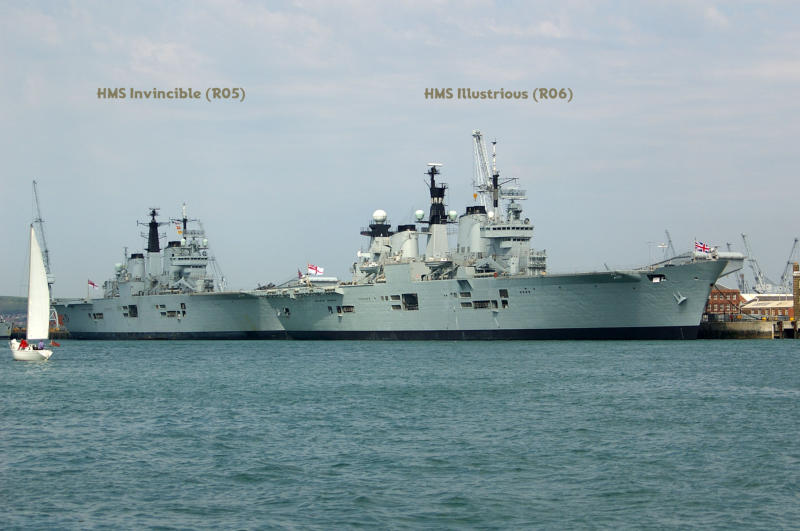
HMS Illustrious
(R06)
Swan Hunter, Tyne and Wear
1978
The Invincible class was a class of light
aircraft carrier operated by the Royal Navy.
Three ships were constructed: HMS
Invincible, HMS Illustrious and HMS Ark
Royal.
HMS Invincible
(R05)
Vickers Shipbuilding Limited, Barrow-
in-Furness
1977
She was originally designated as an anti-
submarine warfare carrier, but was used as
an aircraft carrier during the Falklands War
HMS Enterprise
(H88)
Appledore Shipbuilders, Devon
2002
Multi-role survey vessel - hydrographic
oceanographic (SVHO) of the Royal Navy
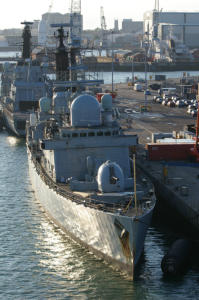
HMS Gloucester
(D96)
Vosper Thornycroft, Portsmouth
1982
Batch 3 Type 42 destroyer, Gloucester served
in the Persian Gulf War in 1991
HMS Warrior
Thames Ironworks and Shipbuilding
Company, London
1860
The first armour-plated, iron-hulled warship.
HMS Exeter
(D89)
Swan Hunter, Tyne and Wear
1978
Batch 3 Type 42 destroyer. The vessel fought
in the Falklands War and the first Gulf War,
HMS
Westminster
(F237)
Swan Hunter, Tyne and Wear
1992
Type 23 frigate, Operation Harlech was
initiated in response to a volcanic eruption in
Montserrat. Westminster was used for the
interior shots in the 1997 James Bond film
Tomorrow Never Dies
HMS York (D98)
Swan Hunter, Tyne and Wear
1982
Batch 3 Type 42 destroyer. She was the
Royal Navy's fastest destroyer.
Cutty Sark
Hercules Linton in Dumbarton,
Scotland
1869
Legendary British clipper ship. In 1871, the
Cutty Sark set a record for the fastest
passage from Shanghai to London,
completing the journey in just 107 days.
HMS Defender
(D36)
BAE Systems Surface Ships, Clyde
2009
Type 45 destroyer, one of the most advanced
warships ever constructed.
HMS Ledbury
(M30)
Vosper Thornycroft, Portsmouth
1979
Hunt-class mine countermeasures vessel
Arrived in the South Atlantic in July 1982 to
clear the waters around the Falkland Islands
of Argentinian mines.
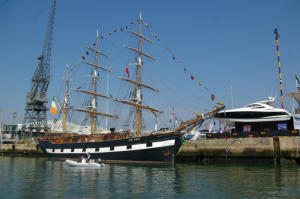
SV Tenacious
Jubilee Yard (Merlin Quay),
Southampton
2000
When completed in 2000, it was the largest
wooden ship to be built in the UK for over 100
years.
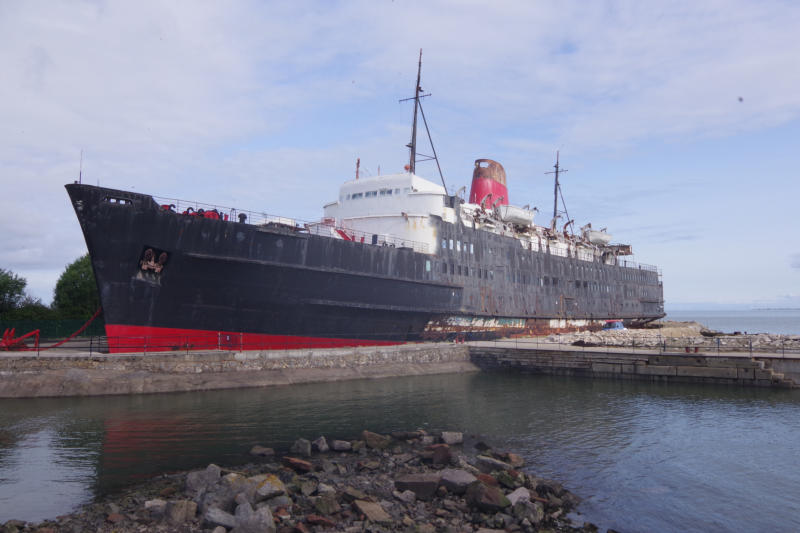
TSS Duke of
Lancaster
Harland & Wolff, Belfast
1955
Duke of Lancaster is a former railway
steamer passenger ship that operated in
Europe from 1956 to 1979. She arrived in
Llanerch-y-Mor, North Wales from Barrow-in-
Furness, in August 1979 to start her new life
as a business venture and retail complex
PS Waverley
A. & J. Inglis, Glasgow
1946
PS Waverley is the last seagoing passenger-
carrying paddle steamer in the world.
She was built for the London and North
Eastern Railway (LNER) to replace a PS
Waverley that was sunk in 1940 while helping
to evacuate troops from Dunkirk.
HMS Richmond
(F239)
Swan Hunter, Tyne and Wear
1995
Type 23 frigate
HMS Kent (F78)
Yarrow Shipbuilders
1998
Type 23 Duke class frigate of the Royal Navy,
and the twelfth ship to bear the name.






Shipbuilding

 Pubs
Pubs Open Map in New Window
 England
 Scotland
 Wales
Wales Ireland
 County Map
 About Britain
 Pubs
Pubs British Beer
 Perfect Pint
 Beer Glasses
 The Barren Years
 Real Fires
 Breweries
 Brewing
 British Food
 Recipes
 Pub Interiors
 Dog Friendly
 Pub Games
 Strange Pub Names
 Visitor Information
 Oldest Pub
 Pub Signs
 Micropubs
 Buildings
 Cathedrals
 Stately Homes
 Castles
 Listed Buildings
 Scheduled Monuments
 Oak Framing
 Architecture
 Thatching
 Waterways
 Sailing
 Shipbuilding
 Boatbuilding
  Shipping Forecast
 Britain's Coastline
 Coastal Locations
 Piers
Piers Lighthouses
 Harbours
 Beach Safety
 British Beaches
 Canals
 Rivers
 Islands
 Lakes
Lakes Waterfalls
 Historical
 Famous People
 Kings & Queens
 Kings of England
 History of Britain
 Industrial Revolution
 Act of Union
 Beaufort Scale
 British Firsts
 World Heritage Sites
 Historical Periods
 Historical Boundaries
 Tradition & Culture
 Morris Dancing
 Film & Television
 Television
 Calendar of Events
 British Sport
 Scottish Highlands
 Money
Money Dry Stone Walling
 British Wildlife
 Class System
 Geographical
 Pub Boundaries
 Facts 'n' Figures
 British Isles
 Other Areas
 Place Name Origins
 Topography
 Suggest an Inn
 Explanation of symbols
 Why Us?
 Places to Visit
 Long Distance Paths
 National Parks
 Areas of Outstanding Natural Beauty
 Coastal Locations
 Other areas of Britain
 Maps
Maps Our Favourite Locations
 Search
 Focus On...
 News
News Contact
 About Us
 Our History
 Donate