Beach Safety
The United Kingdom boasts a diverse and scenic coastline that
spans approximately 7,723 miles (12,429 kilometres).
This extensive coastline offers a variety of landscapes, from rugged
cliffs and sandy beaches to estuaries and tidal flats, beach safety is
taken seriously because the coastline attracts millions of visitors each
year and conditions can change quickly.
There is a code of flags in place at many beaches around the coast -
but not all.
Always check the weather before setting out for the beach, whether
hot, cold or windy, coastal locations have their own dangers and due
to the UK’s huge tidal range, many people are cut of by tides each
year.
The shipping forecast is the most comprehensive forecast of weather
conditions around the coast but it is also worth checking out tide
times as well as the general weather.
The British Climate is VERY changeable due to being an island nation with prevailing winds blowing in from the Atlantic ocean. What seems like a lovely
summers’ day can suddenly change to stormy conditions and equally the other way around. If you holiday in Britain, it’s unlikely you’ll be stuck inside all day
staring out at black clouds.
Our handy checklist can also be saved to your phone s a reminder!
Lifeguarded Beaches
• Many popular beaches are patrolled by RNLI lifeguards (Royal National Lifeboat Institution) during the summer season. • Always swim between the red and yellow flags, which mark the safest area for swimming and bodyboarding under lifeguard supervision.Common Hazards
• Rip currents → Strong channels of water pulling out to sea; if caught, don’t fight it - swim parallel to shore until free. • Tides → The UK has some of the world’s highest tidal ranges; check tide times to avoid being cut off. • Cold water shock → Even in summer, UK seas are cold; sudden immersion can cause breathing difficulty. • Cliffs and rocks → Risk of falls and rockfalls; keep a safe distance.Emergency Advice
• If you get into trouble: Float to live - lie on your back, stay calm, and call for help. • In an emergency: Dial 999 or 112 and ask for the Coastguard.England:
South Coast:
Known for its sandy beaches, chalk cliffs, and vibrant seaside towns. Notable locations include the White Cliffs of Dover, the Jurassic Coast (a UNESCO World Heritage Site), and Brighton.East Coast:
Characterised by flatter landscapes with significant areas of salt marshes and estuaries. Highlights include the Norfolk Broads, the Suffolk Coast, and the Humber Estuary.West Coast:
Features dramatic cliffs and numerous bays. Cornwall and Devon are famous for their picturesque harbours and surf-friendly beaches.Scotland:
West Coast:
Known for its rugged terrain, sea lochs, and numerous islands, including the Hebrides. The coastline offers stunning landscapes such as those found in Argyll and the Isle of Skye.East Coast:
Features a mix of sandy shores and rocky outcrops, with notable cities like Edinburgh and Aberdeen along the coast. The Moray Firth is known for its dolphin populations.Northern Coast:
Remote and less populated, featuring dramatic cliffs and sea stacks. The Orkney and Shetland Islands are located off the northern coast.Wales:
North Coast:
Includes popular seaside resorts such as Llandudno and the Isle of Anglesey, with a mix of sandy beaches and rocky coastline.West Coast:
Known for its natural beauty, including Pembrokeshire Coast National Park and Cardigan Bay, home to marine wildlife like dolphins and seals.South Coast:
Features the Gower Peninsula, the first area in the UK to be designated an Area of Outstanding Natural Beauty (AONB), and the city of Swansea.Northern Ireland:
North Coast:
Famous for the Giant’s Causeway, a UNESCO World Heritage Site with unique basalt columns. Other highlights include the Glens of Antrim and the coastal town of Portrush.East Coast:
Features Belfast Lough and the scenic Ards Peninsula, with Strangford Lough offering diverse birdlife and marine species.
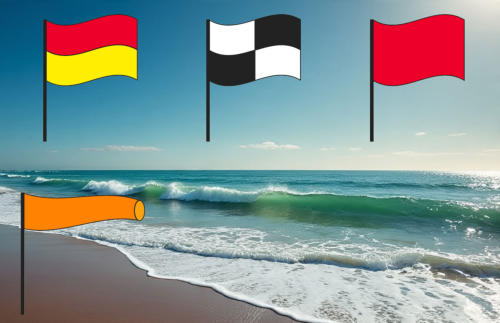
British beaches rely on a flag system to ensure the safety of the beach area.
BATHING
Designated bathing area supervised by Lifeguards. All
swimmers/Boogie and Body Boards etc.
Always bathe between the red and yellow flags.
SURFCRAFT
For all surfcraft over 5 feet in length. Includes canoes,
windsurfers etc.
Always surf between the black and white flags.
DANGER
DANGER DO NOT ENTER THE SEA
The red flag indicates that the sea conditions are dangerous.
Never enter the sea when the red flag is flying
WIND
Orange Windsock
Indicates offshore or strong winds.
Never use inflatables when the windsock is flying and
beware of winds blowing out to sea.


...have a rest after eating.
Always wait at least an hour after large meals before swimming, and never drink alcohol before going for a swim.
...go swimming with a friend.
No matter how good a swimmer you are, you may need help. And never let young children out of your sight.
...take care with inflatables.
An offshore wind can blow you out to sea in seconds. Remember, offshore winds often make the sea look very calm and flat. Check which way
the flags are blowing.
...get out if you feel cold.
Even strong swimmers get tired in the cold.
...keep an eye on the tides.
It is very easy to get cut off by the tide, especially on flat beaches where it may come in much faster than you expect!
...take notice of signs and flags.
Remember, lifeguards patrol the area between red-and-yellow flags, a black-and-white check flag means surfing only, and a red flag means no
swimming.
...swim near piers, rocks or groynes.
Dangerous currents can develop, and you can get knocked into them very easily.
...dive into shallow water.
If you can't tell how deep it is, don't dive! Lots of spinal injuries occur each year because people dive into shallow water.



•
Always accompany children to the sea and make sure you stay in the correct patrolled area and within a reasonable depth.
•
Always listen and obey the Lifeguards advice.
•
Never take inflatables into the sea.
•
Never swim alone or right after eating or drinking alcohol.
•
Never leave valuables unattended.


 Pubs
Pubs Open Map in New Window
 England
 Scotland
 Wales
Wales Ireland
 County Map
 About Britain
 Pubs
Pubs British Beer
 Perfect Pint
 Beer Glasses
 The Barren Years
 Real Fires
 Breweries
 Brewing
 British Food
 Recipes
 Pub Interiors
 Dog Friendly
 Pub Games
 Strange Pub Names
 Visitor Information
 Oldest Pub
 Pub Signs
 Micropubs
 Buildings
 Cathedrals
 Stately Homes
 Castles
 Listed Buildings
 Scheduled Monuments
 Oak Framing
 Architecture
 Thatching
 Waterways
 Sailing
 Shipbuilding
 Boatbuilding
  Shipping Forecast
 Britain's Coastline
 Coastal Locations
 Piers
Piers Lighthouses
 Harbours
 Beach Safety
 British Beaches
 Canals
 Rivers
 Islands
 Lakes
Lakes Waterfalls
 Historical
 Famous People
 Kings & Queens
 Kings of England
 History of Britain
 Industrial Revolution
 Act of Union
 Beaufort Scale
 British Firsts
 World Heritage Sites
 Historical Periods
 Historical Boundaries
 Tradition & Culture
 Morris Dancing
 Film & Television
 Television
 Calendar of Events
 British Sport
 Scottish Highlands
 Money
Money Dry Stone Walling
 British Wildlife
 Class System
 Geographical
 Pub Boundaries
 Facts 'n' Figures
 British Isles
 Other Areas
 Place Name Origins
 Topography
 Suggest an Inn
 Explanation of symbols
 Why Us?
 Places to Visit
 Long Distance Paths
 National Parks
 Areas of Outstanding Natural Beauty
 Coastal Locations
 Other areas of Britain
 Maps
Maps Our Favourite Locations
 Search
 Focus On...
 News
News Contact
 About Us
 Our History
 Donate
