British boatbuilding has a distinguished history that complements its
shipbuilding legacy. While shipbuilding often refers to the construction of
large vessels, boatbuilding encompasses smaller crafts such as yachts,
sailing boats, motorboats, and smaller commercial and military vessels.
The main difference between a ship and a boat is the size. Technically
speaking, a boat becomes classified as a ship when the Length Over All
is equal or greater than 60 meters.
Ships are vessels that are usually operated in oceanic areas and high
seas, would normally have a Captain and a larger number of crew and
would usually carry cargo or a large number of passengers.
Boats are mainly used for recreational purposes, fishing, or ferrying
people.
Being an Island Nation, the British have a long history of boating with
many great achievements and were often the first to achieve something
such as the first aircraft carrier in 1913, HMS Hermes.
John Harrison in 1760 created the first chronometer accurate enough to allow precise determination of longitude making navigation at sea much easier and safer.
Sir Francis Chichester was a British businessman, pioneering aviator and solo sailor who became the first person to sail single-handed around the world by the
clipper route and the fastest circumnavigator, in nine months and one day overall in 1966–67.
On 14 June 1968, Sir Robin Knox-Johnston left Falmouth in his 32-foot (9.8-metre) boat Suhaili, to become
the first person to perform a single-handed non-stop circumnavigation of the globe.
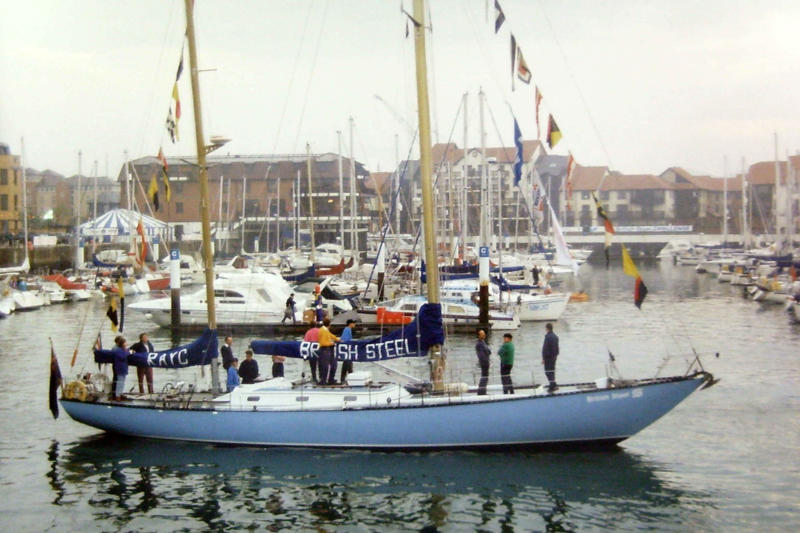
Sir Charles Blyth known as Chay Blyth, is a Scottish yachtsman and rower. He was the first person to sail
single-handed non-stop westwards around the world in 1971, on a 59-foot boat called British Steel.
In 2001 Dame Ellen MacArthur becomes the first woman to sail around the world solo in under 100 days.
On the 21st May 2006, Dee Caffari becomes the first woman to sail single-handed, non-stop, west about
the globe, against the prevailing winds and currents.
Early History
Pre-Industrial Revolution:
British boatbuilding has ancient roots, with the construction of small fishing boats, trade vessels, and military craft dating back to Roman and medieval times.Craftsmanship Tradition:
Throughout history, British boatbuilders have been known for their craftsmanship, particularly in areas like the Thames, the Solent, and the Norfolk Broads, where skilled artisans built various types of wooden boats.19th and Early 20th Centuries
Yachting:
The rise of yachting as a leisure activity in the 19th century spurred developments in boatbuilding. Notable British yacht builders, such as Camper & Nicholsons, established reputations for building high-quality sailing and motor yachts.Innovation and Design:
British designers and builders were instrumental in developing racing yachts and cruising boats. Innovations in hull design, rigging, and materials advanced the performance and comfort of yachts.Post-World War II Era
Materials and Technology:
The post-war period saw significant changes in boatbuilding materials and techniques. The transition from wood to fibreglass revolutionised the industry, making boats more durable, easier to maintain, and more affordable.Mass Production:
Companies like Fairey Marine and Westerly Yachts pioneered the mass production of fibreglass boats, making boating accessible to a broader audience.Performance and Leisure:
The popularity of sailing and motorboating as leisure activities grew, leading to increased demand for a variety of boats, from racing yachts to family cruisers and powerboats.Contemporary British Boatbuilding
Luxury Yachts and Superyachts:
The UK is home to some of the world’s leading builders of luxury yachts and superyachts. Companies like Sunseeker International, Princess Yachts, and Oyster Yachts are renowned for their high-quality craftsmanship, innovation, and luxurious designs.Custom and Semi-Custom Boats:
British boatbuilders often focus on custom and semi-custom builds, offering bespoke designs tailored to the specific needs and preferences of their clients. This includes everything from traditional wooden boats to cutting-edge modern yachts.Innovative Designs:
British designers continue to push the boundaries of boat design. The use of advanced materials, sustainable technologies, and innovative hull forms keeps British boatbuilding at the forefront of the industry.Commercial and Military Boats:
Besides leisure boats, British boatbuilders produce a range of commercial and military craft. Companies like BAE Systems Maritime and CTruk specialize in high- performance workboats, patrol vessels, and other specialised marine craft.Notable British Boatbuilders
Sunseeker International:
Based in Poole, Sunseeker is one of the world’s leading luxury motor yacht manufacturers, known for their sleek designs and high performance.Princess Yachts:
Headquartered in Plymouth, Princess Yachts produces a range of luxury yachts and is renowned for their craftsmanship and innovative design.Oyster Yachts:
This company specializes in high-end cruising yachts, known for their quality, durability, and performance, catering to the blue-water cruising market.Fairline Yachts:
Another prestigious name, Fairline Yachts, based in Northamptonshire, is known for their luxury motor yachts, combining performance with comfort and style.Festivals and Regattas
Southampton Boat Show:
One of the largest boat shows in Europe, showcasing the latest in boatbuilding and marine technology, attracting international visitors and exhibitors.Cowes Week:
An iconic sailing regatta held annually on the Isle of Wight, celebrating competitive sailing and attracting sailors from around the world.Round the Island Race:
Annual yacht race around the Isle of Wight. It starts and finishes in Cowes, and is organised by the Island Sailing Club. It was first held in 1931Educational and Training Institutions
International Boatbuilding Training College (IBTC):
Located in Lowestoft, IBTC offers courses in traditional wooden boatbuilding and modern marine engineering.Southampton Solent University:
Offers specialised programs in yacht design and production, training the next generation of boatbuilders and marine engineers. British boatbuilding combines a rich heritage with a forward-looking approach, characterised by quality craftsmanship, innovative design, and a commitment to excellence. From luxury yachts to high-performance sailing boats, British boatbuilders continue to influence the global marine industry, upholding a tradition of maritime excellence that dates back centuries. Here are just a few of the boats we’ve seen on our travels around the UK:
Boat
Builder
Built
Notes
Photo
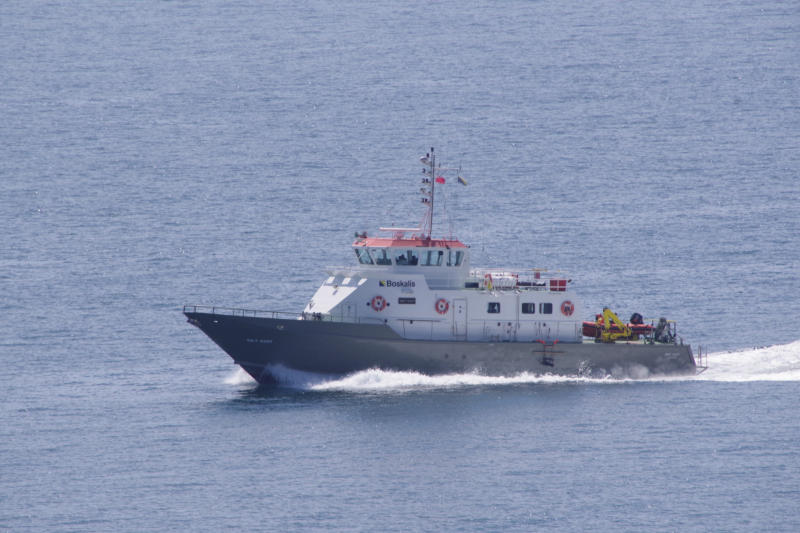
HMS Ranger
(P293)
Vosper Thornycroft, Portsmouth
1987
Sir Malcolm Campbell's water speed record
breaking Bluebird K4
Bloodhound
Camper and Nicholsons, Gosport
1936
Queen Elizabeth II and Prince Philip
(1962–1969)
Xarifa
J.S. White & Co., Cowes
1927
Also built Naval vessels, Seaplanes,
Commercial vessels and Lifeboats for the
RNLI
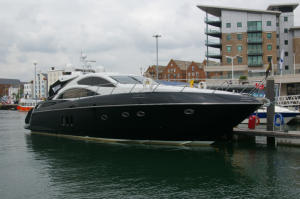
Tickled Pink
Sunseeker, Poole
2008
At Southampton boat show ready to be
delivered to a new client.
MV Glenachulish
Ailsa Shipbuilding Company, Troon
1969
The only turntable ferry in the world
Lucky Seven
Dixon, Exmouth
1978
Fishing out of Lulworth Cove
No. 7
Pendennis Shipyard
2006
One of only five chain ferries in England
Morning Star of
Revelation
Tim Millward, London
1978
The boat is built from ferro-cement
Virgin Atlantic
Challenger II
Brookes
1986
Richard Branson achieved the fastest ever
Atlantic crossing completing the trip in three
days, eight hours and 31 minutes.
Anyuta
Sunseeker, Poole
2014
A bit nerve wracking when you are asked to
park your tiny yacht next to a brand new
£14million superyacht!
Morning Cloud
No. 2
Clare Lallow, Cowes
1971
Designed by Sparkman and Stephens for
British Prime Minister Sir Edward Heath in
which he won the Admiral's Cup.
He became the only ever serving head of
government to captain an international
sporting team to victory in any event.
HSL 102
British Power Boat Co Ltd. Hythe
1936
The only survivor of the 100 class in the UK
and was one of the very first, fast offshore
rescue boats in service with the Royal Air
Force.
Smit Dee
Babcock Rosyth - Rosyth
2003
Training Vessel for the Secretary of State for
Defence
Smit Dart
Babcock Rosyth - Rosyth
2003
This vessel is used for training RAF Air Sea
Rescue helicopter personnel.
British Steel
Philip and Son, Noss
1970
First circumnavigation of the globe "the wrong
way" (i.e. from east to west, against prevailing
winds and currents) by Sir Chay Blyth







Boatbuilding
 Pubs
Pubs Open Map in New Window
 England
 Scotland
 Wales
Wales Ireland
 County Map
 About Britain
 Pubs
Pubs British Beer
 Perfect Pint
 Beer Glasses
 The Barren Years
 Real Fires
 Breweries
 Brewing
 British Food
 Recipes
 Pub Interiors
 Dog Friendly
 Pub Games
 Strange Pub Names
 Visitor Information
 Oldest Pub
 Pub Signs
 Micropubs
 Buildings
 Cathedrals
 Stately Homes
 Castles
 Listed Buildings
 Scheduled Monuments
 Oak Framing
 Architecture
 Thatching
 Waterways
 Sailing
 Shipbuilding
 Boatbuilding
  Shipping Forecast
 Britain's Coastline
 Coastal Locations
 Piers
Piers Lighthouses
 Harbours
 Beach Safety
 British Beaches
 Canals
 Rivers
 Islands
 Lakes
Lakes Waterfalls
 Historical
 Famous People
 Kings & Queens
 Kings of England
 History of Britain
 Industrial Revolution
 Act of Union
 Beaufort Scale
 British Firsts
 World Heritage Sites
 Historical Periods
 Historical Boundaries
 Tradition & Culture
 Morris Dancing
 Film & Television
 Television
 Calendar of Events
 British Sport
 Scottish Highlands
 Money
Money Dry Stone Walling
 British Wildlife
 Class System
 Geographical
 Pub Boundaries
 Facts 'n' Figures
 British Isles
 Other Areas
 Place Name Origins
 Topography
 Suggest an Inn
 Explanation of symbols
 Why Us?
 Places to Visit
 Long Distance Paths
 National Parks
 Areas of Outstanding Natural Beauty
 Coastal Locations
 Other areas of Britain
 Maps
Maps Our Favourite Locations
 Search
 Focus On...
 News
News Contact
 About Us
 Our History
 Donate