Britain's coastline is incredibly diverse, dynamic and plays a significant role in the nation's geography, history, culture
and ecology.
The Flat Green pastures of the Severn Estuary do not inspire the awe of the rocky Cornish coast or the majestic
Scottish Islands or indeed the feelings of Englishness at seeing the White Cliffs of Dover but has much beauty
nevertheless. The British coastline offers some of the best places in the country to visit - care must be taken on cliffs
and on the shoreline - rocks and rock pools are often very slippy and in places it's very easy to get cut off by fast
approaching tides.
The exact length of Britain's coastline is notoriously difficult to measure due to its highly irregular, fractal nature. The
more finely you measure, the longer it becomes.
•
Ordnance Survey: Approximately 31,368 km (19,491 miles) including islands, or 17,819 km (11,073 miles) for
the mainland.
Along with some of the major ports around the UK there is also a wide variety of harbours, some natural and some
very quaint man made structures. Many coastal ‘seaside’ resorts grew during the Victorian period with the
development of the railways allowing the population to easily visit the beautiful areas around the UK coastline.
The UK coastline is a mosaic of different landscapes:
Geographical Features
•
Cliffs:
From the iconic White Cliffs of Dover (chalk) and the
Seven Sisters, a series of stunning chalk cliffs along the English Channel to the rugged, towering sea
cliffs of Cornwall, Devon, and parts of Scotland and Wales, cliffs are a dominant feature. These can be
formed from hard, resistant rock or softer, eroding material leading to different forms and erosion rates.
•
Beaches:
There are many outstanding beaches around the
coast of the British Isles.
o
Sandy Beaches: Found in many areas,
particularly along the East Anglian coast (e.g.,
Holkham), parts of the South Coast (e.g.,
Studland Bay), and stretches of Wales and
Scotland. These are popular for recreation and often backed by sand dunes.
o
Shingle Beaches: Composed of pebbles and larger stones, such as the unique Dungeness in Kent,
which is one of Europe's most extensive shingle landscapes.
•
Bays and Coves:
Numerous sheltered bays and smaller coves, like Lulworth Cove on the Jurassic Coast, provide calm waters
and often picturesque settings.
•
Headlands and Peninsulas:
Jutting out into the sea, these often feature dramatic scenery, like Land's End in Cornwall or the many headlands in Pembrokeshire.
•
Estuaries and Saltmarshes:
Where rivers meet the sea, creating vital habitats for wading birds and marine life. Examples include the Thames Estuary, Severn Estuary (with the second-highest
tidal range in the world) and various estuaries along the East Coast.
•
Islands:
The UK is an island nation with over 1,000 islands, of which about 130 are permanently inhabited. Major
island groups include the Isle of Wight, Orkney, Shetland, the Hebrides and Anglesey.
•
Sea Stacks and Arches:
Formed by the erosion of headlands, these dramatic features are found in many places, such as the Old
Man of Hoy in Orkney or the Green Bridge of Wales in Pembrokeshire.
Coastal Processes and Dynamics
The British coastline is constantly being shaped by:
•
Erosion:
Waves, tides, and weather constantly wear away the
land. This is a significant issue in many areas, particularly on soft cliffs (e.g., East Anglia), leading to the loss
of land and property.
•
Deposition:
Sediment carried by currents and waves is deposited, forming beaches, spits (like Spurn Point), and
sandbanks (like the treacherous Goodwin Sands).
•
Tides:
The UK experiences some of the largest tidal ranges
in the world, particularly in the Bristol Channel.
The tides that flow through the English Channel
mixed with the volume of water creates some of the best sailing conditions in the world and forms part of the
reason for Britain’s successes in the Olympic games.
Biodiversity and Habitats
The varied coastline supports a rich array of habitats and wildlife:
•
Cliffs:
Home to vast seabird colonies (e.g., gannets, puffins, Manx Shearwaters – the UK hosts 80% of the world's
breeding gannets and Manx Shearwaters).
•
Rocky Shores:
Teem with marine life adapted to harsh intertidal conditions, including barnacles, mussels, limpets, and various seaweeds.
•
Sand Dunes:
Important for stabilizing beaches and providing unique plant communities and habitats for insects and birds.
•
Saltmarshes and Mudflats:
Critical feeding grounds for migratory birds and nurseries for fish.
•
Underwater Habitats:
The UK's seas are home to diverse marine life, including bottlenose dolphins (Cardigan Bay, Moray Firth), seals, basking sharks, and rare maerl beds and
seagrass meadows (vital for carbon capture and seahorse habitats). The Cromer Shoal Chalk Beds off Norfolk form the longest chalk reef in Europe.
Human Interaction and Significance
•
Cultural Significance:
As an island nation, the sea has profoundly shaped British history, trade, and culture. No one in the UK lives
more than 130 km (80 miles) from the sea.
•
Tourism and Recreation:
The coastline is a major draw for tourism, with numerous seaside resorts, coastal paths (like the England
Coast Path and Wales Coast Path), and opportunities for activities like sailing, surfing, swimming, and
wildlife watching.
•
Economic Importance:
Ports, fishing, and renewable energy (wind, wave, and tidal power) are important industries reliant on the
coast.
•
Conservation:
Large stretches of the coastline are designated as Areas of Outstanding Natural Beauty (AONBs) or National Parks (e.g., Pembrokeshire Coast), and many sites
have international conservation designations (e.g., SSSIs, Ramsar, SPA).
The Royal National Lifeboat Institution and the Coastguard patrol the coast but common sense should
always be used.
The classic atlas ‘picture’ of the British Isles is etched upon the mind from early schooldays but is not as it
would have appeared a few million years ago. Much erosion has taken place, indeed the British Isles were
once connected to the European mainland.
The erosion of the land by the constant battering of the sea's waves, primarily by the processes of hydraulic
action, corrasion, attrition and corrosion. Hydraulic action, occurs when the force of the waves compresses
air pockets in coastal rocks and cliffs. The air expands explosively, breaking the rocks apart.
Rocks and pebbles flung by waves against the cliff face wear it away by the process of corrasion. Chalk and
limestone coasts are often broken down by solution (also called corrosion). Attrition is the process by which
the eroded rock particles themselves are worn down, becoming smaller and more rounded.
Frost shattering (or freeze-thaw), caused by the expansion of frozen sea water in cavities, and biological weathering, caused by the burrowing of rock-boring
molluscs, also result in the breakdown of the coastal rock.
Where resistant rocks form headlands, the sea erodes the coast in successive stages. First it exploits weaknesses, such as
faults and cracks, in cave openings and then gradually wears away the interior of the caves until their roofs are pierced
through to form blowholes. In time, caves at either side of a headland may unite to form a natural arch. When the roof of the
arch collapses, a stack is formed. This may be worn down further to produce a stump and a wave-cut platform.
With larger areas of land such as that around the Isle of Wight, the course of the old Solent River ran through what is now
Poole Harbour and entered the English Channel to the East of what is now the Island.
Constant battering of the waves between the Isle of Purbeck and the Isle of Wight has eroded the coastline where the rock is
younger and softer. A band of white chalk running between younger and older rock formations can clearly be seen showing
where Old Harry Rocks on the mainland were joined to the Needles on the Isle of Wight.
Beach erosion occurs when more sand is eroded and carried away from the beach than is deposited by longshore drift. Beach erosion can occur due to the
construction of artificial barriers, such as groynes, or due to the natural periodicity of the beach cycle, whereby high tides and the high waves of winter storms tend
to carry sand away from the beach and deposit it offshore in the form of bars. During the calmer summer season some of this sand is redeposited on the beach.
In Britain, the southern half of the coastline is slowly sinking (on the east coast, at the rate of half a centimetre
a year) whilst the northern half is rising, as a result of rebounding of the land mass (responding to the removal
of ice from the last Ice Age). Some areas may be eroding at a rate of 6 m / 20 ft per year. Current opinion is to
surrender the land to the sea, rather than build costly sea defences in rural areas. In 1996, it was reported that
29 villages had disappeared from the Yorkshire coast since 1926 as a result of tidal battering.
Many stretches of coastline are so severely affected by erosion that beaches are swept away, threatening the
livelihood of seaside resorts, and buildings become unsafe. This mostly happens in the South of the UK where
the rock formations are younger and more susceptible to erosion.
To reduce erosion, several different forms of coastal protection may be employed. Structures such as sea
walls attempt to prevent waves reaching the cliffs by deflecting them back to sea. Such structures are
expensive and of limited success. Adding sediment (beach nourishment) to make a beach wider causes waves
to break early so that they have less power when they reach the cliffs. Wooden or concrete barriers called
groynes may also be constructed at right angles to the beach in order to block the movement of sand along the
beach (longshore drift).
Longshore Drift is the movement of material along a
beach. When a wave breaks obliquely, pebbles are carried up the beach in the direction of the wave
(swash). The wave draws back at right angles to the beach (backwash), carrying some pebbles with it.
In this way, material moves in a zigzag fashion along a beach.
Longshore drift is responsible for the erosion of beaches and the formation of spits (ridges of sand or shingle
projecting into the water).
Attempts are often made to halt longshore drift by erecting barriers, or groynes, at right angles to the shore.
Many of our favourite places in the UK (apart from pubs) are coastal areas for either spectacular beaches or
picturesque harbours.
Old Harry Rocks
Solent River
The Needles



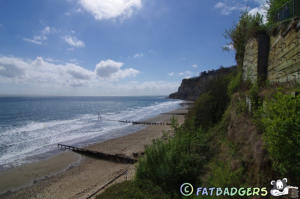
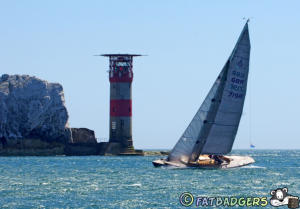


Britain’s Coastline













The Coastline around Britain stretches for some 10,000 miles - a coast of contrasts as the scenery changes from Estuaries, Shingle beaches, Salt
Marshes, Sand Dunes, Rugged Cliffs, Sandy Beaches and Rocky Shores to Industrial Harbours and Oil Refineries.
The West Coast of Scotland is particularly spectacular.




 Pubs
Pubs Open Map in New Window
 England
 Scotland
 Wales
Wales Ireland
 County Map
 About Britain
 Pubs
Pubs British Beer
 Perfect Pint
 Beer Glasses
 The Barren Years
 Real Fires
 Breweries
 Brewing
 British Food
 Recipes
 Pub Interiors
 Dog Friendly
 Pub Games
 Strange Pub Names
 Visitor Information
 Oldest Pub
 Pub Signs
 Micropubs
 Buildings
 Cathedrals
 Stately Homes
 Castles
 Listed Buildings
 Scheduled Monuments
 Oak Framing
 Architecture
 Thatching
 Waterways
 Sailing
 Shipbuilding
 Boatbuilding
  Shipping Forecast
 Britain's Coastline
 Coastal Locations
 Piers
Piers Lighthouses
 Harbours
 Beach Safety
 British Beaches
 Canals
 Rivers
 Islands
 Lakes
Lakes Waterfalls
 Historical
 Famous People
 Kings & Queens
 Kings of England
 History of Britain
 Industrial Revolution
 Act of Union
 Beaufort Scale
 British Firsts
 World Heritage Sites
 Historical Periods
 Historical Boundaries
 Tradition & Culture
 Morris Dancing
 Film & Television
 Television
 Calendar of Events
 British Sport
 Scottish Highlands
 Money
Money Dry Stone Walling
 British Wildlife
 Class System
 Geographical
 Pub Boundaries
 Facts 'n' Figures
 British Isles
 Other Areas
 Place Name Origins
 Topography
 Suggest an Inn
 Explanation of symbols
 Why Us?
 Places to Visit
 Long Distance Paths
 National Parks
 Areas of Outstanding Natural Beauty
 Coastal Locations
 Other areas of Britain
 Maps
Maps Our Favourite Locations
 Search
 Focus On...
 News
News Contact
 About Us
 Our History
 Donate