British harbours have played a significant role in the country's maritime
history, serving as crucial hubs for trade, fishing, military operations, and
tourism.
There are large commercial harbours or ports, smaller commercial
harbours which are generally still used for fishing and some really quaint
little refuges from the sea in stronger weather. These are still mostly used
by small local fishing boats and other leisure craft.
Over recent years some places have grown into very busy yachting
centres with berthing places along existing rivers and some have grown
into vast yachting centres with pontoons allowing hundreds of yachts on
either permanent moorings or visitor berths.
Some areas manage to comfortably mix their fishing fleets amongst the
pleasure boats and some keep both separate with different berthing areas
for commercial vessels and sailing boats.
One thing is for certain, where there is a harbour, there is usually at least
one pub and often many more.
Historical Overview
Ancient and Medieval Times:
British harbours have been used since ancient times, with Roman ports like Londinium (London) and Durobrivae (Rochester) playing key roles in trade and military logistics. During medieval times, harbours such as Bristol and Liverpool became vital for trade with Europe and beyond.Age of Exploration:
During the Age of Exploration and the subsequent colonial period, British harbours facilitated the expansion of the British Empire. Ports like Plymouth and Portsmouth were launch points for explorations and naval expeditions.Industrial Revolution:
The Industrial Revolution saw a dramatic increase in maritime trade. Harbours such as Glasgow, Newcastle, and Southampton expanded significantly to handle the increased volume of goods and raw materials.Notable British Harbours
London (Port of London):
Historically one of the world’s busiest ports, crucial for trade and commerce. Now includes modern container terminals and is a hub for tourism, with the River Thames playing a central role in the city’s transport and leisure activities. By the late 19th Century, most of the South East of London was docklands, from St. Katherine’s dock near Tower Bridge, past Surrey Quays at Rotherhithe, Millwall and West India Docks on the Isle of Dogs through to the Royal Victoria & Albert Docks at Woolwich, an immense amount of World trade was done.Liverpool:
Played a key role during the transatlantic slave trade and later as a major port for immigrants to America. The modern port handles a wide range of cargo and is a cultural and tourist centre with attractions like the Royal Albert Dock. Liverpool is now a vibrant city with lots of things to see and do, whether it’s the Beatles, museums, pubs or football - Liverpool has plenty to offer everyone.Southampton:
Known for its significant passenger traffic, including being a major embarkation port for the RMS Titanic. Today, it’s a key cruise port and handles large container ships. Southampton is also home to the SeaCity Museum, with an interactive model of the Titanic. Southampton City Art Gallery specialises in modern British art. Solent Sky Museum features vintage aircraft like the iconic Spitfire. Southampton Water is the long stretch of water that ships and boats use to access the Solent and the English Channel. It is fed by the River Test, Bartley Water, The River Itchen and the Hamble River with many yachting marinas including Ocean Village, the departure point for Sir Chay Blyth, the first person to sail single-handed non-stop westwards around the world. The Hamble River alone is home to billions of pounds worth of yachts as well as Oyster Yachts basePlymouth:
A historic naval port, significant during the Age of Exploration. Home to a large naval base and a thriving commercial port.Portsmouth:
A major naval port and home to the Royal Navy. Features historic dockyards with museums and preserved ships like HMS Victory and the Mary Rose.Glasgow (Clydeport):
Once a major shipbuilding centre, contributing significantly to British naval and merchant fleets. Currently, it handles a variety of cargo and has developed areas for tourism and leisure.Bristol:
Historically a key port for trade with the Americas and Africa. The modern port is located at Avonmouth, handling a variety of cargo, while the old harbour has been transformed into a cultural and residential area.Newcastle (Port of Tyne):
Historically important for coal exports and shipbuilding. Today, it handles cargo, passenger ferries, and has developed leisure and commercial facilities.Aberdeen:
Known for its role in the North Sea oil industry. It is a key support hub for offshore oil and gas operations, and also serves fishing and ferry services.Harwich:
A major ferry terminal providing connections to the Netherlands and Denmark. It also supports freight and passenger services.Current Roles and Economic Impact
Trade and Industry:
British harbours remain vital for trade, handling millions of tonnes of cargo annually. Major ports like Felixstowe and Dover are crucial for container shipping and ferry services.Tourism and Leisure:
Many harbours have developed vibrant tourism sectors. Historical dockyards, waterfront attractions, and cruise terminals draw millions of visitors each year.Fishing:
Harbours like Grimsby and Fleetwood are central to the UK’s fishing industry, supporting fleets and processing facilities. Naval and Defence: Ports such as Portsmouth and Devonport (Plymouth) are home to major naval bases, playing critical roles in national defence and military operations.Environmental and Sustainability Efforts
Green Initiatives:
Many harbours are investing in sustainable practices, such as shore-side electricity for ships, reducing emissions, and promoting green logistics.Conservation Projects:
Efforts are underway in several ports to protect marine environments and promote biodiversity, often involving local communities and stakeholders. British harbours are integral to the nation’s economic, cultural, and historical landscape. From ancient trade hubs to modern industrial ports, they have adapted to changing times while retaining their significance. Today, they continue to support trade, tourism, and defence, reflecting both their storied past and dynamic present.Some of the harbours around the UK that we recommend.
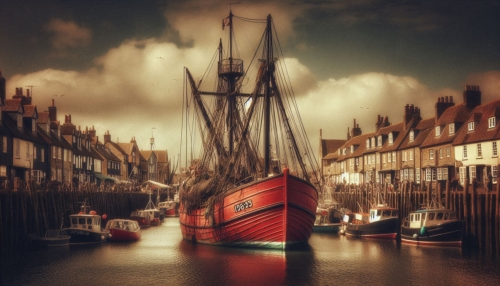


Harbours around the UK
The British Isles have some fantastic coastal locations with some incredibly picturesque fishing villages. An absolute must visit in Devon and
Cornwall and the West Coast of Scotland. The East coast of the British Isles is generally much harsher than the West although the fishing villages in
Fife in Scotland are a delight.















 Pubs
Pubs Open Map in New Window
 England
 Scotland
 Wales
Wales Ireland
 County Map
 About Britain
 Pubs
Pubs British Beer
 Perfect Pint
 Beer Glasses
 The Barren Years
 Real Fires
 Breweries
 Brewing
 British Food
 Recipes
 Pub Interiors
 Dog Friendly
 Pub Games
 Strange Pub Names
 Visitor Information
 Oldest Pub
 Pub Signs
 Micropubs
 Buildings
 Cathedrals
 Stately Homes
 Castles
 Listed Buildings
 Scheduled Monuments
 Oak Framing
 Architecture
 Thatching
 Waterways
 Sailing
 Shipbuilding
 Boatbuilding
  Shipping Forecast
 Britain's Coastline
 Coastal Locations
 Piers
Piers Lighthouses
 Harbours
 Beach Safety
 British Beaches
 Canals
 Rivers
 Islands
 Lakes
Lakes Waterfalls
 Historical
 Famous People
 Kings & Queens
 Kings of England
 History of Britain
 Industrial Revolution
 Act of Union
 Beaufort Scale
 British Firsts
 World Heritage Sites
 Historical Periods
 Historical Boundaries
 Tradition & Culture
 Morris Dancing
 Film & Television
 Television
 Calendar of Events
 British Sport
 Scottish Highlands
 Money
Money Dry Stone Walling
 British Wildlife
 Class System
 Geographical
 Pub Boundaries
 Facts 'n' Figures
 British Isles
 Other Areas
 Place Name Origins
 Topography
 Suggest an Inn
 Explanation of symbols
 Why Us?
 Places to Visit
 Long Distance Paths
 National Parks
 Areas of Outstanding Natural Beauty
 Coastal Locations
 Other areas of Britain
 Maps
Maps Our Favourite Locations
 Search
 Focus On...
 News
News Contact
 About Us
 Our History
 Donate