
Lighthouses of some kind have been known from very ancient
times.
One of the seven wonders of the world was the great Pharos, or
lighthouse of Alexandria which dates back to 280 BC, but some
hundreds of years before that, beacon fires had been maintained by
priests on the Egyptian coast as warnings and guides to mariners in the
Mediterranean.
When the Romans came to Britain they built a pharos, or lighthouse, at
Dover, and several beacons were maintained during the following
centuries.
The Early Lighthouses
Ancient lighthouses were purely a tower with a 'basket' constructed at the top, where a fire was lit. The fires needed to be maintained which was difficult as was removing the ash afterwards. By the reign of Henry VIII, when British shipping and commerce began to grow, it became necessary to take the matter of lighthouses seriously in hand, and the King granted a charter to a society which was to build and maintain light beacons at certain points on the coast. Later, candles were used, and then came oil lamps. The number of lighthouses, too, increased, and at last the Eddystone Lighthouse as built by Winstanley on a lonely rock off the south coast. It was a weird wooden structure, more like a pleasure pagoda in the grounds of an exhibition than a lighthouse to withstand the storms of the Atlantic, and one night during a great gale it was carried away, its designer being inside at the time. Modern day lighthouses carry a powerful light to warn ships or aeroplanes that they are approaching a place (usually land) dangerous or important to navigation. The light is magnified and directed out to the horizon or up to the zenith by a series of mirrors or prisms. Increasingly lighthouses are powered by electricity and automated rather than staffed; the more recent models also emit radio signals. Lights may be either flashing or rotating. Fixed lights are liable to cause confusion. The pattern of lighting is individually varied so that ships or aircraft can identify the lighthouse. In fog, sound signals are made (horns, sirens, explosives), and in the case of lightbuoys, fog bells and whistles are operated by the movement of the waves. In England beacons burning in church towers served as lighthouses until the 17th century, and in the earliest lighthouses, such as the Eddystone, first built in 1698, open fires or candles were used. Where reefs or sandbanks made erection of a lighthouse impossible, lightships were often installed; increasingly these are being replaced by fixed, small, automated lighthouses. Where it is impossible to install a fixed structure, unattended lightbuoys equipped for up to a year's service may be used. In the UK, these are gradually being converted from acetylene gas in cylinders to solar power. In the UK there are three lighthouse authorities: Trinity House, the Northern Lighthouse Board, and the Commissioners of Irish Lights. In 1995 in Britain, there were 56 automated lighthouses, 11 staffed lighthouses, 10 automated lightvessels, 2 automated lightfloats, 2 large automatic navigation buoys (lanbys), 414 buoys (of which 94 were unlit), 26 beacons, 62 radar or radio beacons, and 11 Decca Navigator stations.Strong as a Rock
A wiser system of construction for the lighthouse towers came into favour when Smeaton built the second Eddystone Lighthouse. It was made of massive blocks of stone, dovetailed together, the foundations being dovetailed into the rock itself, so that the lighthouse really became a continuation of the rock on which it was built. Also the shape of the tower, tapering towards the top, was based on the principle of the tree trunk, which weathers the storms so well. There are, of course, different plans and designs for dovetailing the stonework, but the principle of Smeaton is still used. The walls are made much thicker at the bottom of the lighthouse than the top, and in the Wolf Rock Lighthouse, for instance, off Land's End, the walls at the level of the entrance door are nearly eight feet thick, and they gradually decrease till they are only two and a quarter feet near the top. It is in the brilliance of the light that the most marvellous improvements have taken place in recent years. Oil, gas and electricity are all used, but the power of the light is enormously increased by the wonderful system of lenses through which the light is made to shine. In lighthouses which are to shine only in one direction a combination of lenses, prisms and reflecting mirrors gives a concentrated and powerful beam. There are all sorts of combinations of lenses and prisms, but the principle is more or less the same.The First Revolving Light
In order that the mariner on dark nights may distinguish one lighthouse from another, and not mistake his position, various systems of revolving and flashing lights are arranged. It was in 1783 that the first revolving light was erected at Marstrand in Sweden, and at the beginning of the 19th century one was placed at Flamborough Head. Now there are many revolving lighthouses in different parts of the world. Up to Smeaton's day coal and wood fires had been used to give the light, but he, for the first time, used tallow candles, placing 24 in a chandelier, and the total value of the light was only 67.2 candle power. Contrast this with the present illumination of some lighthouses, which throw a beam of over 60 million candle power that can bee seen for a distance of more than 30 miles.The Lighthouses
Anvil Point Lighthouse
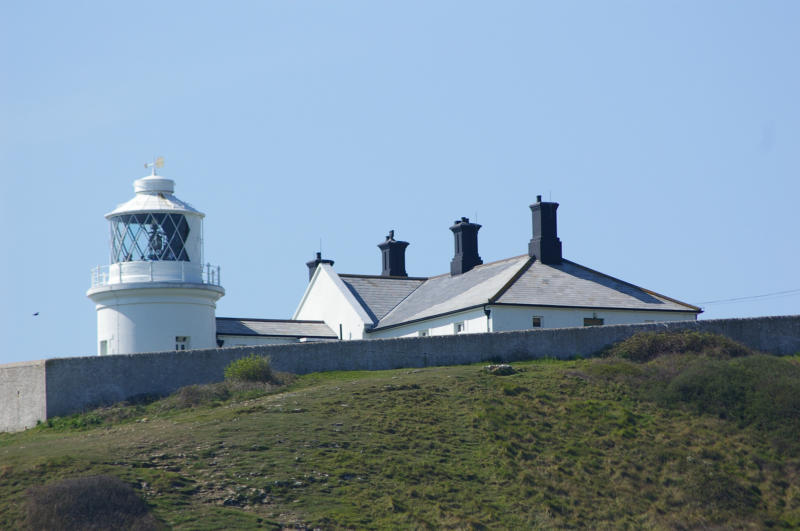
Fully-automated lighthouse located at Durlston Country Park near Swanage in Dorset, England. It is owned by Trinity House and operated as two holiday cottages. The lighthouse is built of local stone and was completed in 1881. The lighthouse tower is twelve metres tall, the height of the light above the high-water mark is 45 m (148 ft). The light is positioned to give a waypoint for vessels passing along the English Channel coast. Anvil Point Lighthouse was fully automated on 31 May 1991Bamburgh Lighthouse
(also known as Black Rocks Point Lighthouse) was built by Trinity House in 1910 to guide shipping both passing along the Northumberland coast and in the waters around the Farne Islands. It was extensively modernised in 1975 and is now monitored from the Trinity House Operations and Planning Centre in Harwich. It is the most northerly land-based lighthouse in England.Beachy Head Lighthouse
Located in the English Channel below the cliffs of Beachy Head in East Sussex. It is 33 m (108 ft) in height and became operational in October 1902. It was the last traditional-style 'rock tower' (i.e. offshore lighthouse) to be built by Trinity House. Beachy Head Lighthouse was built to replace the Belle Tout Lighthouse (which was completed in 1834).Beaulieu River Millennium Beacon
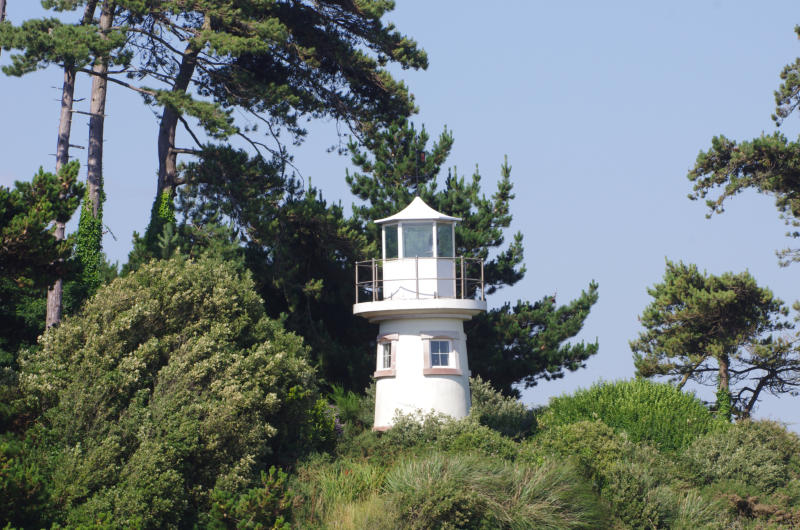
Lighthouse near Lepe Beach at Beaulieu, not far from Southampton, England. The lighthouse here is one of the newest in the UK, having only been erected in 2000. The land that the lighthouse sits on is within the grounds of Lepe House and marks the entrance of Beaulieu river. Sailing in and out of the river can be extremely difficult due to strong cross tides and having to follow the winding channel between the red and green markers. The 25ft traditional style lighthouse helps boats navigate the river.Bishop Rock Lighthouse
Bishop Rock is a skerry off the British coast in the northern Atlantic Ocean in the westernmost part of the Isles of Scilly, an archipelago 45 kilometres (24 nautical miles) off the southwestern tip of the Cornish peninsula of Great Britain. The Guinness Book of Records lists it as the world's smallest island with a building on it. The original iron lighthouse was begun in 1847 but was washed away before it could be completed. The present building was completed in 1858 and was first lit on 1 September that year. Before the installation of the helipad, visitors to the lighthouse would rappel from the top (with winches installed at the lamp level and at the base below) to boats waiting away from the lighthouse. Bishop Rock is also at the eastern end of the North Atlantic shipping route used by ocean liners in the first half of the 20th century; the western end being the entrance to Lower New York Bay. This was the route that ocean liners took when competing for the Transatlantic speed record, known as the Blue Riband.Corsewall Lighthouse
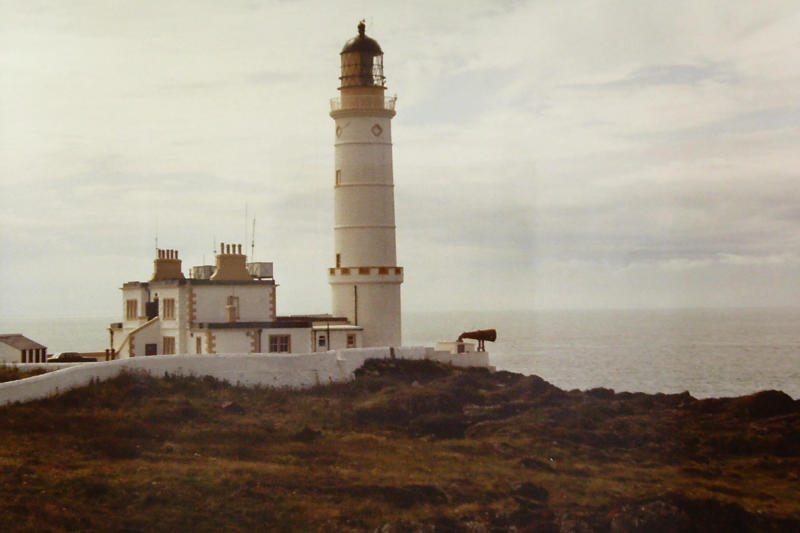
Lighthouse at Corsewall Point, Kirkcolm near Stranraer in the region of Dumfries and Galloway in Scotland. First lit in 1817, it overlooks the North Channel of the Irish Sea. The definition of the name Corsewall is the place or well of the Cross. In 1814, a Kirkman Finley applied to the Trade of Clyde for a lighthouse on Corsill Point. Robert Stevenson, inspected in December of that year and soon the 30 ft tower and house were in the first stages of construction. Corsewall Lighthouse was exhibited in 1817 but that year, the Principal Keeper at Corsewall was reported for incompetence after falling asleep on duty as the revolving apparatus of the light had stopped for a certain period. They suspended him and he was to never chiefly monitor a lighthouse again and was demoted as an assistant at Bell Rock. In November 1970, Concorde reportedly flew over the lighthouse on a trial flight and shattered panes of glass on the lighthouse. Later flights did not affect it. Although the light is still operated by the Northern Lighthouse Board, since automation in 1994 the rest of Corsewall Lighthouse has been converted into the Corsewall Lighthouse Hotel.Douglas Harbour Lighthouse
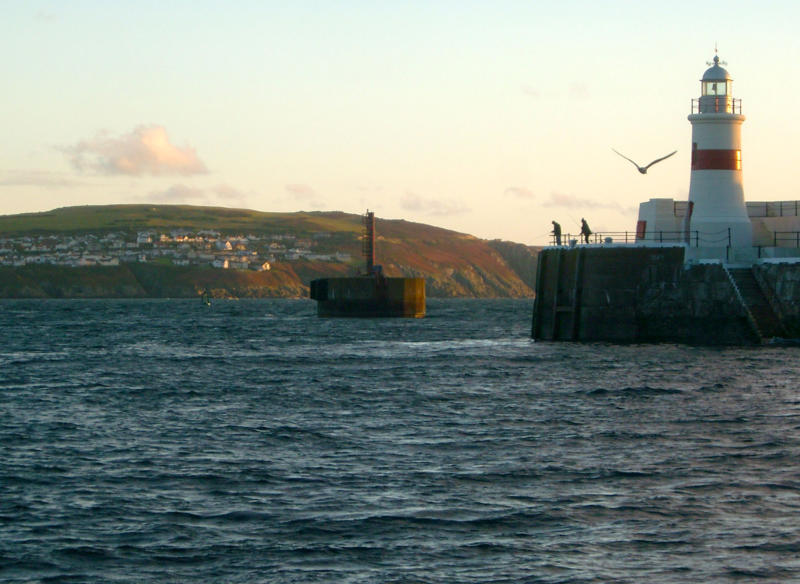
Douglas Harbour is composed of the Outer Harbour and the Inner Harbour separated by the Bascule Bridge and Flapgate. There is a sea terminal building at the north-east end of the harbour, co-located with the harbour control. The earliest record of lights being displayed in Douglas date back as early as 1671. Battery old timber framed breakwater incorporated landing berths with three platforms at different levels, adapted for loading and unloading at all stages of the considerable tidal range in Douglas with steps for the accommodation of passengers. The breakwater sustained significant damage in early February 1865 and work started on Battery Pier costing a total of £105,774 8s 2d completed by the end of July 1879. The construction of a small lighthouse on the seaward end of the structure being the final part of the work.Eddystone Lighthouse
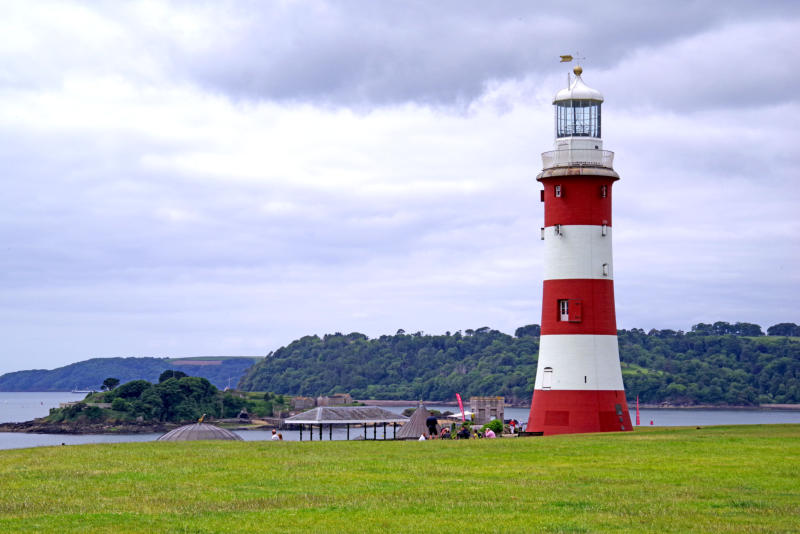
The Eddystone had always been a dangerous rock for shipping entering the Channel, and for centuries there had been suggestions for lighting it in some way so that mariners might be warned. Henry Winstanley was an artist and engraver, who among other things designed playing cards. He was born at Saffron Walden in Essex. He was greatly interested in mechanics, and had a workshop at Littlebury, where he invented many strange devices. Winstanley began building the first Eddystone Lighthouse on July 14th 1696, when William the Third was on the throne, and the first summer was spent in making twelve holes in the rock and fastening twelve great irons to hold the work that was to be done afterwards. Winstanley hoped to be able to finish the lighthouse in the second year, and the Admiralty helped him by lending him boats and men. In the second year a round pillar twelve feet high and fourteen feet in diameter was erected on the Rock, and in the third year the remainder of the lighthouse, built of wood, was carried up to a height of eighty feet, and a weather vane placed on top. At last it was finished, and on the night of November 14th, 1698, it was lighted up with tallow candles. After the first winter Winstanley visited his lighthouse to see how it had borne the blasts. He found it unshaken, but as the seas had often blown over the top of the lantern, obscuring the light, he decided to strengthen the foundations, take down the upper part of the building and rebuild it much higher. He did so, and the height was now raised to 120 feet. Some people feared for the lighthouse should a really terrific storm sweep round it, but Winstanley laughed at all their fears. "I only wish," said he "that I may be in the lighthouse in circumstances that will test its strength to the utmost." On the afternoon of November 26th, 1703, he set off in dirty weather from Plymouth for the Eddystone Rock, deciding to stay there for the night. Then came the Great Storm, with its dramatic consequences. We know no more of what happened, except that when daylight dawned on the morning of November 27th, and men looked out towards the Eddystone Rock, there were no signs of a lighthouse. The Rock was bare as it used to be. Winstanley's structure, with its designer, had been swept away for ever by the Great Storm. A wiser system of construction for the lighthouse towers came into favour when Smeaton built the second Eddystone Lighthouse. It was made of massive blocks of stone, dovetailed together, the foundations being dovetailed into the rock itself, so that the lighthouse really became a continuation of the rock on which it was built. The upper part of Smeaton's lighthouse was subsequently rebuilt, as planned, on top of a replica granite frustum on Plymouth Hoe.Flamborough Head Lighthouse
Active lighthouse located at Flamborough, East Riding of Yorkshire, England. Flamborough Head Lighthouse acts as a waypoint for passing deep sea vessels and coastal traffic, and marks Flamborough Head for vessels heading towards Scarborough and Bridlington. The first lighthouse, built by Sir John Clayton, was completed in 1674 and is one of the oldest surviving complete lighthouses in England. Built from chalk, it was never lit. This is now a Grade II* listed building. The present lighthouse, designed by Samuel Wyatt and costing £8,000 to build, was first lit on 1 December 1806. It had a distinctive light characteristic of two white flashes followed by a red flash. This was provided by the lighting apparatus, which was designed by optics specialist George Robinson, who was also Chief Inspector of Lighthouses at Trinity House.Grande Amfroque
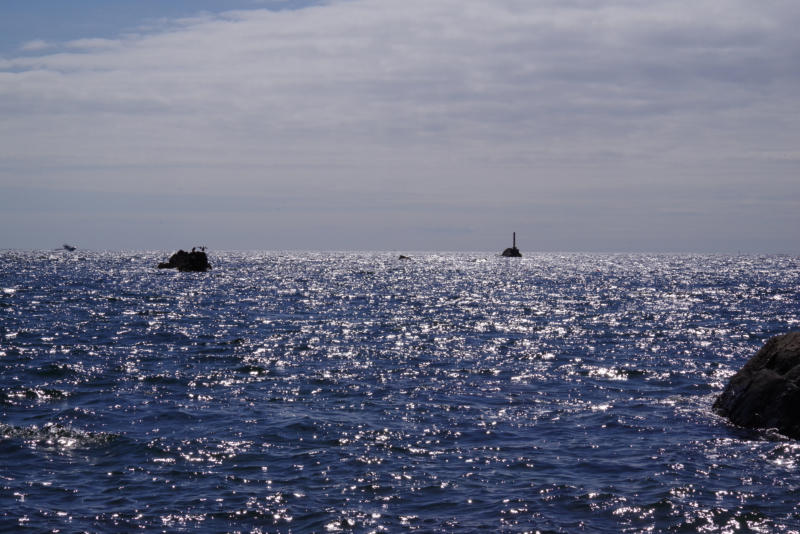
Grande Amfroque is a rock and is located in 2 miles NE of Herm Island North East of Guernsey in the Channel Islands. It has an extreme tidal range of over 7m making it a danger to shipping. Britain is on the European continental shelf, and the water off the shore is shallow for a long way out especially around the channel Islands and Avonmouth.Hartland Point Lighthouse
Hartland Point Lighthouse is a Grade II listed building at Hartland Point, Devon, England. The point marks the western limit (on the English side) of the Bristol Channel with the Atlantic Ocean continuing to the west. Trinity House, the lighthouse authority for England and Wales, have a lighthouse on the tip of the peninsula. Designed by Sir James Douglass, construction began in November 1873 by contractor Mr Yerward of Wales under the supervision of resident engineer Henry Norris, Douglass and Norris having completed Souter Lighthouse in 1871. The tower is 18 metres (59 ft) tall with the lamp being 37 metres (121 ft) above mean sea level. It was blessed by Frederick Temple, Bishop of Exeter, who later became Archbishop of Canterbury, and the light was lit for the first time by Lady Stucley of Hartland Abbey during the opening ceremony on 1 July 1874. The lighthouse was built with accommodation for four keepers and their families and was electrified in 1927. The tower was automated in 1984 and controlled from Trinity House Operations Centre at Harwich in Essex.Hurst Point Lighthouse
Located at Hurst Point in the English county of Hampshire, and guides vessels through the western approaches to the Solent. The original lighthouse was the Hurst Tower, sited to the south west of the old Hurst Castle and lit for the first time on 29 September 1786. The Hurst Tower light was found to be obscured behind the Needles from certain directions; consequently, in 1812, this tower was supplemented by the High Lighthouse, a new tower at a higher level. In 1865, a new Low Light was built: a white circular granite tower with a red lantern, which was attached to the new curtain wall of Hurst castle. In 1867, a new High Light was built to designs by James Douglass, a free-standing 26 metre tower which was converted to electric power in 1997.La Corbière
La Corbière is the extreme south-western point of Jersey in St. Brélade. The name means "a place where crows gather", deriving from the word corbîn meaning crow. However, seagulls have long since displaced the crows from their coastal nesting sites. The rocks and extreme tidal variation around this stretch of Jersey's coast have been treacherous for navigation and La Corbière has been the scene of many shipwrecks, including that of the mail packet "Express" on 20 September 1859. The lighthouse is situated on a rock that is a tidal island. A causeway links the lighthouse to shore at low tide. There is an alarm to warn visitors to clear the causeway as the tide rises; still, there have been casualties among the unwary or unlucky. A plaque adjacent to the causeway commemorates Peter Edwin Larbalestier, assistant keeper of the lighthouse, who was drowned on 28 May 1946, while trying to rescue a visitor cut off by the incoming tide. The lighthouse tower is 19 m (62 ft) high and the lamp stands 36 m (119 ft) above high water spring tides. It was lit on 24 April 1874, for the first time, and was the first lighthouse in the British Isles to be built of concrete. The lighthouse was built to designs by Sir John Coode. The beam has a reach of 18 nmi (33 km), and was automated in 1976.Lizard Lighthouse
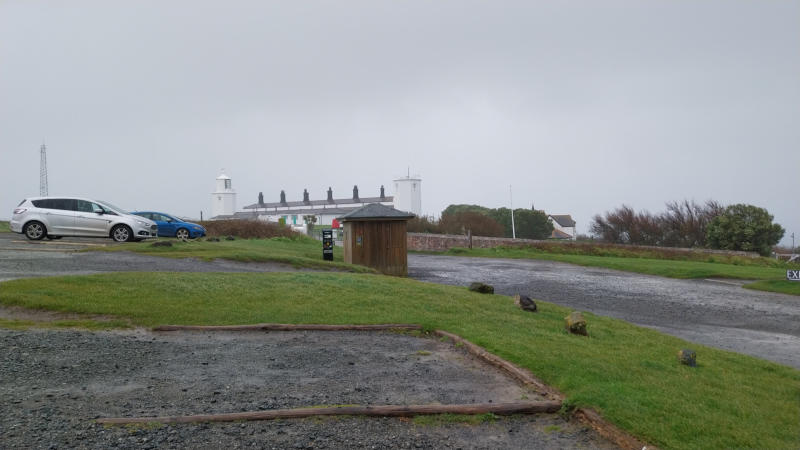
Lighthouse at Lizard Point, Cornwall, England, built to guide vessels passing through the English Channel. It was often the welcoming beacon to persons returning to England, where on a clear night, the reflected light could be seen 100 mi (160 km) away. History A light was first exhibited in 1619, built thanks to the efforts of Sir Christopher Dimaline but it was extinguished and the tower demolished in 1630 because of difficulties in raising funds for its operation and maintenance. The current lighthouse, consisting of two towers with cottages between them, was built in 1751 by the landowner Thomas Fonnereau; each tower was topped by a coal-fired brazier. Trinity House took responsibility for the installation in 1771. In 1812 the coal burners on each tower were replaced with Argand lamps and reflectors. In each tower a fixed arrangement of nineteen lamps and reflectors was installed. In 1873 the original lamps and reflectors were still in use. That year, because of the number of wrecks still occurring around the Point, the decision was taken to upgrade the lights and provide a fog signal. A carbon arc lamp continued to provide the light source until it was superseded in 1926 by an electric filament lamp. The engines and magneto generators continued in daily use until 1950, when the lighthouse was connected to mains electricity. In 1998, Lizard Lighthouse was automated and de-manned. The fog horn was decommissioned in 1998 and replaced with an automatic electronic fog signal; at the time it was the last compressed-air fog signal still in use in the United Kingdom.Longships Lighthouse
Active 19th-century lighthouse about 1.25 mi (2.0 km) off the coast of Land's End in Cornwall, England. It is the second lighthouse to be built on Carn Bras, the highest of the Longships islets which rises 39 feet (12 m) above high water level. In 1988 the lighthouse was automated, and the keepers withdrawn. It is now remotely monitored from the Trinity House Operations & Planning Centre in Harwich, Essex. In 1790 John Smeaton surveyed the area, and recommended either Wolf Rock or the Longships reef as potentially suitable locations. Smith's lighthouse was first lit on 29 September 1795. Three storeys high and built of granite, on top of which was a glazed lantern storey with a copper-covered dome. In 1869 Trinity House began constructing a replacement tower to the designs of William Douglass. The building of the present granite tower used much of the equipment that had previously been used in the construction of the Wolf Rock Lighthouse. The new lighthouse was just over 117 feet (36 m) tall. The tower was first lit in December 1873, having cost £43,870 to build. Initially the new lighthouse was fitted with a fog bell, which sounded two strokes every fifteen seconds. In 1967 the light was electrified and the tower modified and in 1974 a helipad was constructed on top of the lantern, greatly easing access. In 1988 the lighthouse was automated and the keepers withdrawn.Lundy Lighthouses
The isle of Lundy has three lighthouses: a pair of active lights built in 1897 and an older lighthouse dating from 1797. Foundations for a lighthouse on Lundy were laid in 1787, but the first lighthouse (now known as the Old Light) was not built until Trinity House obtained a 999-year lease in 1819. The 97-foot (30-metre) granite tower, on the summit of Chapel Hill, was designed by Daniel Asher Alexander, and built by Joseph Nelson at a cost of £36,000. The current Lundy North and Lundy South lighthouses were built in 1897 at the extremities of the island to replace the Old Light. Designed by Sir Thomas Matthews, both lighthouses are painted white and are run and maintained by Trinity House. The North lighthouse is 56 ft (17 m) tall, slightly taller than the south one at 52 ft (16 m) tall.Maryport Lighthouse
Small lighthouse located in Maryport, Cumbria, England, formerly run by England's general lighthouse authority, Trinity House. It is a Grade II listed building. Maryport possessed a small lighthouse in 1796, in 1833 an Act of Parliament granted permission for a dock to be built at Maryport together with a new pier and lighthouse. Construction was overseen by a new board of trustees and the pier, complete with its lighthouse, was in place by 1846. It is the UK's oldest cast iron lighthouse and is 36 feet (11 m) high, consists of an octagonal metal plinth, column and lantern on top of a rusticated stone base. It was originally gas-lit. By 1946 the light was powered by acetylene and in 1996 Trinity House provided a new aluminium tower for the end of the pier extension, lit by mains electricity.Needles Lighthouse
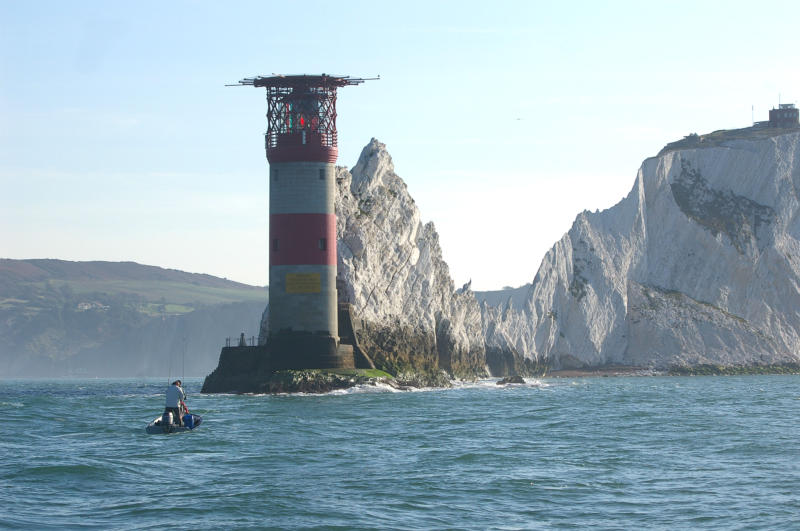
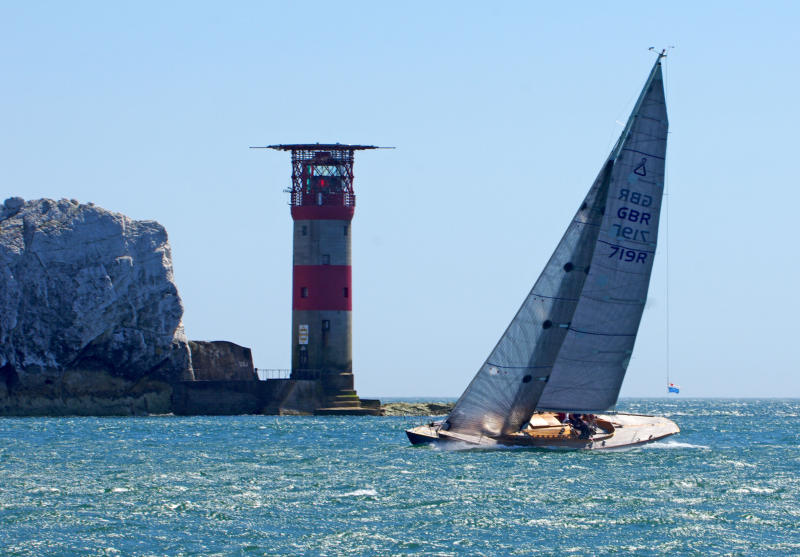
Active 19th century lighthouse on the outermost of the chalk rocks at The Needles on the Isle of Wight in the United Kingdom, near sea level. Designed by James Walker, for Trinity House at a cost of £20,000, it was completed in 1859 from granite blocks. It stands 33.25 metres (109.1 ft) high and is a circular tower with straight sides. It replaced an earlier light tower on top of a cliff overhanging Scratchell's Bay, which was first lit on 29 September 1786. Before work could begin on the new tower, a sizeable section of rock was cut away to provide a level base. Tunnels were also excavated within the rock behind the tower to provide rooms for storage. The lighthouse was first lit on 1 January 1859. The tower itself had initially been left as plain granite 'not coated nor coloured', but in 1886, so as to make it stand out more prominently against the cliffs during the day, it was painted with a broad black stripe around the middle; the metalwork of the lantern was also painted black, and dark curtains were hung within the glass when the lamp was not in use. In 1946, a new electric light was installed following damage in a German air raid and in 1987, a helipad was added to the top of the lighthouse. By the early 1990s the Needles was the last Trinity House lighthouse to be powered by 100 V DC electricity from its own generators.Plymouth Breakwater Lighthouse
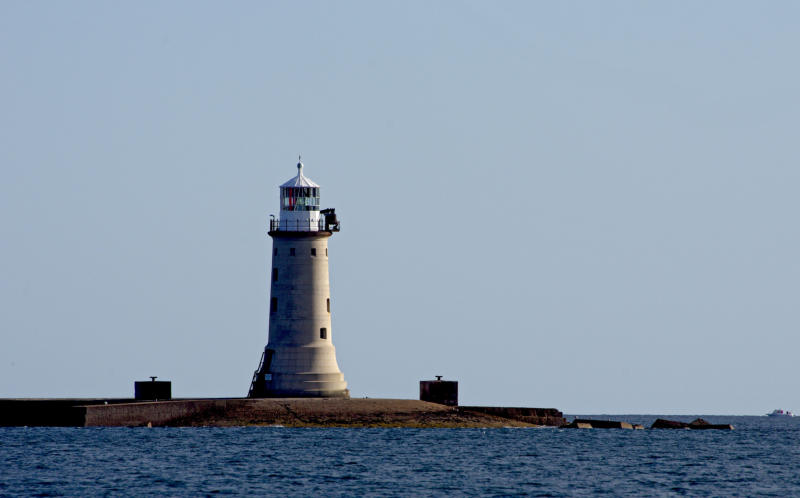
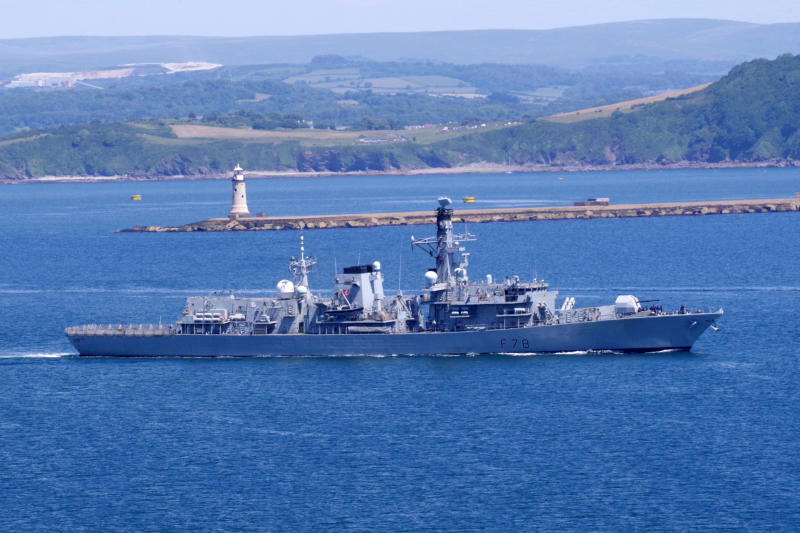
Plymouth Breakwater Lighthouse stands on the western tip of the breakwater. Designed for the Admiralty by Walker & Burgess, construction of the granite tower began on 22 February 1841 and was completed on 9 November 1843. The light became operational in June 1844, soon afterwards a horse-drawn omnibus was driven along the breakwater from end to end, with a full complement of passengers accompanied by a military band. On completion, management of the light was transferred to Trinity House. A beacon was placed at the eastern end of the breakwater, consisting of a 6-foot (1.8 m) spherical cage on a 17-foot (5.2 m) pole; the cage was designed as a refuge for six shipwrecked sailors. By 1867 a 7 cwt bell had been installed at the lighthouse to serve as a fog signal. In 1879 a larger (32 cwt) bell was installed, and the old bell was transferred to Gunfleet Lighthouse. (The new bell had previously been in use at Start Point lighthouse, where a fog siren had replaced it two years earlier). In 1920 the lighthouse was converted to run automatically on acetylene gas. Following departure of the resident keepers, the light was monitored from the Trinity House fog signal station at nearby Penlee Point. Oversight of the lighthouse was passed from Trinity House to the Ministry of Defence in 1993. The bell remained in use until 1994, when it was replaced by an electronic fog horn. Shag Stone, near the Eastern entrance to Plymouth Sound and close to the Great Mew Stone off Wembury Point, is one of several along the coastline with the same name. The rock is a popular spot with the local Cormorant population - it is marked by an unlit beacon. The remains of the 1890 wreck of an English liner Nepaul, which ran aground on the Shag Stone in Plymouth Sound can still be found. She was an iron-hulled steamer, en route from Calcutta to London with a general cargo. Her scattered remains lie mixed up with the remains of the steamer CONSTANCE along with the remains of the wreck BARODAPortland Bill Lighthouse
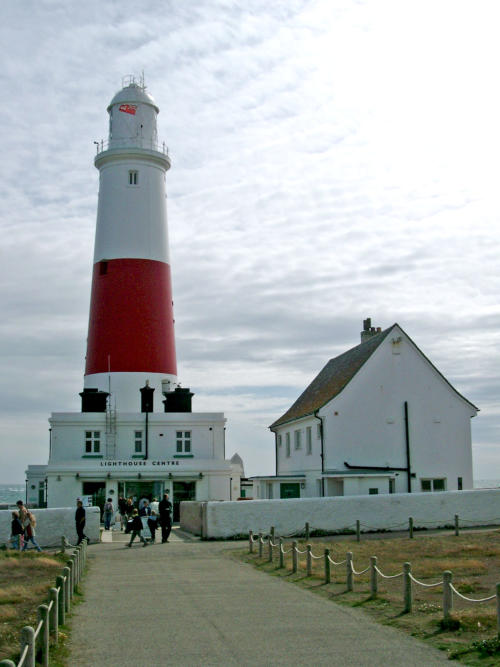
Lighthouse at Portland Bill, on the Isle of Portland, Dorset, England. The lighthouse and its boundary walls are Grade II Listed. As Portland Bill's largest and most recent lighthouse, the Trinity House operated Portland Bill Lighthouse is distinctively white and red striped, standing at a height of 41 metres (135 ft). It was completed by 1906 and first shone out on 11 January 1906. The lighthouse guides passing vessels through the hazardous waters surrounding the Bill, while also acting as a waymark for ships navigating the English Channel. The two original lighthouses, now known as the Old Higher Lighthouse and Old Lower Lighthouse, operated as a pair of leading lights to guide ships between Portland Race and The Shambles sandbank. They were constructed in 1716, both rebuilt in 1869, and decommissioned following the completion of the present lighthouse. At the turn of the 20th-century, Trinity House put forward plans for building a new lighthouse at Bill Point. They acquired the required land in 1903. The lighthouse was completed in 1905 at a cost of £13,000, and the lamp first lit on 11 January 1906. On 18 March 1996, Portland Bill Lighthouse was de-manned, and all monitoring and control transferred to the Trinity House Operations & Planning Centre in Harwich.Phare de la Hague
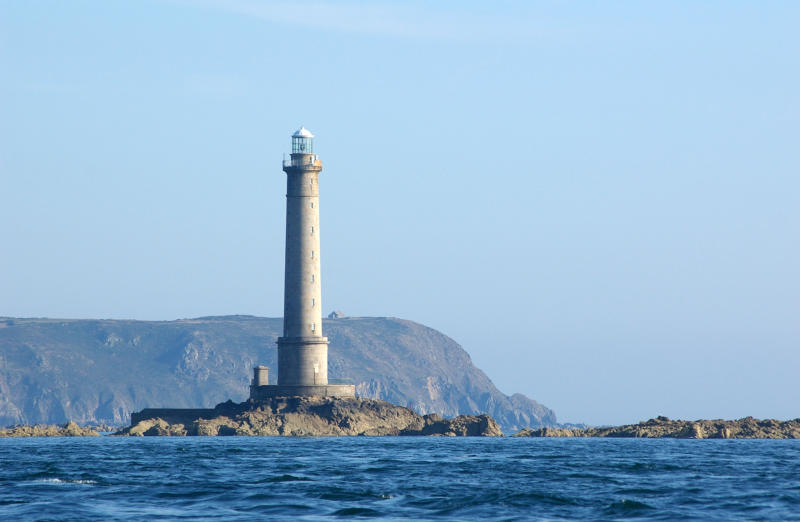
The La Hague lighthouse or Goury lighthouse stands 800 meters off Cap de la Hague, on the rock known as “le Gros du Raz”. Not a UK lighthouse but spectacular to see and not to far from Alderney in the Channel Islands, those sailors fighting against the very strong currents around the Normandy coast when travelling from Jersey or Guernsey heading for Cherbourg will be familiar with this light. After multiple shipwrecks near Raz Blanchard , it was decided to build a lighthouse off the coast of Auderville and the port of Goury. It was built from 1834 in three years, to the plans of the engineer Morice de La Rue . Commissioned in 1837, it was electrified in 1971. Automated in 1989 and the last keepers left in May 1990.South Stack Lighthouse
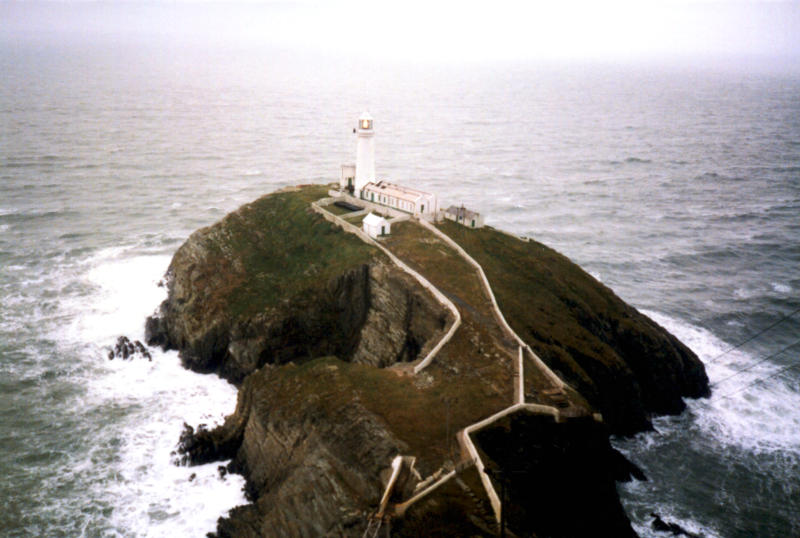
The South Stack Lighthouse is built on the summit of a small island off the north-west coast of Holy Island, Anglesey, Wales. It was built in 1809 to warn ships of the dangerous rocks below. The lighthouse has warned passing ships of the treacherous rock below since its completion in 1809. The 91-foot (28 m)-tall lighthouse on South Stack was designed by Daniel Alexander and the main light is visible to passing vessels for 28 miles (44 km), and was designed to allow safe passage for ships on the treacherous Dublin–Holyhead–Liverpool sea route. It provides the first beacon along the northern coast of Anglesey for east-bound ships. It is followed by lighthouses, fog horns and other markers at North Stack, Holyhead Breakwater, The Skerries, the Mice, Point Lynas and at the south-east tip of the island Trwyn Du. The lighthouse is operated remotely by Trinity House.Spy House Point Lighthouse
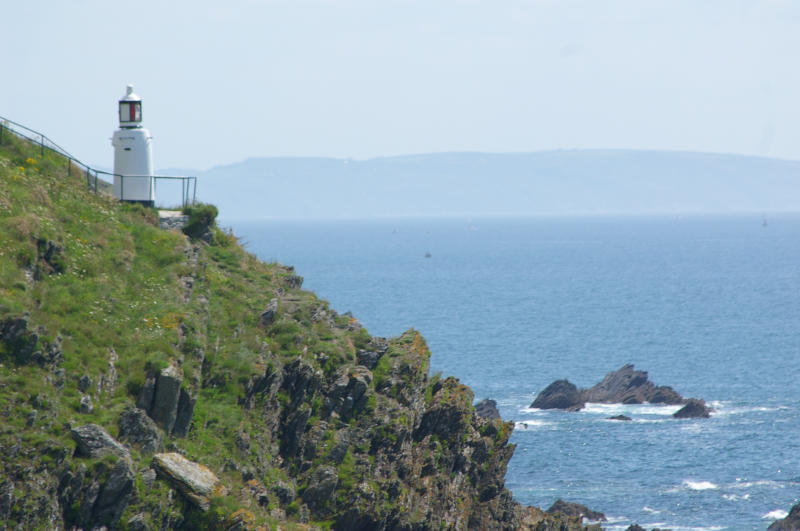
Located in Polperro, Cornwall. It was built in 1911, replacing the previous lighthouse built in 1904 and decommissioned in the 1950's. The building is only 16 feet tall and 140 feet above the sea below.St Catherine's Lighthouse
Lighthouse located at St Catherine's Point at the southern tip of the Isle of Wight. It is one of the oldest lighthouse locations in Great Britain. The first lighthouse was established on St Catherine's Down in 1323 on the orders of the Pope, after a ship ran aground nearby and its cargo was either lost or plundered. Once part of St Catherine's Oratory, its octagonal stone tower can still be seen today on the hill to the west of Niton. It is known locally as the "Pepperpot". Nearby there are the footings of a replacement lighthouse begun in 1785, but this was never completed because the hill is prone to dense fog. The new lighthouse, built by Trinity House in 1838, was constructed as a 40-metre (130 ft) stone tower. It was first lit on 1 March 1840 however, the light was often obscured by fog, which led in due course to the height of the tower being reduced by 13-metre (43 ft) in 1875. In the 1880s the decision was taken to convert the St Catherine's light to electric power. St Catherine's was the last English lighthouse to be provided with an arc lamp. A new fog signal house was also built in 1888.Start Point Lighthouse
Built in 1836 to protect shipping off Start Point, Devon, England. Open to the public in summer months, it is owned and operated by Trinity House. It has been designated by English Heritage as a grade II listed building. Start Point is one of twenty nine towers designed by James Walker. The lighthouse is in the gothic style, topped by a crenellated parapet. The main tower is built of tarred and white-painted granite ashlar with a cast-iron lantern roofed in copper. The tall circular tower is 92 feet (28 m) high with a moulded plinth and pedestal stage and two diminishing stages above that. There are two entrances porches, on the north and south sides. The porch on the south side is blocked and has a 4-centred arch hood mould, whilst the doorway to the north porch has a Tudor arch. Both have raised parapets with Trinity House arms. The inside of the tower includes a cantilevered granite staircase around the inside well of the tower with an iron balustrade completed by a cast-iron newel. The lighthouse originally had the keepers' living accommodation on the ground and first floors but this was removed in 1871 when new keepers' houses were built, either side of the porches to the north and south. In 1882 another cottage was built, detached from the tower, to the east. The lighthouse was powered by oil until 1959, when it was electrified. Work began on the automation of Start Point Lighthouse in August 1992 and was carried out by LEC Marine at a cost of £82,754. It was completed in early 1993. The light alone was found to be inadequate in fog, and a bell was installed in 1862Teignmouth Lighthouse
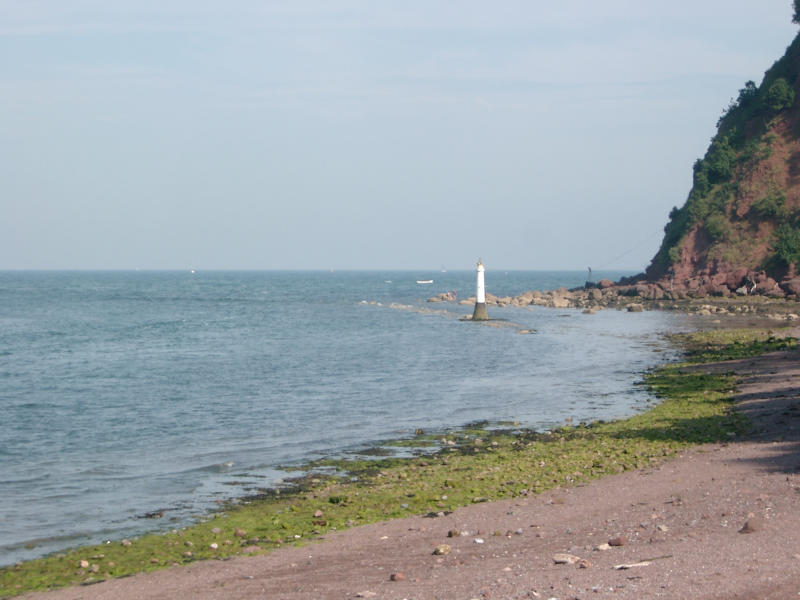
Teignmouth lighthouse is a lighthouse situated on the south end of the Den promenade at Teignmouth, Devon, England. It is paired with a red polycarbonate leading light at Powderham Terrace behind the lighthouse. It has been a Grade II listed building since 1949. The entrance to the River Teign has dangerous currents, rocks and shifting sands, posing a danger to vessels and thus was deemed to require a navigational aid. Under the Harbour Commissioners, planning for the lighthouse commenced in the early 1840s. The limestone lighthouse tower was built in 1844–1845 and came into service in 1845. It was lit by three gas burners, with reflectors, and showed a fixed red light (with a range of 7 nautical miles) to guide ships to the mouth of the harbour. The lighthouse is currently maintained by the Harbour Master and continues to guide vessels through the channel's sand bars into the harbour. The Philip Lucette Beacon off Marine Parade on the Shaldon side of the harbour mouth on the river Teign. The lamp on top of this 15 foot high beacon is an all round red occulting light, with a 6 second pattern (5 secs on 1 sec off). It marks the dredged channel when lined up with a red beacon. At the entrance to the harbour is a green lattice steel tower called Point Light, displaying an occulting green light.Whiteford Lighthouse
Whiteford Lighthouse stands on Whiteford Point, on the Gower Peninsula in Wales, overlooking Burry Inlet. It’s quiet, eerie, loaded with history and one of those places that feels half-forgotten, like it’s slowly being taken back by the sea - a relic of industrial maritime Britain. Completely isolated (no road, no causeway), reachable only by walking across the sands at low tide. It is surrounded by mudflats, salt marsh and shifting channels That isolation is a big part of its mystique - and its danger. Built in 1865, its purpose was to warn ships away from the dangerous sandbanks at the mouth of the River Loughor. The area was vital for Coal shipping, Copper and tin industries and with trade moving in and out of Swansea and Llanelli. The sands here move constantly and shipwrecks were common. Whiteford Lighthouse is one of the last surviving cast-iron lighthouses in Britain. • Made of prefabricated cast-iron plates • Bolted together on site • Squat and cylindrical rather than tall and elegant • Originally painted white (hence the name) It looks industrial, practical, and slightly alien - very Victorian engineering. The light was powered by oil lamps and no lighthouse keeper lived there. It was unmanned and serviced only occasionally and later replaced by more modern navigation aids It was finally decommissioned in 1920 and is a Grade II listed structure.


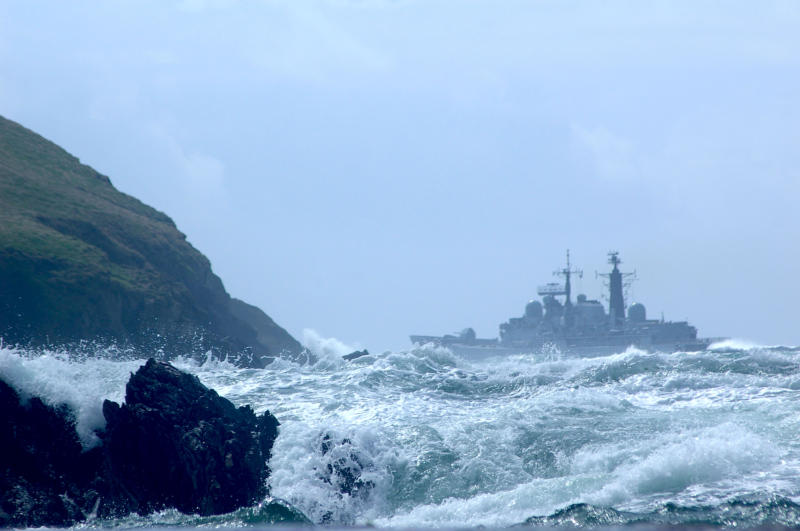









There are around 7,000 islands around the British Isles and with a coastline of over 11,000 miles at high tide, a huge danger to shipping. The United
Kingdom has more than 60 lighthouses dotted around the country to help maintain the safety of seafarers.
Lighthouses














 Pubs
Pubs Open Map in New Window
 England
 Scotland
 Wales
Wales Ireland
 County Map
 About Britain
 Pubs
Pubs British Beer
 Perfect Pint
 Beer Glasses
 The Barren Years
 Real Fires
 Breweries
 Brewing
 British Food
 Recipes
 Pub Interiors
 Dog Friendly
 Pub Games
 Strange Pub Names
 Visitor Information
 Oldest Pub
 Pub Signs
 Micropubs
 Buildings
 Cathedrals
 Stately Homes
 Castles
 Listed Buildings
 Scheduled Monuments
 Oak Framing
 Architecture
 Thatching
 Waterways
 Sailing
 Shipbuilding
 Boatbuilding
  Shipping Forecast
 Britain's Coastline
 Coastal Locations
 Piers
Piers Lighthouses
 Harbours
 Beach Safety
 British Beaches
 Canals
 Rivers
 Islands
 Lakes
Lakes Waterfalls
 Historical
 Famous People
 Kings & Queens
 Kings of England
 History of Britain
 Industrial Revolution
 Act of Union
 Beaufort Scale
 British Firsts
 World Heritage Sites
 Historical Periods
 Historical Boundaries
 Tradition & Culture
 Morris Dancing
 Film & Television
 Television
 Calendar of Events
 British Sport
 Scottish Highlands
 Money
Money Dry Stone Walling
 British Wildlife
 Class System
 Geographical
 Pub Boundaries
 Facts 'n' Figures
 British Isles
 Other Areas
 Place Name Origins
 Topography
 Suggest an Inn
 Explanation of symbols
 Why Us?
 Places to Visit
 Long Distance Paths
 National Parks
 Areas of Outstanding Natural Beauty
 Coastal Locations
 Other areas of Britain
 Maps
Maps Our Favourite Locations
 Search
 Focus On...
 News
News Contact
 About Us
 Our History
 Donate