Like Boats and Ships, there are subtle differences between sailing and
Yachting.
There is no standard definition, but sailing vessels that have a cabin with
amenities that accommodate overnight use would usually be called a
yacht.
A sailing boat is generally smaller than a yacht but, however there are
small yachts and big sailboats. All sailing boats have a sail although
yachts can also have sails.
Some sailing boats have motors but these are very much the secondary
means of propulsion which are generally used for manoeuvring around a
harbour or marina - although on days when there is no wind, many small
engines have been used to trundle along whilst those on board sup a
beer or gin & tonic.
The history of sailing is a tale of human ingenuity, exploration, and
adventure that spans thousands of years.
Whilst the British can’t claim to have invented sailing, they were
responsible for turning sailing into a sport and the Royal Cork Yacht Club in Ireland is the oldest yacht club in the world, established in 1720.
Due to the huge tidal range in the UK, Britain and particularly the south coast offers some of the best sailing in the world.
Ancient Civilizations
Prehistoric Era:
The earliest known use of sails dates back to prehistoric times, with evidence suggesting that early humans used simple rafts or dugout canoes equipped with animal skins or woven reeds as sails to harness wind power.Ancient Egypt:
Around 3000 BCE, the Egyptians developed sailing vessels for transportation and trade along the Nile River. These early boats had square sails made of woven papyrus or linen.Phoenicians:
Between 1200 and 800 BCE, the Phoenicians, a seafaring people from the eastern Mediterranean, advanced sailing technology. They developed the first long-distance trading ships and were known for their navigational skills, exploring and trading across the Mediterranean and beyond.Classical Antiquity
Ancient Greece and Rome:
The Greeks and Romans further refined sailing techniques and ship design. Greek triremes and Roman galleys, with their oar and sail combinations, became formidable naval vessels. The Greeks used sails for both trade and warfare, while the Romans expanded their naval fleet for empire building.China:
Around the same period, Chinese civilizations were also making significant advancements in sailing. The Chinese junk, with its unique battened sails, became an important vessel for trade and exploration along rivers and coastal waters.Middle Ages
Viking Age:
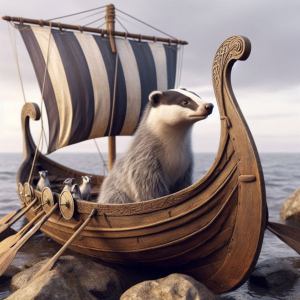
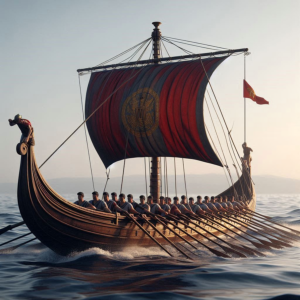
From the 8th to the 11th century, the Vikings from Scandinavia were renowned for their longships. These vessels, with their square sails and clinker-built hulls, enabled the Vikings to explore, trade, and raid across Europe, reaching as far as North America.Arab and Indian Ocean Traders:
Arab traders developed the lateen sail, a triangular sail that allowed for better manoeuvrability and sailing against the wind. This innovation greatly influenced the design of ships used by traders in the Indian Ocean, enabling extensive trade routes between Africa, the Middle East, India, and Southeast Asia.Age of Exploration (15th - 17th Centuries)
European Exploration:
The 15th century marked the beginning of the Age of Exploration, driven by European powers like Britain, Portugal and Spain. Navigators such as Christopher Columbus, Vasco da Gama, and Ferdinand Magellan embarked on voyages that opened up new trade routes and led to the discovery of the Americas, the sea route to India, and the circumnavigation of the globe. Although many think it was Columbus that discovered America, it wasn't. The Americas were actually named after the Italian, Amerigo Vespucci who claimed to have discovered Native Americans in 1497 although he didn't claim this until 1504. In 1497 John Cabot under the commission of Henry VII, King of England is the earliest known European exploration of coastal North America since the Norse visits. He set sail aboard the Mathew from Bristol and landed in Newfoundland. Christopher Columbus did find Cuba & Haiti in 1492 but returned without seeing the American mainland. He finally set foot in South America on the 1st August 1498 in Venezuela on his third voyage.Caravels and Galleons:
The development of the caravel, with its combination of square and lateen sails, allowed for long-distance ocean voyages. The larger and more heavily armed galleons became the primary ships for exploration and trade during this period.18th and 19th Centuries
Golden Age of Sail:
The 18th and early 19th centuries are often referred to as the Golden Age of Sail. This period saw the dominance of sailing ships in global trade, exploration, and naval warfare. Ships like the British East Indiaman and the American clipper ship were known for their speed and cargo capacity.•
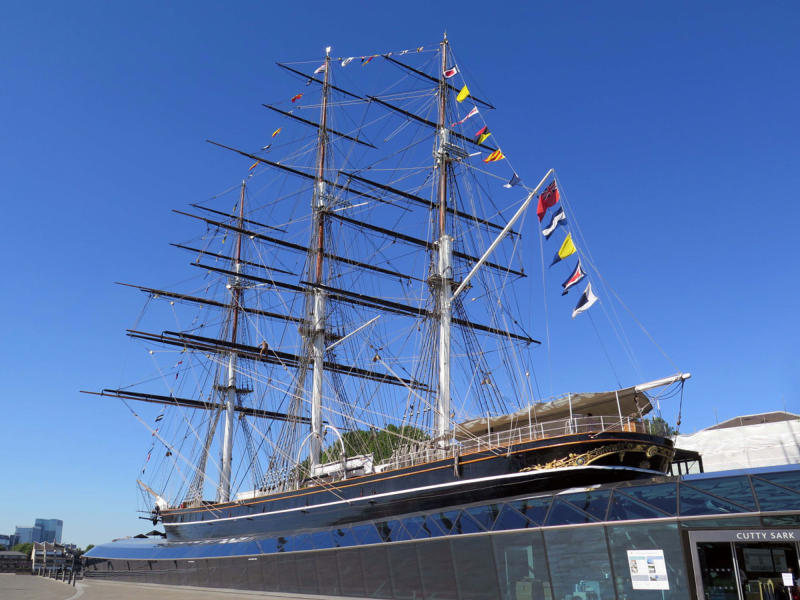
The Cutty Sark
Built in 1869 in Dumbarton, Scotland, by the shipbuilding firm Scott & Linton. The ship was designed by Hercules Linton, who was a partner in the firm. The name "Cutty Sark" comes from the poem "Tam o' Shanter" by Robert Burns, in which the character Nannie the witch is described as wearing a short nightdress, known in Scots as a "cutty sark." The Cutty Sark is a composite construction of wood planking on an iron frame. It measures 212 feet in length, with a beam of 36 feet and a draught of 21 feet. The ship's design aimed to optimize speed, making it one of the fastest clippers of its time.•
Tea Trade
The Cutty Sark was initially built for the China tea trade. At that time, the first ship to bring the new season's tea from China to Britain fetched the highest prices, creating fierce competition among shipowners. The ship's maiden voyage began in February 1870, under the command of Captain George Moodie. It sailed to Shanghai and returned with a cargo of tea. The Cutty Sark competed in the tea trade against other fast clippers, including the Thermopylae. Although it never won the coveted title of the fastest tea clipper to bring the first cargo of the season, it made several notable voyages.•
Transition to Wool Trade
With the opening of the Suez Canal in 1869, steamships began to dominate the tea trade because they could take the shorter route through the canal, which was not suitable for sailing ships due to its length and the lack of favourable winds. In the 1880s, the Cutty Sark was switched to the Australian wool trade. Under the command of Captain Richard Woodget, the ship established a reputation for speed, making the journey from Australia to England in as little as 73 days. This period marked some of the ship's most successful years.•
Later Years and Preservation
By the end of the 19th century, steamships had largely replaced sailing ships for most commercial purposes. The Cutty Sark continued to operate under various owners and in different roles, including serving as a training ship for cadets. In 1922, the Cutty Sark was purchased by Captain Wilfred Dowman, who recognised its historical significance and began restoration efforts. Upon his death, the ship was transferred to the Thames Nautical Training College at Greenhithe. In 1954, the Cutty Sark was moved to a specially constructed dry dock in Greenwich, London, where it became a museum ship open to the public. It has since become a popular tourist attraction and a symbol of Britain's maritime heritage.Naval Warfare:
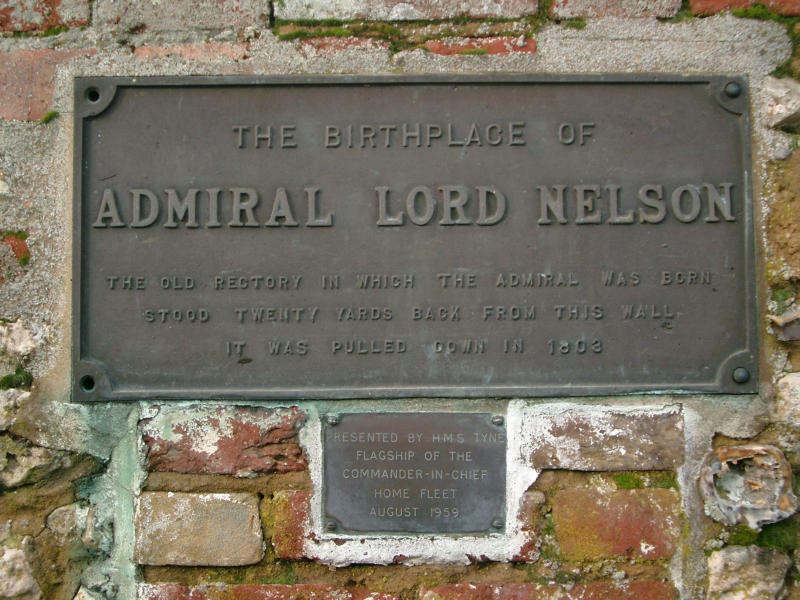
Sailing warships, such as the British ships of the line, played a crucial role in naval battles and the establishment of empires. The Battle of Trafalgar (1805) is a notable example where Admiral Nelson's fleet achieved a decisive victory using tactical sailing manoeuvrers. A force of 27 British ships of the line faced 33 French and Spanish ships. Three of Nelson’s ships were built at the fabulous Bucklers Hard in Hampshire.HMS Victory
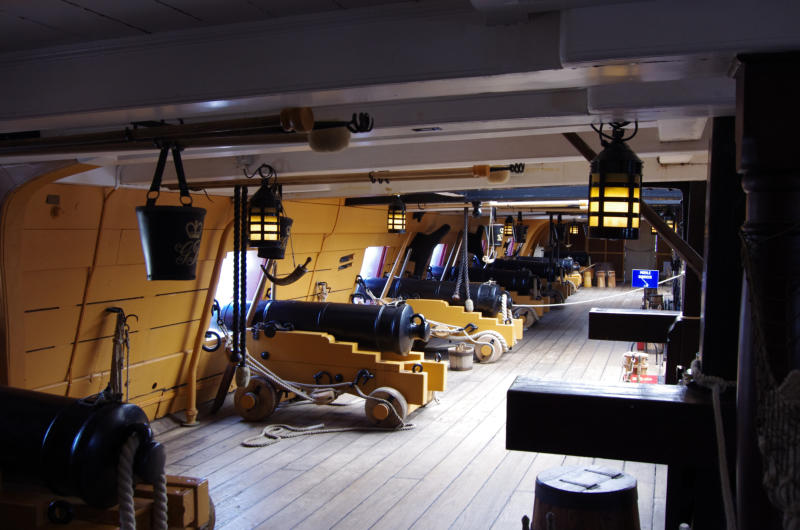
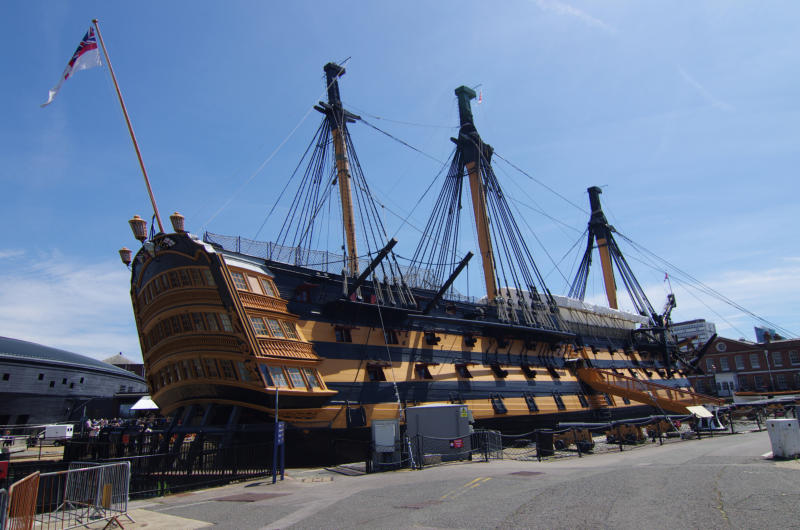
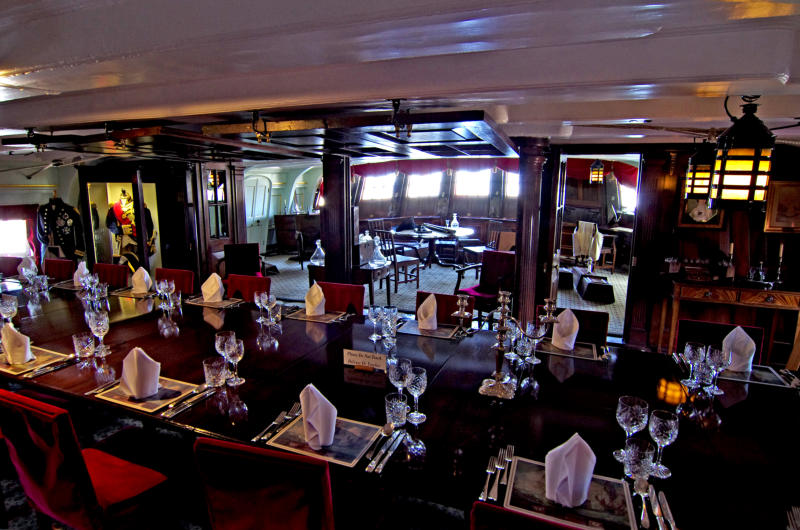
An historic ship of the Royal Navy, most famous for her role as Admiral Lord Nelson's flagship at the Battle of Trafalgar in 1805.History and Construction
• Laid Down: 1759 • Launched: 1765 • Commissioned: 1778 • Builder: Chatham Dockyard, EnglandSpecifications
• Type: First-rate ship of the line • Displacement: Approximately 3,500 tons • Length: 227 feet (69 metres) • Beam: 50 feet (15 metres) • Draft: 28 feet (8.5 metres) • Armament: 104 guns • Crew: Around 850 men HMS Victory played a crucial role in the British victory over the combined fleets of France and Spain. It was during this battle that Admiral Nelson was fatally wounded. Victory also served in the American War of Independence, the French Revolutionary War, and the Napoleonic Wars. HMS Victory is preserved as a museum ship at Portsmouth Historic Dockyard in England. She remains the world's oldest naval ship still in commission, although she is no longer seaworthy.Transition to Steam and Modern Sailing (19th - 20th Centuries)
Steam Power:
The advent of steam-powered ships in the 19th century marked the decline of commercial sailing vessels. However, sailing remained important for recreational purposes and competitive sport.Yachting:
The 19th century also saw the rise of yachting as a leisure activity among the wealthy. The formation of yacht clubs and the establishment of prestigious races like the America's Cup in 1851 fostered competitive sailing.20th and 21st Centuries
Technological Advancements:
The 20th century brought significant advancements in sailboat design and materials. The introduction of fibreglass hulls, synthetic sails, and advanced rigging systems improved the performance and safety of sailboats.Recreational Sailing:
Sailing became increasingly accessible to the general public. Sailing schools, charter companies, and the production of affordable sailboats contributed to the popularity of recreational sailing.Competitive Sailing:
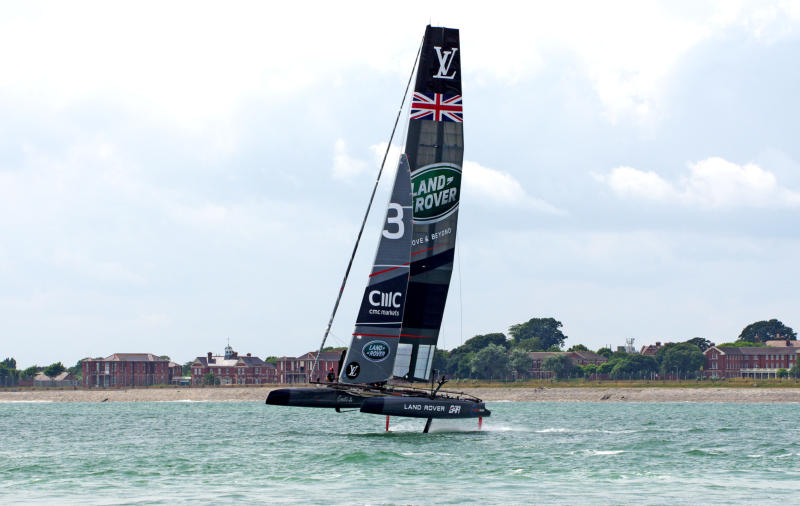
Modern sailing competitions, such as the Olympics, America's Cup, and the Volvo Ocean Race, attract global participation and spectatorship. Innovations in sailing technology and techniques continue to push the boundaries of the sport.Yachting
Yachting, which refers to the use of recreational boats and yachts, has a rich history that dates back centuries.Early Beginnings
Ancient Times:
The concept of using boats for pleasure rather than solely for transportation or commerce can be traced back to ancient civilizations. The Egyptians, Greeks, and Romans all enjoyed boat trips along rivers and coastal waters.17th Century
Dutch Influence:
The modern history of yachting began in the 17th century in the Netherlands. The word "yacht" comes from the Dutch word "jacht," meaning "hunt" or "chase." Wealthy Dutch merchants and nobles used yachts for pleasure cruises and as symbols of status.Royal Adoption:
In 1660, King Charles II of England was gifted a yacht named Mary by the Dutch. This event popularised yachting among the English aristocracy, who began commissioning their own yachts.18th and 19th Centuries
Growth in Popularity:
Yachting became increasingly popular among the wealthy elite in Europe. In England, the formation of the Royal Cork Yacht Club in 1720, which is considered the oldest yacht club in the world, marked the formalization of yachting as a recreational activity.Technological Advances:
The 19th century saw significant advancements in yacht design and construction, with the introduction of new materials and techniques. The invention of the steam engine also led to the creation of steam yachts.19th Century: Yachting Clubs and Races
First Yacht Clubs:
In addition to the Royal Cork Yacht Club, other notable clubs such as the Royal Yacht Squadron (1815) in England, the Royal London Yacht Club (1838) in Cowes and the New York Yacht Club (1844) in the United States were established, further institutionalizing the sport.America's Cup:
In 1851, the schooner America won a race around the Isle of Wight against British yachts, leading to the establishment of the America's Cup. This event became one of the most prestigious sailing competitions in the world.20th Century
Technological Innovation:
The 20th century brought further advancements in yacht design, including the use of lighter and stronger materials such as fibreglass, aluminium, and composite materials. The introduction of GPS and other electronic navigation tools revolutionised yachting.Recreational Boating:
Post-World War II economic prosperity led to a boom in recreational boating. More people could afford yachts and powerboats, making yachting a popular leisure activity for the middle class.Motor Yachts:
The development and improvement of marine engines led to the rise of motor yachts, which became popular for both leisure and competitive racing.21st Century
Luxury Yachts:
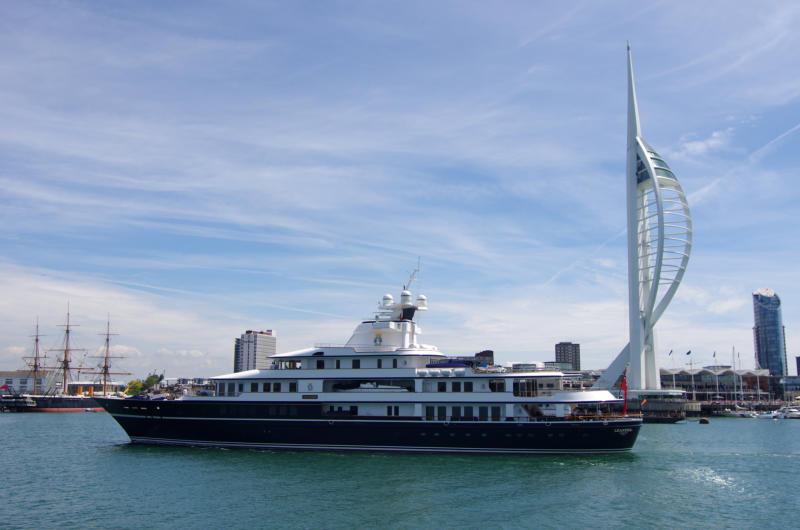
The modern era has seen the rise of superyachts and megayachts, which are often equipped with luxurious amenities such as swimming pools, helipads, and elaborate entertainment systems. These vessels are typically owned by the ultra-wealthy.Environmental Concerns:
There is an increasing focus on sustainability and environmental impact within the yachting industry. Innovations in green technologies, such as electric propulsion systems and eco-friendly materials, are becoming more prevalent.Global Competitions:
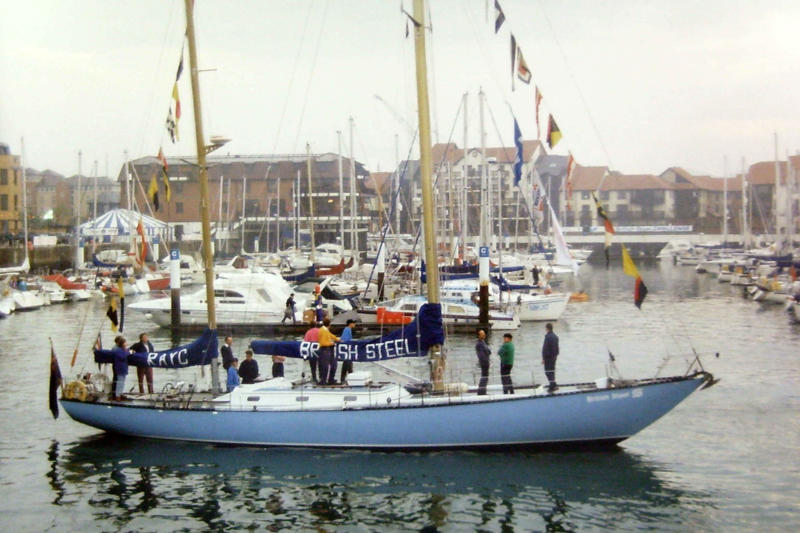
Yachting continues to be a competitive sport with global appeal. Events like the America's Cup, the Volvo Ocean Race, and the Sydney to Hobart Yacht Race draw participants and spectators from around the world. The America’s cup is the oldest international competition still operating in any sport. It was first raced for on 22 August 1851 around the Isle of Wight off Southampton and Portsmouth in Hampshire, in a fleet race between the New York Yacht Club's America and 15 yachts of the Royal Yacht Squadron. The race was witnessed by Queen Victoria and the future Edward VII The Global Challenge was a round the world yacht race run by Challenge Business, the company started by Sir Chay Blyth in 1989. It was held every four years, and took a fleet of one-design steel yachts, crewed by ordinary men and women who have paid to take part, round Cape Horn and through the Southern Ocean where winds can reach 70 kn (130 km/h). It was unique in that the race took the west about route around the world against prevailing winds and currents – often referred to as the ‘wrong way’ route. The route of the race covered a distance of some 29,000 nmi (54,000 km). It changed to accommodate different ports of call, but in 2004/5 started from Portsmouth (UK) and stopped at Buenos Aires (ARG), Wellington (NZ), Sydney (AUS), Cape Town (SA), Boston (USA) and La Rochelle (FRA) before returning again to Portsmouth. The event claimed the motto “The World’s Toughest Yacht Race” and was the ultimate sailing challenge for amateur sailors. The Ocean Race is a yacht race around the world, held every three or four years since 1973. Originally named the Whitbread Round the World Race. The Fastnet Race is a biennial offshore yacht race organised by the Royal Ocean Racing Club (RORC) of the United Kingdom with the assistance of the Royal Yacht Squadron in Cowes and the City of Cherbourg in France. The race is named after the Fastnet Rock off southern Ireland, which the race course rounds. Along with Sydney to Hobart Yacht Race and the Newport-Bermuda Race, it is considered one of the classic big offshore races testing both inshore and offshore skills, boat and crew preparation and speed potential. Overall, yachting has evolved from a pastime of the elite to a diverse activity enjoyed by a wide range of enthusiasts, from competitive sailors to luxury travellers. The blend of tradition, innovation, and luxury continues to shape the future of yachting.


Sailing & Yachting
 Pubs
Pubs Open Map in New Window
 England
 Scotland
 Wales
Wales Ireland
 County Map
 About Britain
 Pubs
Pubs British Beer
 Perfect Pint
 Beer Glasses
 The Barren Years
 Real Fires
 Breweries
 Brewing
 British Food
 Recipes
 Pub Interiors
 Dog Friendly
 Pub Games
 Strange Pub Names
 Visitor Information
 Oldest Pub
 Pub Signs
 Micropubs
 Buildings
 Cathedrals
 Stately Homes
 Castles
 Listed Buildings
 Scheduled Monuments
 Oak Framing
 Architecture
 Thatching
 Waterways
 Sailing
 Shipbuilding
 Boatbuilding
  Shipping Forecast
 Britain's Coastline
 Coastal Locations
 Piers
Piers Lighthouses
 Harbours
 Beach Safety
 British Beaches
 Canals
 Rivers
 Islands
 Lakes
Lakes Waterfalls
 Historical
 Famous People
 Kings & Queens
 Kings of England
 History of Britain
 Industrial Revolution
 Act of Union
 Beaufort Scale
 British Firsts
 World Heritage Sites
 Historical Periods
 Historical Boundaries
 Tradition & Culture
 Morris Dancing
 Film & Television
 Television
 Calendar of Events
 British Sport
 Scottish Highlands
 Money
Money Dry Stone Walling
 British Wildlife
 Class System
 Geographical
 Pub Boundaries
 Facts 'n' Figures
 British Isles
 Other Areas
 Place Name Origins
 Topography
 Suggest an Inn
 Explanation of symbols
 Why Us?
 Places to Visit
 Long Distance Paths
 National Parks
 Areas of Outstanding Natural Beauty
 Coastal Locations
 Other areas of Britain
 Maps
Maps Our Favourite Locations
 Search
 Focus On...
 News
News Contact
 About Us
 Our History
 Donate