The Castles , Cathedrals and Stately Homes of the United Kingdom punctuate the landscape reflecting the lifestyles of kings and noblemen of the
past. Many of these buildings are open to the public.
Castles
Some have even been converted into hotels and nothing is better than
spending a night in a stately room or even in the case of St. Briavels
Castle in the Wye Valley in Gloucestershire - the Castle jail.
St. Briavels castle provides accommodation and is open to the public
but is actually used by the Youth Hostel Association of England &
Wales so the accommodation is very basic. In some ways this gives a
more realistic idea of what life might have been like at the time of the
Castle's peak importance.
If an inn is close to a castle we will award a shield symbol within that inns entry. There are
hundreds of castles in the United Kingdom and all are worth visiting. We cannot list them all
here, but we would certainly recommend a visit to any that we do list and probably most that we don't.
Castles with accommodation include:
England
Amberley Castle - West Sussex, Caverswall Castle - Staffordshire, Langley Castle - Northumberland, Lumley Castle - Northumberland, Taunton Castle -
Somerset and Thornbury Castle - Gloucestershire.
Scotland
Brothwick Castle - Lothian, Comlongon Castle - Dumfries, Culcreuch Castle - Central, Dalhousie Castle - Lothian, Dornoch Castle - Highland, Duns Castle -
Borders, Fernie Castle - Fife and Kilravock Castle - Highland.
Wales
Gwydir Castle - Gwynedd, Penhow Castle - Gwent, Ruthin Castle - Clwyd and Brecon Castle - Powys.
A castle is a fortified building or group of buildings, characteristic of medieval Europe. The castle underwent many changes, its size, design, and construction
being largely determined by changes in siege tactics and the development of artillery.
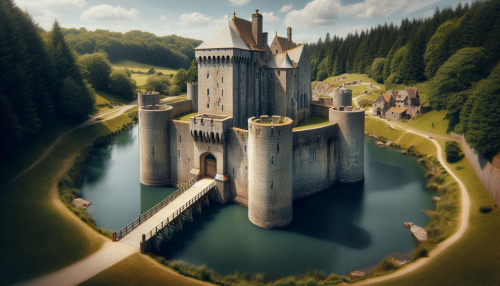
The main parts of a typical castle are the keep, a large central tower containing store rooms, soldiers' quarters, and a hall for the lord and his family; the inner
bailey or walled courtyard surrounding the keep; the outer bailey or second courtyard, separated from the inner bailey by a wall; crenellated embattlements
through which missiles were discharged against an attacking enemy; rectangular or round towers projecting from the walls; the portcullis, a heavy grating
which could be let down to close the main gate; and the drawbridge crossing the ditch or moat surrounding the castle. Sometimes a tower called a barbican
was constructed over a gateway as an additional defensive measure.
The British Isles has a wide variety of castles from the tiny such as
Lindisfarne in Northumberland, England to the huge such as the
Great Windsor Castle in Berkshire, England - from the almost
completely demolished such as Corfe Castle in Dorset, England to
the superbly elegant such as Caernarfon in Gwynedd, Wales.
Scotland has some of the most elegant architectural castles and
often in the most stunning of locations.
Castles became more of a feature of the landscape in Anglo Saxon
times after the Romans had withdrawn from Britain in 410. Many
were built to repel the Saxons, Angles and Jutes in the 5th & 6th
centuries and then the Vikings in the 8th & 9th centuries.
•
11th century
o
The motte and bailey castle (the motte was a mound of
earth, and the bailey a courtyard enclosed by a wall).
o
The first rectangular keep dates from this time; an example
is the White Tower in the Tower of London.
•
12th century
o
Developed more substantial defensive systems, based in part on the Crusaders' experiences of sieges during the First Crusade of 1096; the first
curtain walls with projecting towers were built (as at Framlingham, Suffolk).
•
13th century
o
Introduction of the round tower, both for curtain walls such
as Pembroke Castle in Wales and for keeps such as
Conisbrough in Yorkshire. Concentric planning in the castles
of Wales, such as Beaumaris and Harlech and fortified town
walls.
•
14th century
o
First use of gunpowder; inclusion of gunports in curtain walls
such as Bodiam in Sussex.
•
15th century
o
Fortified manor houses now adequate for private dwelling.
•
16th century
o
End of castle as a practical means of defence; fortified
coastal defences, however, continued to be built such as
Falmouth in Cornwall.
Many of these castles are also close to historic battlefields although
there’s usually a lot more to see at the castle than the battle grounds.
Acton Burnell Castle is a 13th-century fortified manor house located in the village of Acton Burnell,
Shropshire, England. Built between 1284 and 1293 by Robert Burnell, Bishop of Bath and Wells and
Lord Chancellor to King Edward I, the castle served as both a residence and a symbol of Burnell's
prominence. Constructed from red sandstone, the structure features a rectangular layout with corner
towers and large first-floor windows, suggesting it was designed more for comfort and status than for
defence.
Acton Burnell Castle holds a notable place in English history due to its association with early
parliamentary developments. In 1283, a Parliament was convened here by King Edward I, which is
believed to be the first at which the Commons were fully represented. This assembly led to the
enactment of the Statute of Acton Burnell, providing protections for creditors and reflecting the growing
importance of commerce in medieval England.
After Robert Burnell's death in 1292, the castle remained in his family's possession but gradually fell
into disuse. By the early 15th century, it was abandoned, and a new residence, Acton Burnell Hall, was constructed nearby. Today, only the outer shell of the
manor house and the gable ends of the adjacent barn remain.
Alnwick Castle, an 11th-century castle, near England's border with Scotland which has been the historic seat of the Percy family, dukes of Northumberland,
since 1309. It was the site of battles 1092 and 1174 following Scottish invasions of Northumberland. The castle was much restored in the 19th century and is
the second largest inhabited castle in England.
Arundel Castle, the seat of the Fitzalan-Howard family, Dukes of Norfolk, was built in 1067 by the cousin of William the Conqueror, Roger Montgomery, to
defend the Arun valley; its large stone keep dates from the 12th century. During the English Civil War the castle was besieged from 1643 to 1644 and almost
ruined by Oliver Cromwell's Parliamentary troops. It was rebuilt in the 18th century and much restoration work was carried out in 1890.
The church of St Nicholas, dating from 1380, has a pre-Reformation pulpit and 14th-century wall paintings. The 14th-century Fitzalan Chapel stands behind
the altar, separated from the rest of the church by an iron grille and glass screen. Catholic services are held in the chapel, which belongs to the estate of the
Duke of Norfolk and can be entered from the castle.
Aydon Castle, a fascinating site in Northumberland, England, near the town of Corbridge. Despite its name, it’s not a grand fortress like Alnwick or
Bamburgh, but rather a fortified manor house - one of the best preserved in England.
It was begun around 1296 by Robert de Reymes, a wealthy merchant from Suffolk who acquired the land. He originally built it as a comfortable manor house,
not a military stronghold.
With the outbreak of Anglo-Scottish wars at the end of the 13th century, he quickly had to strengthen it. By 1305, it had a curtain wall, battlements, and
defensive features, making it resemble a castle. Built of local stone, perched dramatically above the Cor Burn (a stream) and by the 17th century, it was
being used as a farmhouse, which helped preserve it rather than seeing it dismantled.
Bamburgh Castle in the village of Bamburgh on the coast of Northumberland, England is built on a
rock which rises 46 m / 151 ft above the North Sea.
Founded in the 6th century and rebuilt in Norman times, the castle underwent extensive restoration in
the 18th and 19th centuries. An imposing structure of red sandstone - is open to the public.
According to the Anglo-Saxon Chronicle, Ida, the first king of Northumbria, built a fort in Bamburgh in
547. The great stone keep was first built during the Norman period. In 1095 Robert Mowbray, Earl of
Northumberland, was forced to surrender Bamburgh to William Rufus after a siege. Bamburgh was the
scene of many battles in the Border wars of the 14th century; during the Wars of the Roses it changed
hands several times. Henry VI ruled briefly from Bamburgh, but after the Battle of Hexham in 1464 the
castle was besieged and fell after a bombardment.
It was the first English castle to fall to artillery. The castle was held for over a century by the Forster
family, until it was bought by Lord Crewe in 1704. On his death the estate was devoted to charity, and
large-scale restoration was carried out. In 1894 the first Lord Armstrong of Cragside bought the castle
and rebuilt it for private use.
Beaumaris town and tourist resort on the Isle of Anglesey, north-west Wales is home to Beaumaris
Castle, one of the finest European examples of the concentric type. Founded by Edward I in 1295, and
is classified by the United Nations as a World Heritage site.
Belvoir Castle near Bottesford, Leicestershire,
England originally dates from the 11th century,
but has been rebuilt several times. The castle
has an important art collection which includes
works by Holbein, Poussin, Reynolds and
Gainsborough.
The original fortress of 11th to 13th centuries was rebuilt in 1528 when the present owners, the
Manners family, acquired the property.
In 1654-58 it was rebuilt again as a mansion. Around 1800 the 5th duke employed James Wyatt to
reconvert it to a castle, altering the apartments at the same time.
A fire in 1816 necessitated further rebuilding by Wyatt's sons (Benjamin Dean Wyatt 1775-1855; and
Matthew Cotes Wyatt 1777-1862), supervised by the duchess and a relative, the Rev John Thoroton.
The rebuilding included interior decoration of the principle rooms of the castle and the construction of a Romanesque-style mausoleum in the castle grounds
(1820-30). The present castle is thus a handsome neo Gothic structure with interiors of various styles.
Belvoir Castle is the seat of the Duke of Rutland.
Bodiam Castle in East Sussex, England is situated 10 miles north of Hastings, on the River Rother. It
was built by Sir Edward Dalyngruge in 1385, and was one of the last castles to be constructed in
England. The towers, walls, gateway, portcullis, and moat of this large rectangular castle remain intact,
although the interior is less well -preserved. The castle, attractively set in a large moat, now belongs to
the National Trust.
Bodiam Castle was restored by Lord Curzon of Kedleston and left by him to the nation in 1925.
Caerlaverock Castle is a ruined triangular fortification in Dumfries and Galloway, Scotland, on the
Solway Firth, 6 miles south-east of Dumfries. Dating from the 13th century, the castle contains some
fine 17th-century Renaissance buildings. One of the finest castles in Scotland, Caerlaverock Castle is
surrounded by moats.
Caernarfon or Caernarvon, is one of the most impressive and historically significant castles in Wales -
and indeed in all of the British Isles. Located in Caernarfon, Gwynedd, it was constructed by King
Edward I as part of his campaign to conquer and control Wales in the late 13th century.
Built beginning in 1283, Caernarfon Castle was intended not just as a military stronghold, but also as a
symbol of English dominance over Wales. The architect was Master James of St. George, a Savoyard
expert in castle design.
The castle’s distinctive polygonal towers and banded coloured stone were influenced by the walls of
Constantinople, suggesting Edward's imperial ambitions. Unlike many concentric castles, Caernarfon’s
design was also political and symbolic.
Together with Conwy, Harlech, and Beaumaris castles, Caernarfon is part of the “Castles and Town
Walls of King Edward in Gwynedd” World Heritage Site (designated in 1986).
Caernarfon Castle famously hosted the investiture of Prince Charles as Prince of Wales in 1969. The
original investiture of a Prince of Wales - Edward II, son of Edward I - is believed to have occurred here in 1301.
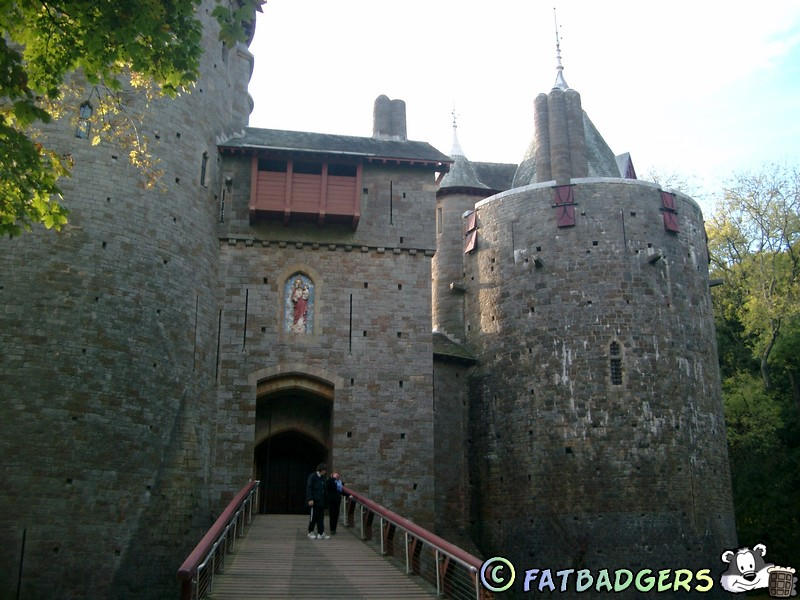
Castell Coch, meaning "Red Castle" in Welsh, is a striking 19th-century Gothic Revival castle nestled
above the village of Tongwynlais, just north of Cardiff. Its distinctive conical towers and richly
decorated interiors give it the appearance of a fairy-tale fortress, though its history spans centuries of
transformation and reinvention.
The first fortification on the site was likely a Norman motte built shortly after 1081 to secure the newly
conquered town of Cardiff and control the route along the River Taff.
Between 1267 and 1277, Gilbert de Clare, Lord of Glamorgan, constructed a new stone castle to
protect his lands. This structure was probably destroyed during the native Welsh rebellion of 1314.
In the 19th century, John Crichton-Stuart, the 3rd Marquess of Bute, commissioned architect William
Burges to reconstruct the castle as a summer residence. Burges's design, executed between 1875
and 1891, was a romantic interpretation of medieval architecture, complete with modern amenities like
central heating.
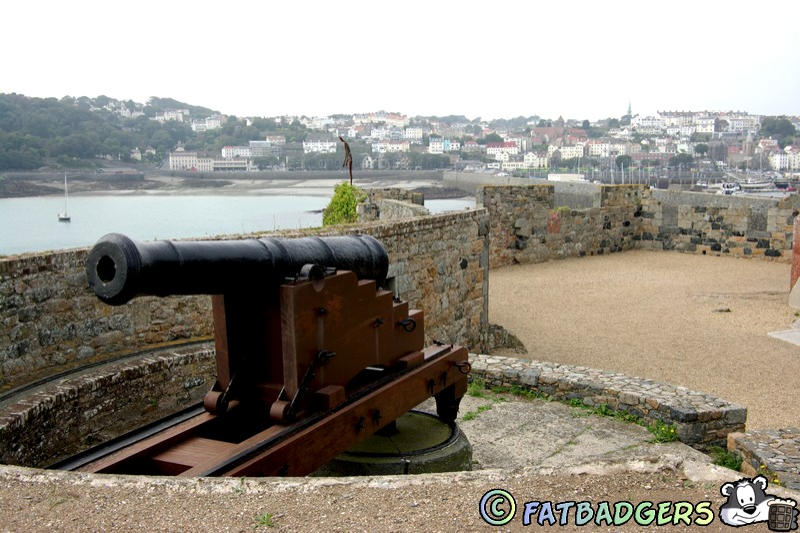
Castle Cornet is an historic island fortress located in St Peter Port, the capital of Guernsey in the
Channel Islands. It has a rich and varied history spanning over 800 years and serves as one of the
island’s most iconic landmarks.
Construction began around the 13th century, shortly after King John lost mainland Normandy to
France in 1204. The castle was meant to defend Guernsey against French invasion.
It was a royalist stronghold during the English Civil War (1642–1651), even after Guernsey had
declared for Parliament. The castle was used by the British military through the centuries, including
during World War II, when Guernsey was occupied by Nazi Germany.
Castell Cricieth is a striking ruined castle perched on a headland overlooking Cardigan Bay, in the
town of Criccieth, Gwynedd, North Wales. Though smaller and less imposing than Caernarfon, it offers
a uniquely layered history as a castle built by the Welsh and later adapted by the English.
Built in the 1230s by Llywelyn the Great (Llywelyn ap Iorwerth), Prince of Gwynedd and one of the few
castles of Welsh origin that still visibly stands today.
It was captured by Edward I of England in 1283, during his campaign to conquer Wales.
Modified and strengthened under English control, including the addition of a stone curtain wall and
gatehouse.
In 1404, during the rebellion of Owain Glyndŵr, the castle was burned and left in ruins by Welsh
forces, it was never rebuilt and has remained a ruin since the 15th century.
The D-shaped twin-towered gatehouse, characteristic of Edwardian castle design.
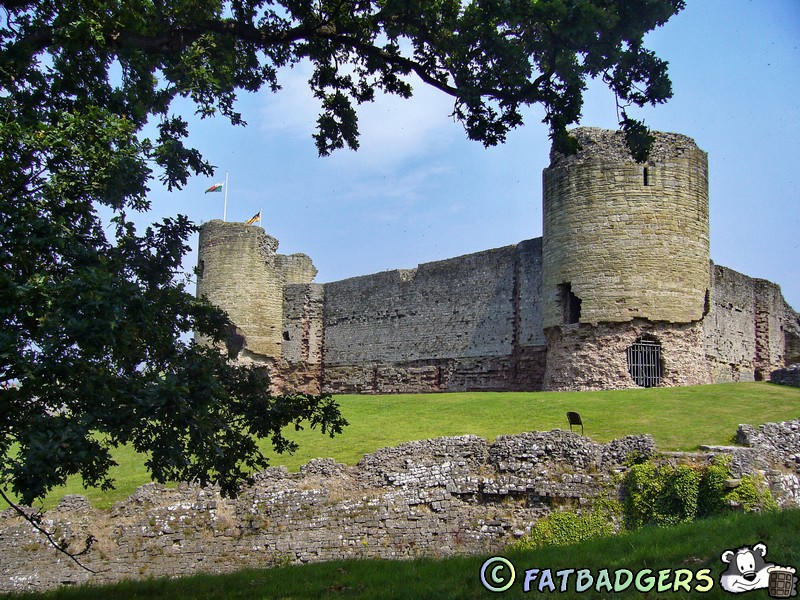
Castell Rhuddlan is a formidable late 13th-century fortress located in Denbighshire, North Wales,
beside the River Clwyd. Built by King Edward I of England during his conquest of Wales, it was part of
a sophisticated and deliberate system of castles designed to subdue and control the region.
Construction began in 1277, shortly after Edward I’s first Welsh campaign. It was overseen by the
famous military architect Master James of St. George, the same engineer responsible for Caernarfon,
Conwy, and Harlech Castles.
The River Clwyd was re-engineered to allow ships to deliver supplies directly to the castle - an
impressive feat of medieval engineering.
The Statute of Rhuddlan was issued here by Edward I. It laid out the administrative structure for the
governance of the newly conquered Wales, establishing English common law in the region.
The castle played a role in the Wars of the Roses and was later held by Royalists during the English
Civil War.
It was slighted (intentionally damaged) by Parliamentarian forces in 1648 to prevent future military use.
Castle Howard is not a medieval fortress - rather, it’s one of England’s grandest stately homes, often
mistaken for a true “castle” due to its name and grandeur. Located in North Yorkshire, Castle Howard
is a Baroque and Palladian masterpiece built in the late 17th and early 18th centuries.
Built between 1699 and 1811 for the Howard family, one of England’s oldest aristocratic dynasties. The
architect was Sir John Vanbrugh, in collaboration with Nicholas Hawksmoor. It was Vanbrugh's first
architectural project, though he later designed Blenheim Palace as well.
It was designed in English Baroque style, with later Palladian elements. and features a central dome,
long symmetrical wings, ornamental gardens, and a monumental landscape. Interiors include frescoed
ceilings, a grand central dome hall and a lavish Long Gallery.
It has featured prominently in film and TV, including:
•
Brideshead Revisited (1981 TV series and 2008 film)
•
Bridgerton (Netflix series)
It is often regarded as one of England’s most beautiful country houses.
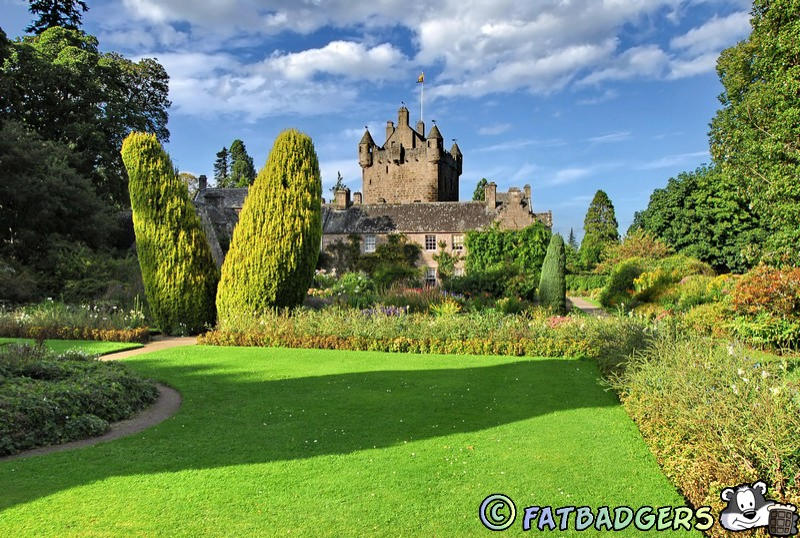
Cawdor Castle is a captivating blend of history, legend, and natural beauty, nestled in the Scottish
Highlands near Nairn. Though famously linked to Shakespeare's Macbeth, the castle's actual history is
distinct and equally intriguing.
Construction of Cawdor Castle began around 1380, with the earliest documented reference in 1454
when William Calder, 6th Thane of Cawdor, received a license to fortify the site. A local legend tells of
a donkey carrying gold that lay down beneath a holly tree, indicating where the castle should be built.
Remarkably, the petrified remains of this tree can still be seen in the castle's lowest level.
In the 16th century, the castle passed to the Campbell family through the marriage of heiress Muriel
Calder to Sir John Campbell of Muckairn. The Campbells have maintained ownership ever since, with
the Dowager Countess Angelika Campbell currently residing there.
While Macbeth features the title "Thane of Cawdor," the play's association with the castle is more
fictional than factual. The real King Macbeth lived in the 11th century, whereas Cawdor Castle was
constructed several centuries later. The title "Thane of Cawdor" was likely a literary invention, and the castle itself is not mentioned in the play.
Castle Leod is a captivating historic castle nestled near Strathpeffer in the Scottish Highlands. As the
ancestral seat of Clan Mackenzie, it boasts over 500 years of continuous family residence, making it
one of Scotland's most authentic and atmospheric castles. Its rich tapestry of history, architecture, and
natural beauty offers visitors a unique glimpse into Scotland's storied past.
The origins of Castle Leod trace back to a Pictish fort, later replaced by a Norse stronghold in the 11th
century. The existing L-plan tower house, constructed from red sandstone, dates to the late 15th
century and was expanded in the early 17th century by Sir Roderick Mackenzie, known as the "Tutor
of Kintail."
Throughout its history, the castle has been intertwined with significant events, including the Jacobite
uprising of 1745, during which George Mackenzie, 3rd Earl of Cromartie, was convicted of high
treason. Despite periods of decline, the castle has remained under the stewardship of the Mackenzie
family, with the current resident being John Mackenzie, 5th Earl of Cromartie.
Chepstow Castle is a remarkable fortress perched atop limestone cliffs overlooking the River Wye in
Monmouthshire, South East Wales. Renowned as one of Britain's earliest stone-built Norman castles,
it offers a vivid chronicle of medieval military architecture and history spanning over 900 years.
Initiated in 1067 by William FitzOsbern, a close associate of William the Conqueror, Chepstow Castle
stands as one of the first Norman strongholds in Wales. Its strategic location facilitated control over the
River Wye and the surrounding region.
The castle underwent significant expansions under notable figures such as William Marshal, the 1st
Earl of Pembroke, who added the Great Hall and the pioneering twin-towered gatehouse - the first of
its kind in Britain.
During the English Civil War, Chepstow Castle was besieged twice. In 1645, it surrendered to
Parliamentarian forces, and in 1648, it endured a prolonged siege led by Oliver Cromwell, resulting in
substantial damage. Post-war, the castle served as a prison before falling into disuse by the late 17th
century .
Clun Castle is a ruined Norman fortress located in the small town of Clun, in Shropshire, England,
near the Welsh border. Though now a peaceful spot, it once stood as a crucial military outpost in the
turbulent Welsh Marches, the contested frontier between England and Wales.
Built shortly after the Norman Conquest (late 11th century), by Robert de Say, a Norman lord. It was
one of several marcher castles designed to control the borderlands. Clun Castle guarded a vital route
into Wales and was part of a network of defenses in a volatile region often embroiled in conflict. The
castle passed to the powerful FitzAlan family in the 12th century, who also held Arundel Castle. They
transformed Clun from a frontier fortification into a more comfortable lordly residence.
The most striking feature is the massive 13th-century stone keep, unusually built on a mound that
appears slightly separate from the main motte. It’s tall and rectangular, and although now partly
collapsed, it still commands the landscape. The castle is surrounded by deep ditches and
embankments that helped protect it from attack.
By the 16th century, Clun Castle had largely fallen into ruin. It was never significantly modernised and was abandoned as a residence.
Conisbrough Castle is a striking medieval fortress located in South Yorkshire, England, best known for its unique circular keep - one of the finest examples
in Europe. It stands above the town of Conisbrough, near Doncaster, and has a long and layered history stretching back to the Norman period.
The original motte-and-bailey structure was erected shortly after the Norman Conquest (late 11th century) by William de Warenne, a close ally of William the
Conqueror. Around 1180 - 1190, Hamelin Plantagenet (half-brother of Henry II and husband to Isabel de Warenne) rebuilt the castle in stone. He is
responsible for the distinctive cylindrical keep that defines the castle today. By the 16th century, the castle had fallen into disrepair. It was never a major
military fortress in later periods and was eventually left to decay, though it was never destroyed in battle.
Conisbrough Castle was immortalised in Sir Walter Scott’s 1819 novel Ivanhoe, where it appears as the fictional home of the Saxon noble Cedric.
Corfe Castle a village in the Isle of Purbeck, Dorset, built around the ruins of a Norman castle,
destroyed during the English Civil War.
The castle is situated on a high ridge, separated from the village by a ravine over which a bridge has
been built. It was built in the 11th century on the site of a Saxon stronghold where King Edward the
Martyr was murdered in 978.
It was captured by the Earl of Devonshire in the reign of Stephen, and during the English Civil War the
castle was a Royalist stronghold and the home of John Bankes, chief justice to Charles I. In 1643 his
wife defended it for six weeks against 600 Parliamentary troops, but the castle was finally captured
and largely destroyed in 1646.
Cow Tower is a distinctive medieval artillery tower situated on the banks of the River Wensum in
Norwich, Norfolk. Constructed between 1398 and 1399, it stands as one of England's earliest purpose-
built artillery blockhouses, reflecting the city's strategic response to the evolving nature of warfare
during the late 14th century.
In the late 14th century, Norwich faced potential threats from both foreign adversaries and internal
rebellions. To bolster the city's defences, Cow Tower was erected to oversee and protect the
northeastern approach to Norwich. Its primary function was to house gunpowder artillery, including
hand cannons and bombards, marking a significant shift in military architecture. The tower's elevated
position allowed for strategic firing across the river, deterring potential aggressors.
The name "Cow Tower" derives from "Cowholme," the name of the meadow on which it was built. Over
the centuries, the tower played various roles, including during Kett's Rebellion in 1549, when it
sustained damage from rebel artillery.
Dinefwr Castle is an historic Welsh castle located near the town of Llandeilo in Carmarthenshire,
Wales. It sits dramatically on a hill overlooking the River Towy and has deep roots in Welsh royal
history. The site was a stronghold long before the Normans arrived - it's believed to have been the seat
of the Welsh ruler Rhodri the Great in the 9th century. His grandson, Hywel Dda, who codified Welsh
law, is also associated with the site.
The existing stone castle was likely built in the 12th century by Lord Rhys (Rhys ap Gruffydd), a
powerful prince of Deheubarth. It remained a key symbol of Welsh power. Dinefwr was central in the
struggle between the Welsh princes and the English crown. It changed hands multiple times and was
reinforced under English control in the 13th century.
The castle has a round keep, curtain walls,
towers, and a gatehouse. There’s a spectacular
viewpoint from the castle walls, offering
panoramic views of the Towy Valley. Some
renovations were done by the English after conquest, and further enhancements happened during the
19th century, particularly in the surrounding estate.
The castle is part of Dinefwr Estate, which includes:
•
Newton House - a grand 17th - century mansion.
•
Ancient Deer Park - home to a historic herd of fallow deer.
•
National Trust stewardship - the estate is managed for conservation and public enjoyment.
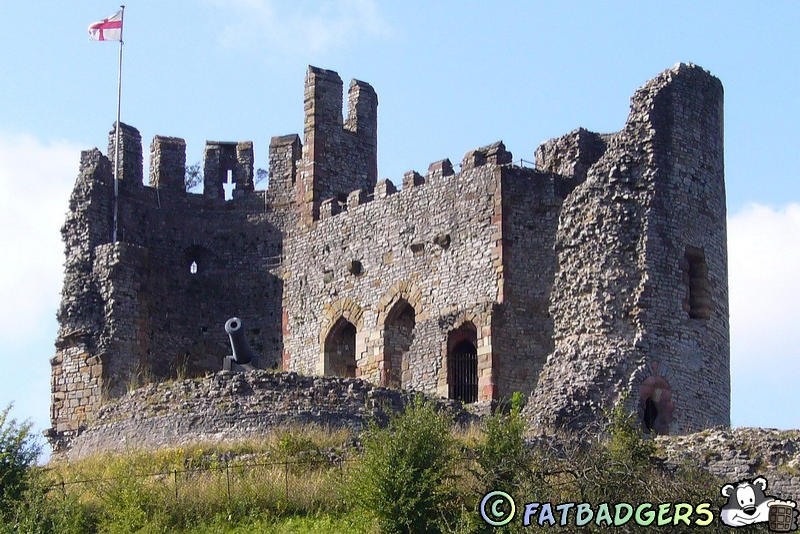
Dudley Castle, perched atop a limestone hill in the heart of the West Midlands, is a storied ruin that
weaves together nearly a millennium of English history, architecture, and folklore. Now enveloped
within the grounds of Dudley Zoo, it offers visitors a unique blend of medieval heritage and modern-
day attractions.
Established around 1070 by Ansculf de Picquigny, Dudley Castle began as a wooden motte-and-bailey
structure. It was later reconstructed in stone during the 12th century, with significant enhancements in
the 13th and 14th centuries. Notably, the Sharrington Range, added in the 16th century by John
Dudley, showcases early Italian Renaissance architectural influences in the West Midlands.
During the English Civil War, the castle served as a Royalist stronghold. After surrendering to
Parliamentarian forces in 1646, it was deliberately damaged to prevent further military use. A
devastating fire in 1750 left it in ruins, leading to its romanticised status in the 19th century.
In 1937, the castle grounds became home to Dudley Zoo, integrating the historic ruins into a zoological setting. Today, the site is managed by the Dudley and
West Midlands Zoological Society and is recognised as a Grade I listed building and a Scheduled Monument.
Dunluce Castle is a dramatic medieval ruin perched on the edge of a basalt cliff in County Antrim,
Northern Ireland, overlooking the North Atlantic Ocean. Its striking position and turbulent history have
made it one of Ireland’s most photographed and legendary castles.
Originally built in the 13th century by the Richard Óg de Burgh, 2nd Earl of Ulster. Most of the visible
remains date from the 16th and 17th centuries.
The castle became the seat of the MacDonnell clan in the 1550s, Scottish settlers who became
powerful in Ulster. It was notably occupied by Sorley Boy MacDonnell, a key historical figure.
The castle was abandoned in the late 1600s and fell into ruin, though its imposing structure still
reflects its former strength and importance.
Rumored to be an inspiration for Cair Paravel in C.S. Lewis’s Chronicles of Narnia and featured as
House Greyjoy’s stronghold (Pyke) in HBO’s Game of Thrones (via CGI adaptation).
Dunnottar Castle is one of Scotland's most impressive castle locations. The rocks which support the
Castle have been fortified since the 5th Century when St. Ninian used it as a base.
The present castle dates to the 14th century and in 1651 was under siege from Cromwell's
Roundheads who were trying to capture the Scottish Crown Jewels after they were hidden here. The
jewels were passed to a fishwife who managed to hide them in a basket and bypass the fighting to
take them to Kinneff Church, 6 miles away.
The castle rock was formerly connected to the mainland by a ridge but this was destroyed to make it
easier to defend.
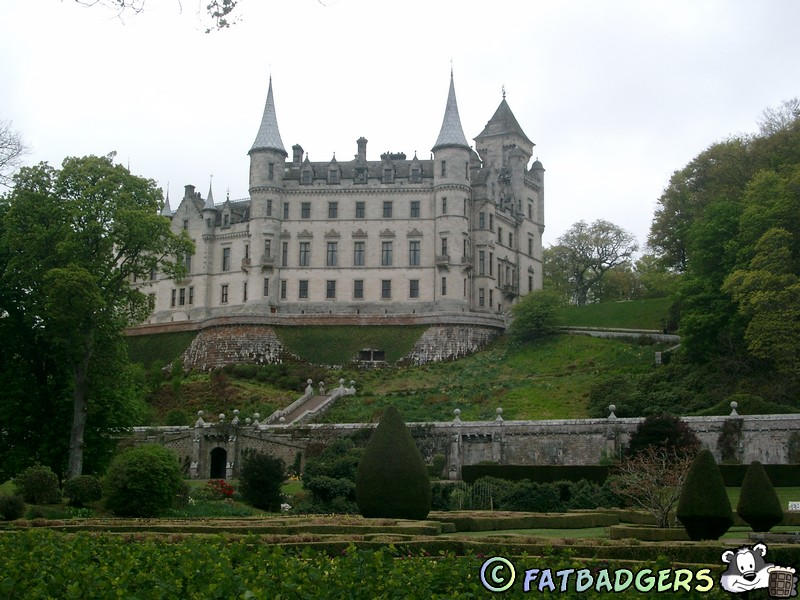
Dunrobin Castle is one of the grandest and most visually striking castles in the Scottish Highlands,
located near Golspie in Sutherland, northern Scotland. Unlike many medieval or ruined castles,
Dunrobin is a fully restored and inhabited stately home, showcasing a blend of architectural styles and
a long aristocratic history.
The core of the castle dates back to the early 1300s, originally built as a fortified home for the Earls
(later Dukes) of Sutherland, one of Scotland’s most powerful noble families.
Significantly remodelled in the mid-1800s by architect Sir Charles Barry (who also designed the
Houses of Parliament in London). The result is a French château-style exterior with conical spires and
turrets, unlike most Scottish castles.
With 189 rooms, it’s the largest castle in the northern Highlands and is surrounded by formal gardens
inspired by the Palace of Versailles.
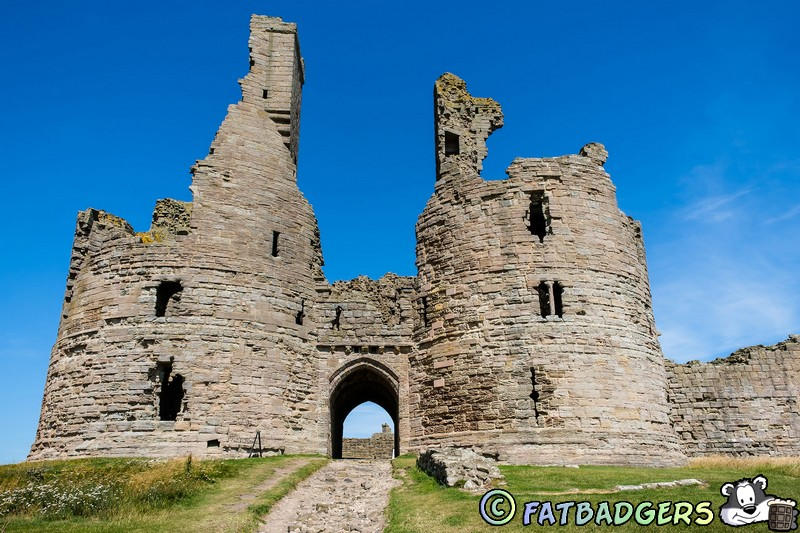
Dunstanburgh Castle is a dramatic 14th-century ruin perched on the rugged Northumberland
coastline between the villages of Craster and Embleton. Its remote location and windswept setting
make it one of England’s most evocative medieval sites.
Built between 1313 and 1322 by Thomas, Earl of Lancaster, Dunstanburgh Castle was intended as
both a symbol of power and a defensive stronghold. It was constructed on the site of an earlier Iron
Age fort, taking advantage of the natural defences offered by the Whin Sill escarpment.
The castle saw significant action during the Wars of the Roses, suffering extensive damage. By the
16th century, it had fallen into disrepair, described as being in "wonderfull great decaye." Despite its
ruinous state, the castle has inspired artists like J.M.W. Turner, who captured its romantic silhouette in
his paintings.
Dunster Castle is a historic fortress located in the village of Dunster, Somerset, England. Perched on
a wooded hill overlooking the Bristol Channel, the castle boasts a rich history spanning over a
millennium.
The site has been fortified since at least the Norman period, with the first castle established shortly
after the Norman Conquest of 1066.
•
The Luttrell family acquired the castle in the late 14th century and retained ownership for over 600
years.
During the English Civil War in the 17th century, Dunster Castle was held by Royalist forces and
endured a siege before surrendering to Parliamentarians.
In the 19th century, the castle underwent significant remodelling, transforming it into a comfortable
country house while retaining its medieval features.
Dunster Castle offers a captivating blend of history, architecture, and natural beauty, making it a worthwhile destination for visitors interested in England's rich
heritage.
Edinburgh Castle contains St Margaret's chapel, the oldest building in Edinburgh, dating from the
12th century.
There is evidence of Bronze and Iron Age occupation of Castle Rock, and in Roman times the site was
occupied by Celtic peoples; in about 617 the site was captured by Edwin of the Angles of Northumbria;
the city took its name from the fortress of Din Eidin which he built.
Near to St Margaret's chapel is a cannon called `Mons Meg´, forged in Belgium in 1448. The Great
Hall, built at the beginning of the 16th century, was restored in 1892; the room in which Queen Mary
gave birth to James VI in 1566 is situated at the eastern end of the castle.
The Scottish National War Memorial, opened by the then Prince of Wales on 14 July 1927, is situated
on the apex of the castle rock on the site of the old barracks; it contains the names of over 100,000
Scots who died in World Wars I and II.
A notable annual event in the cultural life of the United Kingdom is the Edinburgh International Festival,
which includes music, drama, opera, and art exhibitions. It was founded in 1947 by Rudolph Bing and
has been held annually ever since, in August - September. The Edinburgh Fringe Festival provides a
showcase for amateur groups and new talent. The Military Tattoo is held a few days before the Festival on the Esplanade in front of the castle.
The Union of England and Scotland in 1707 aroused great excitement in Edinburgh, and attempts were made to intimidate the members of the Scottish
Parliament who were favourable to the Act of Union, but the Act was eventually passed without bloodshed. An unsuccessful attempt was made by the
Jacobites to surprise the castle in the rebellion of 1715. In 1745 the Jacobites were more successful and were masters of the town from 15 September to 31
October, but could not take the castle.
Eilean Donan Castle at the end of Loch Duich in the Scottish Highlands became more widely known
after the film 'Highlander' used the castle for it's opening scenes. The castle will be remembered by
those that visit however, more for the spectacular location.
Sitting on a small island connected to the mainland via a stone bridge, Eilean Donan Castle is a
wonderful example of a castle come family home. Originally built in 1230 by Alexander II, it was
destroyed by the Royal Navy in 1719. In 1912, Colonel MacRae restored the castle and it is still used
to this day as a family residence, but is open to the public.
Photographs of family weddings held at the castle can be seen along with older portraits and furniture
from the past.
A visitor centre and car park was added in 1999 built on the mainland.
Flint Castle overlooks the Dee estuary towards the Wirral. One of the first castles to be built in Wales
by King Edward I as part Edward's campaign against Llywelyn ap Gruffydd (Llywelyn the Last) in north
Wales.
Started in 1277 and largely completed by 1284, the castle is dominated by the great tower (or donjon)
at its south-east corner. Surrounded by its own moat and accessed via a drawbridge, it’s essentially a
castle within a castle. Built with exceptionally thick walls and equipped with all the facilities required to
withstand a siege, it was presumably intended to be a final refuge in the event of an attack.
Flint Castle is also famous as the location of a fateful meeting in 1399 between Richard II and his rival
to the crown Henry Bolingbroke (later Henry IV), an event immortalised in Shakespeare’s Richard II.
Fort George, located near Ardersier, just outside Inverness in Scotland, is one of the most impressive
military fortifications in the UK. Built following the Jacobite Rising of 1745, the fort was designed to
prevent any further uprisings against the British crown, particularly from supporters of the deposed
Stuart monarchy.
After the Battle of Culloden in 1746, where the Jacobite forces of Bonnie Prince Charlie were defeated,
the British government wanted a stronghold in the Highlands to control the area and prevent future
rebellions. Fort George was part of a broader strategy to assert dominance over the Highlands.
Fort George was designed by military engineer William Skinner and is a superb example of 18th-
century military architecture. Its star-shaped design, with thick walls and bastions, was intended to
make it impenetrable to siege warfare.
Fort George was built on a promontory overlooking the Moray Firth, providing excellent views of the
sea and surrounding land. This location ensured that it could serve as a defensive structure both
against any land-based attack from the Highlands and seaborne assaults.
The fort is equipped with a sea wall, giving it additional protection from coastal threats.
Fort George is still an active military barracks today, used by the British Army as a base for the Black Watch, 3rd Battalion, Royal Regiment of Scotland.
It is open to the public, with parts of the fort housing the Highlanders’ Museum, which explores the history of the Highland regiments. Visitors can explore the
walls, bastions, and other features of the fort.
Framlingham Castle is a magnificent, curtain-walled medieval fortress located in Suffolk, England. Unlike many Norman castles with central keeps,
Framlingham is famous for its 13 massive curtain wall towers, which once enclosed grand domestic buildings and now offer impressive views over the
surrounding countryside.
The current castle dates from the late 12th century, constructed by Roger Bigod, 2nd Earl of Norfolk, one of the most powerful noblemen of his time. An
earlier motte-and-bailey castle had existed on the site since the Norman Conquest.
Framlingham played a dramatic role in 1553 when Mary Tudor (later Mary I of England) rallied support there before successfully claiming the English throne.
For this reason, it’s sometimes called “The Castle of Queen Mary’s Triumph.”
Glamis Castle near Glamis village, Angus, Scotland, has been the seat of the Lyon family, later earls of Strathmore, since 1372. Its central tower dates from
the 15th century, but the castle was greatly enlarged 1650-96.
Shakespeare refers to Glamis in Macbeth, and it is also famed for the legend of a secret chamber, supposedly known only to each heir.
Goodrich village in Herefordshire, England, on the River Wye, is home to an impressive ruined castle
which dates from the mid-12th century. The castle keep was erected to guard the ford on the river, but
it was not completed for around another 150 years. Goodrich Castle, which is guarded by a deep rock-
cut moat, became the seat of the lords of the southern Welsh Marches. As a Royalist stronghold, it
was destroyed by Parliamentary forces during the English Civil War.
Castle Hedingham in Essex, Southern England has one of the finest Norman keeps in Europe. The
keep is all that survives today of Castle Hedingham. It was built by Aubrey de Vere around 1140
making it the second oldest Norman Keep in Europe. The walls are 12 feet thick, except the east wall
that is strangely 13 feet thick.
Aubrey de Vere was granted the Lordship of Hedingham by William the Conqueror. He married Beatrice the half-sister of King William. His son Aubrey II
inherited and he built the castle. The Castle has the largest Norman arch in Europe.
Hever Castle in Kent, England, dating back to the 13th century was the Boleyn family home in Tudor times but sank into obscurity with the family's decline
after the dissolution of Anne Boleyn's marriage to Henry VIII. In the early 20th century it was modernised by William Waldorf Astor and includes an entire
Tudor-style village built to augment the castle's accommodation, and magnificent gardens.
The oldest part of the Castle being built in 1270, consisted of a massive Gatehouse together with a walled Bailey surrounded by a moat and approached via
a wooden drawbridge.
Two hundred years later, around 1505, the Bullen family, who had acquired the Castle in 1462, added a comfortable Tudor dwelling house inside the
protective wall.
This was the beginning of the glory days for Hever Castle, although sadly short-lived when Anne Boleyn (Bullen) failed to produce a son and heir for King
Henry VIII.
Despite the fact Hever Castle had been the home of two queens (Anne Boleyn and Anne of Cleves) the Castle slowly fell into disrepair until finally, in 1903,
the Castle was bought by an American, William Waldorf Astor. With a keen appreciation for quality and a true respect of history he set about restoring the
Castle and Gardens, lavishing millions of dollars of his personal fortune filling it with treasures, building the 100 room Tudor Village and creating the Gardens
and lake making Hever Castle what it is today.
Inveraray Castle in Argyll and Bute, Scotland, situated on Loch Fyne, 23 miles north-west of
Greenock is the ancestral seat of Archibald, 3rd Duke of Argyll who laid out the town of Inveraray in
1743.
The castle, initially constructed in the 15th century as the stronghold of the 1st Earl of Argyll, head of
the clan Campbell, was also redesigned in 1745 by the 3rd duke to provide a stately home.
Kenilworth in Warwickshire, central England, 5
miles north of Warwick has a Norman castle,
celebrated in Walter Scott's novel Kenilworth. It
became a royal residence.
Edward II relinquished his crown here in 1327. The castle was enlarged by John of Gaunt and later by
the Earl of Leicester - who entertained Elizabeth I here in 1575 - but was dismantled after the English
Civil War.
There are some remains of an Augustinian priory dating from about 1122. The ruins of the castle were
given to the British nation by the first Lord Kenilworth in 1937.
King John's Castle is a remarkably well-preserved Norman fortress located in the heart of Limerick
City, Ireland. Constructed around 1212 on the orders of King John of England, the castle stands on the
site of an earlier Viking settlement and has played a pivotal role in Irish history.
Built to assert English authority in the region, the castle's strategic position on the River Shannon
allowed control over vital trade routes and defence against potential uprisings.
During the Williamite War, the castle was a focal point of military activity. On October 3, 1691, Irish
Jacobite leader Patrick Sarsfield surrendered to Williamite forces at this site. The terms of surrender,
known as the Treaty of Limerick, were signed on a boulder now referred to as the Treaty Stone,
located across the river from the castle. This event marked the end of significant resistance to
Williamite rule in Ireland.
The castle's walls still bear the scars of cannon fire from various sieges. Statues commemorating
Sarsfield and the "Wild Geese" - Irish soldiers who left for France following the treaty - stand near the
castle, honouring their legacy.
Leeds Castle is one of England’s most picturesque and best-preserved castles, located near
Maidstone in Kent. Often called “the loveliest castle in the world,” it stands on islands in a lake formed
by the River Len, creating a stunning reflection that has made it a popular tourist destination and
filming location.
A wooden fort stood on the site of Leeds Castle as early as 857.
The first stone castle was built in 1119 by Robert de Crevecoeur, on the site of an earlier Saxon manor.
It became a royal residence in 1278, when Edward I acquired it for his queen, Eleanor of Castile. Over
the next 300 years, it was a favourite of six medieval queens, leading to its nickname: “The Ladies’
Castle.”
Henry VIII transformed Leeds Castle into a luxurious royal palace for Catherine of Aragon. After the
Tudor period, it passed into private hands, notably the Fairfax and Wykeham Martin families. In the
20th century, it was owned by Lady Baillie, an Anglo-American heiress who restored it in lavish style
and entertained royalty and celebrities there.
Lindisfarne Castle is situated on Holy Island in the North Sea, 2 miles off the coast of
Northumberland, which is connected by a causeway at low tide. In the 16th century stones from
Lindisfarne priory were used to construct the Castle, which was converted into a private house by
Edwin Lutyens in 1903, and is now the property of the National Trust.
The Celtic manuscript known as the Lindisfarne Gospels, dating from about 698, was written at
Lindisfarne as a memorial to St Cuthbert (prior of Lindisfarne from 664 to 676). The manuscript is now
in the British Museum. Following his death on Farne Island in 687, St Cuthbert's body was returned to
Lindisfarne, and the monastery became a place of pilgrimage until the monks were driven from the
island by the Danes in 875.
According to tradition, the monks took with them the remains of St Cuthbert and finally settled in
Durham in 995. Benedictine monks from Durham returned to the island in 1082, renamed it Holy
Island, and established a Benedictine priory here. Lindisfarne Mead is produced on the island, an
ancient alcoholic drink made from honey.
Lowther Castle, situated near Penrith in the Lake District, is a striking example of Gothic Revival
architecture with a rich history spanning over 900 years. Originally the seat of the Lowther family, the
estate has undergone significant transformations, from a grand 19th-century mansion to a romantic
ruin, and now a revitalised heritage attraction.
The Lowther family has been associated with the estate since the 12th century. Between 1806 and
1812, architect Sir Robert Smirke, known for designing the British Museum, reconstructed the castle
into a Gothic Revival masterpiece. The castle became a hub for artistic and political gatherings,
attracting notable figures like Wordsworth, Turner, and Kaiser Wilhelm II.
During World War II, the castle was requisitioned by a tank regiment, leading to significant damage.
Post-war financial difficulties forced the Lowther family to abandon the castle in 1952, leaving it to
deteriorate.
Ludlow Castle sits in the heart of the Shropshire town of Ludlow dating from about 1086 and has a
large Norman keep. The Castle, owned by the Earl of Powis, is an extensive stone ruin, the entire
castle surviving intact.
The curtain wall is well preserved to the battlements, pierced by a much altered gatehouse and a
square flanking tower. The large outer bailey has lodgings, a prison and stables backing onto the
curtain.
Opposite is the semicircular Mortimer's tower, with the Chapel of St Peter close by. A steep rock-cut
ditch, surrounding curtain wall and four open backed square towers, defend the inner bailey. The
original gatehouse was blocked off and raised to become a keep, a new arched entrance cut through
on the right.
The inner bailey has a fine range of buildings in the classic domestic plan and also an unusual circular
Norman chapel.
Lulworth Castle is a striking historic building on the Dorset coast in southern England - often
described as a “mock castle” rather than a true medieval fortress.
Built between 1608–1610 as a hunting lodge for aristocrat Thomas Howard and designed in a castle-
like style to impress royalty, not for defence and one of only a handful of surviving
Elizabethan/Jacobean revival castles in England
It was bought in 1641 by the Weld family, who still own it today and damaged during the English Civil
War and later remodelled into a country house. It was devastated by a major fire in 1929, leaving it
roofless for decades and restored from the 1970s–1990s with help from English Heritage, keeping a
partly “ruined” interior
Set within the scenic Lulworth Estate, near landmarks like Lulworth Cove and the Jurassic Coast and
open to visitors as a museum and event venue (also hosts festivals and weddings). Surrounded by
parkland, woodland walks and historic buildings like St Mary’s Chapel.
Even though it looks medieval - with towers and battlements - it was essentially a luxury showpiece for entertaining guests and royalty, reflecting the romantic
fascination with castles in the early 1600’s.
Marisco Castle, also known as Lundy Castle, Marisco is a historic fortification on Lundy Island, a
small island in the Bristol Channel off the coast of Devon. It has a long and colourful history, with
phases of medieval royal construction, Civil War defence, decline and modern restoration.
The castle was built by order of King Henry III in 1243 - 1244 after he seized control of Lundy from the
rebellious de Marisco family, minor nobles associated with piracy and treason. The “Marisco” name
stuck, even though Henry’s fortress was meant to keep the family’s influence out, not represent it.
It began life as a shell keep and bailey - a fortified tower with surrounding defensive walls - located on
the island’s south-east cliffs, overlooking what would become Landing Bay. Early royal forces
garrisoned it to control access to Lundy and the surrounding sea routes.
During the English Civil War (1642–1647), Royalist supporter Thomas Bushell held and rebuilt much of
the castle at his own expense, adding a perimeter parade ground, bastions, curtain walls, and a
residence. The present visible structure is mainly from this 17th-century phase, built around the older
foundations.
In the late 20th century, the Landmark Trust restored the castle remains and converted parts into holiday cottages that visitors can rent today. The castle is
also protected as a Scheduled Monument and a Grade II* listed building under UK heritage law.
Mont Orgueil Castle, also known as Gorey Castle, is a striking medieval fortress perched above the
fishing village of Gorey on Jersey’s east coast. With over 800 years of history, it stands as a powerful
symbol of the island’s identity and its enduring ties to the English Crown.
Constructed beginning in 1204 following the loss of mainland Normandy to France, Mont Orgueil
served as Jersey’s primary defence against French invasion for over four centuries. Its granite
foundation and cliffs on three sides made it nearly impervious to undermining and assault.
In 1461, during the Wars of the Roses, the castle was captured by French forces allied with the
Lancastrians. It was during this occupation that the name “Mont Orgueil” (meaning “Mount Pride”)
came into use. The castle was retaken in 1468 by Yorkist forces under Admiral Richard Harliston, who
later added the Harliston Tower to the structure.
As artillery technology advanced, Mont Orgueil became vulnerable to cannon fire. In 1594, Elizabeth
Castle was constructed to replace it as the island’s main fortress. Mont Orgueil subsequently served various roles, including as a prison and military
barracks.
Newark Castle Situated in the market town of Newark-on-Trent, on the banks of the River Trent, this
castle played a significant role in English medieval history - especially during the English Civil War.
Founded around 1123 by Alexander, Bishop of Lincoln, as a bishop’s residence and defensive
stronghold. It was originally a Norman motte-and-bailey style structure and rebuilt in stone in the 12th
and 13th centuries with curtain walls, towers, and a gatehouse. It is where King John died in 1216.
Newark was a Royalist stronghold during the English Civil War (1642–1651). It was besieged three
times by Parliamentarian forces. The town suffered greatly during these sieges.
King Charles I surrendered to the Scots at Newark in 1646, marking a pivotal moment in the war.
Pembroke in Pembrokeshire, south-west Wales is home to Pembroke Castle. Henry VII was born in
the Castle in 1457. Originally founded in 1090 by the Norman Lord Grimley de Montgomery, the castle was completely rebuilt around 1207 by William
Marshall, the greatest English knight of the Middle Ages, and remains largely unaltered today. There is a bridge crossing the River Cleddau, an arm of Milford
Haven.
Pennard Castle is a ruined medieval castle located in South Wales, overlooking the scenic Three
Cliffs Bay on the Gower Peninsula near Swansea. It has a romantic, picturesque setting and is a
popular spot for walkers and history enthusiasts.
Originally constructed in the early 12th century by Henry de Beaumont, the first Norman lord of Gower,
initially as a timber ringwork fortification, later rebuilt in stone during the late 13th or early 14th century,
likely by the de Braose family.
The castle includes a gatehouse, curtain walls, and a small courtyard. The remains are fragmented,
but the gatehouse towers are particularly striking against the coastal backdrop.
Pennard Castle was built to oversee the nearby valley and coastline, giving it both military and
administrative importance. Its location provided control over a key route into the Gower Peninsula.
The castle was abandoned in the later Middle Ages, mainly due to encroaching sand dunes that made
the site impractical for occupation. The movement of sand is a natural phenomenon still visible today,
contributing to the castle’s mysterious, half-buried appearance.
Rochester is a remarkable example of Norman military architecture, located in Rochester, Kent. Its
imposing stone keep, constructed in the 12th century, stands as one of the tallest and best-preserved
in England, reaching approximately 113 feet (35 meters) in height. The castle's strategic position on
the River Medway made it a focal point in England's medieval history.
The initial fortifications were established by Gundulf, Bishop of Rochester, in the 1080s. In 1127,
Archbishop William de Corbeil began constructing the great keep, which remains a dominant feature of
the castle today.
During the First Barons' War, rebel barons held the castle against King John. The king laid siege,
famously using the fat of 40 pigs to fire a mine beneath the keep, causing a corner to collapse. Despite
this, the defenders held out for two months before surrendering due to starvation.
The castle saw further conflict in 1264 during the Second Barons' War. Over time, its military
significance waned, and by the 17th century, it had fallen into ruin. In the 19th century, efforts were
made to preserve the castle, and it was opened to the public in the 1870s.
Rockingham Castle is a remarkable Norman fortress with over 950 years of history, nestled in the
Welland Valley near Corby, Northamptonshire. Commissioned by William the Conqueror, it has
evolved from a royal stronghold to a family residence, and today, it welcomes visitors to explore its rich
heritage and picturesque gardens.
Established in the 11th century by William the Conqueror, Rockingham Castle served as a royal retreat
and hunting lodge, capitalizing on its strategic location overlooking the Welland Valley.
The castle was a favoured residence for monarchs, including King John and Edward III. Notably, in
1095, it hosted a significant council addressing church-state relations.
During the English Civil War, Rockingham was a Royalist stronghold. In 1643, it was captured by
Parliamentarian forces, leading to the destruction of parts of its defences. Since the late 15th century,
the Watson family has maintained the castle, transforming it into a stately home while preserving its
historical essence. The current custodians, the Saunders Watson family, continue this legacy.
Rowton Castle is a 17th-century Grade II* listed country house nestled in the Shropshire countryside,
approximately 6 miles west of Shrewsbury. Steeped in history and surrounded by 17 acres of
picturesque gardens, it now serves as an exclusive-use wedding venue and boutique hotel, offering a
blend of historical charm and modern luxury.
The current structure was built in the 17th century, though a castle had existed on the site for several
centuries prior. It remained in the Lyster family until 1889, when Lady Charlotte Lyster passed it to her
nephew, Montagu Corry, 1st Baron Rowton. Subsequent owners included Colonel N. A. Lowry Corry
and Major Lees.
In 1941, the Royal Normal College for the Blind acquired the castle after its London premises were
bombed during the Blitz. The college operated there until 1978, when it relocated to Hereford.
After a period of vacancy, restoration work began in 1986, transforming the castle into a luxury hotel,
which officially opened on April 12, 1989. In 1997, it was taken over by hospitality professionals Jack
De Sousa, Bryan Cherrington, and Steve Parke, who have since maintained its reputation as a
premier wedding venue.
Scarborough Castle overlooks the town and was built on a rocky headland 285 ft high which separates Scarborough's north and south bays. Bronze Age
and Iron Age relics have been recovered from the site and in the castle yard are the remains of a Roman signal station. Remains of the Norman castle
include the 12th-century keep and the 13th-century barbican.
During the Civil War the castle surrendered to Parliamentary forces after a siege in 1645. George Fox, the founder of the Society of Friends, was imprisoned
in the castle from 1665 to 1666.
Scotney Castle is a captivating blend of medieval history and 19th-century romanticism, nestled in the
Kent countryside near Lamberhurst. Managed by the National Trust, the estate encompasses a 14th-
century moated castle ruin, a Victorian mansion, and expansive gardens and parkland.
The earliest record of occupancy dates back to 1137, with the oldest parts of the Old Castle
constructed in 1378 by Roger de Ashburnham. Edward Hussey I acquired the estate in 1778. His
grandson, Edward Hussey III, commissioned architect Anthony Salvin in the 1830s to build a new
house atop the hill, transforming the Old Castle into a picturesque ruin within a landscaped garden.
The estate remained with the Hussey family until Christopher Hussey bequeathed it to the National
Trust in 1970. The Victorian mansion opened to the public in 2007 after the passing of his widow, Betty
Hussey.
Shrewsbury Castle is a historic red sandstone fortress situated in the heart of Shrewsbury,
Shropshire, England. Perched atop a hill overlooking the River Severn, the castle has played a pivotal
role in the region's history since its inception in the 11th century.
Commissioned by William the Conqueror around 1067, the castle was constructed by Roger de
Montgomery circa 1070. It served as a strategic base for operations into Wales and as a defensive
stronghold for the town, which was naturally protected by the river's meander.
Throughout the Middle Ages, the castle witnessed several key events, including a siege in 1138 during
the civil war between King Stephen and Empress Matilda. In 1215, it was briefly held by Llywelyn the
Great, Prince of Wales.
After the Welsh wars ended around 1300, the castle fell into decline. During Elizabeth I's reign, it was
converted into a domestic residence and later came under the ownership of the town council around
1600. Significant repairs were undertaken during the English Civil War in 1643. Renowned engineer
Thomas Telford carried out extensive renovations after 1780 on behalf of Sir William Pulteney,
following designs by architect Robert Adam.
In 1924, the Shropshire Horticultural Society purchased the castle and gifted it to the town. It served as the Borough Council chambers for over 50 years. In
1985, the castle was restructured to house the Shropshire Regimental Museum, now known as the Soldiers of Shropshire Museum.
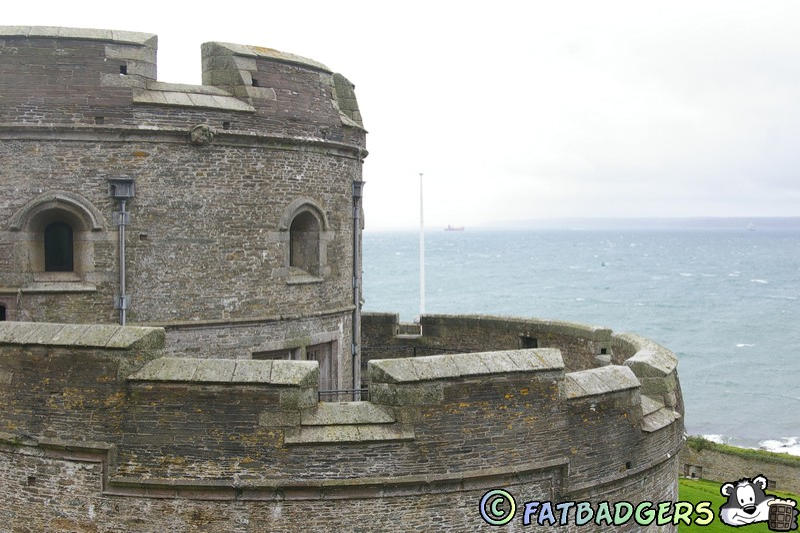
St Mawes Castle is a remarkably preserved Tudor coastal fortress located in St Mawes, near Truro,
Cornwall. Constructed between 1540 and 1542 under the orders of King Henry VIII, it was part of a
nationwide initiative to fortify England's coast against potential invasions from France and the Holy
Roman Empire. The castle's unique cloverleaf design, featuring a central four-storey tower and three
round bastions, was specifically engineered to mount heavy artillery, enabling it to cover the Carrick
Roads waterway in conjunction with its sister fort, Pendennis Castle, situated across the estuary .
St Mawes Castle was built as part of Henry VIII's "Device Forts" program, a response to the alliance
between France and the Holy Roman Empire, which posed a significant threat to England's security .
Throughout its history, the castle has seen various military uses, including during the English Civil War,
when it was held by Royalist forces before surrendering to Parliamentarians in 1646. It was also
rearmed during the Napoleonic Wars and played a defensive role in both World Wars .
The castle boasts elaborate 16th-century carvings, including sea monsters and gargoyles, and has been described as "arguably the most perfect survivor of
all Henry's forts"
St. Michael's Mount - part of the lost Kingdom of Lyonesse where King Arthur's Knights once rode.
Home of the St. Aubyn family, St. Michael's Mount is a magical island of granite which rises sharply out
of the sea in Mount's Bay opposite the village of Marazion, near to Penzance.
The Island was given to the National Trust in 1954 by Lord St. Levan and is accessed at high tide by
small ferry boats from Marazion at a nominal charge.
At low tide, a stone causeway links the island to the mainland.
The 12th century Benedictine Priory perched on the summit is open to the public and is well worth a
visit, not only for the delightful Chevy Chase room and Priory Church but also for the spectacular views
of Mount's Bay.
Stokesay is not so much a castle as a fortified manor house and although it is fortified it is more
domestic in character then military. No longer the focal point of its original town but standing alone, as
do so many castles and churches today. This very distinctive castle lies in the valley of the River Onny
along the border of England and Wales and was built in the late 13th century, Though its origins can
be traced back to the Norman Conquest.
What can be seen today is largely the work of Lawrence of Ludlow, a leading wool merchant of that
time. He purchased the site in 1281 and commenced building plans, which are believed to have been
completed c1291, when he was granted a "license to crenellate" by Edward I. Sadly, Lawrence was
not able to enjoy his new home for long; he was drowned in 1294.
The moat which is now dry would have offered some degree of protection from minor disputes, which
were an ever-present problem during the middle ages. J.D. Allcroft purchased it in 1869 and restored it
to its present state of preservation. The entire castle is still under roof and even retains a medieval
wood staircase. The half timbered gatehouse must be part of one of the most picturesque views in
England.
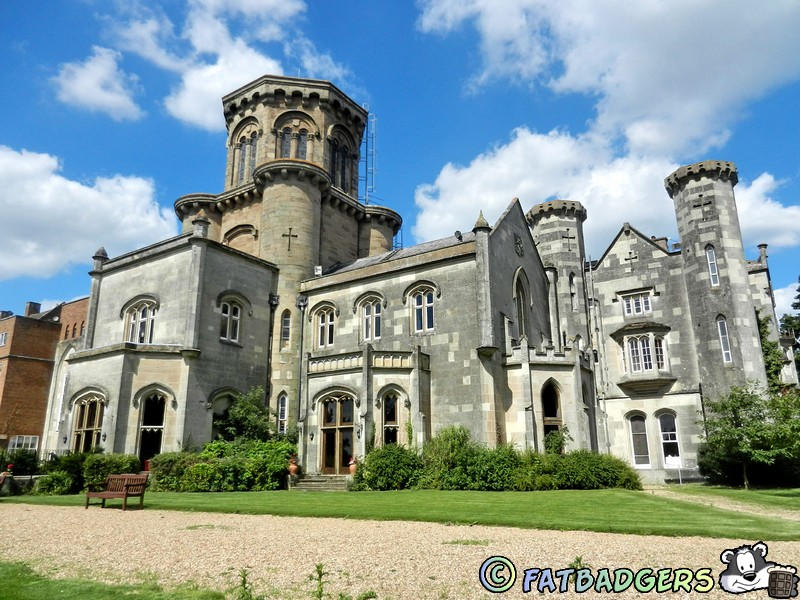
Studley Castle in Warwickshire is a Grade II* listed Gothic Revival mansion, renowned for its rich
history and transformation into a luxurious adults-only hotel. Located near Stratford-upon-Avon, it
offers a blend of historic charm and modern amenities.
Built in 1836 by Francis Lyttelton Holyoake-Goodricke, the castle was designed by architect Samuel
Beazley in the Gothic Revival style. Despite its name, it was never a true castle.
The original medieval Studley Castle, constructed in the late 11th century by William Courbucion, was
situated nearby and now only a ditch remains of it.
In 1903, the building was repurposed as the Studley Agricultural College for Women, providing
horticultural training for daughters of the gentry.
During both World Wars, it served as a training camp for the Women’s Land Army. Later, it became a
management development centre for the Rover Group.
Tattershall Castle is a striking medieval fortress located in Lincolnshire, England. Renowned for its
impressive brick construction and rich history, the castle offers visitors a glimpse into England's
architectural and aristocratic past.
The castle's initial structure was a stone manor house built in 1231 by Robert de Tateshale. In the 15th
century, Ralph Cromwell, the Lord Treasurer to King Henry VI, transformed it into a grand brick castle,
a material choice that was both fashionable and a display of wealth at the time.
Tattershall Castle is one of the earliest and finest examples of brick-built castles in England. Its design
influenced subsequent English architecture, including notable structures like Hampton Court Palace.
After periods of neglect and partial dismantling, the castle was rescued in the early 20th century by
Lord Curzon, who restored it and later bequeathed it to the National Trust in 1925.
Tintagel Castle, perched dramatically on Cornwall’s rugged north coast, is a captivating blend of
history and legend. Renowned as the mythical birthplace of King Arthur, the site offers visitors a unique
opportunity to explore ancient ruins, breathtaking landscapes, and tales that have inspired
generations.
Archaeological evidence indicates that Tintagel was a significant settlement between the 5th and 7th
centuries, likely serving as a royal stronghold for the rulers of Dumnonia. The discovery of
Mediterranean pottery suggests it was a thriving trading hub during this period.
In the 12th century, the chronicler Geoffrey of Monmouth linked Tintagel to the Arthurian legend,
claiming it as the place where King Arthur was conceived. This association inspired Richard, Earl of
Cornwall, to construct the present-day castle in the 1230s, capitalizing on the site's legendary status.
Tintagel is steeped in myth. Visitors can explore Merlin’s Cave, a sea cave beneath the castle,
accessible at low tide. On the cliffs stands Gallos, an 8-foot bronze sculpture by Rubin Eynon, symbolizing the site's royal past and its connection to Arthurian
tales.
The Tower of London is an impressive Fortress on the bank of the River Thames to the east of the
City of London, England. The keep, or White Tower, was built about 1078 by Bishop Gundulf on the
site of British and Roman fortifications. It is surrounded by two strong walls and a moat (now dry), and
was for centuries a royal residence and the principal state prison.
Today it is a barracks, an armoury, and a museum. In 1994 the crown jewels, traditionally kept in a
bunker in the tower, were moved to a specially designed showcase, the Jewel House, situated above
ground level.
Warkworth village in Northumberland, England, is home to the remains of Warkworth Castle, founded
in the 12th century. The River Coquet forms an oxbow around the village providing the castle with a natural moat.
Warwick Castle is one of the most complete and best-preserved medieval castles in England, located
in the town of Warwick, on a bend in the River Avon in Warwickshire. With over 1,100 years of history,
it has evolved from a Norman motte-and-bailey fort to a lavish stately home and now a major historical
attraction.
Originally built by William the Conqueror in 1068 as a wooden motte-and-bailey to secure Norman
control of the Midlands. In the 12th century, it was transformed into a stone castle, and significantly
expanded in later centuries.
Key in many national conflicts, especially during the Wars of the Roses. It was home to the powerful
Beauchamp family, and later the Nevilles - most famously Richard Neville, the “Kingmaker”, who
helped make and unmake kings during the 15th century.
Massive Curtain Walls & Towers: Including the imposing Caesar’s Tower and Guy’s Tower, both built in
the 14th century to strengthen defences. It has heavily fortified entranceways with murder holes and
portcullises and lavishly decorated interiors from later periods, reflecting the tastes of the aristocratic Greville family, who owned the castle from the 17th
century until the 20th.
It was landscaped in the 18th century by Capability Brown, with peacocks still roaming the grounds.
Windsor Castle is probably Britain's best known castle. A British royal residence in Windsor,
Berkshire, founded by William the Conqueror on the site of an earlier fortress. It includes the
Perpendicular Gothic St George's Chapel and the Albert Memorial Chapel, beneath which George III,
George IV, and William IV are buried. In the Home Park adjoining the castle is the Royal Mausoleum,
Frogmore, where Queen Victoria and Prince Albert are buried.
Beyond the Round Tower or Keep are the state apartments and the sovereign's private apartments.
Windsor Great Park lies to the south. In 1990 the royal residence Frogmore House, near Windsor
Castle, as well as the Royal Mausoleum, were opened to the public.
On 20 November 1992 the castle was heavily damaged by a fire in its 14th-century St George's Hall.
In April 1993 the Queen decided to open Buckingham Palace to the public to raise money for the
necessary repair work. St George's Hall was reopened in 1998.
Windsor Castle was constructed by William the Conqueror as an earthwork surmounted by wooden
palisades, and has been in continuous royal possession ever since. The work of replacing the
palisades with stone walls and towers was started a century later by Henry II (1165-79), and finished in the following century by Henry III, who built the three
vast towers towards the town. Stone walls were followed by stone buildings, to which succeeding centuries have made many alterations and additions. The
most notable are those made in the 14th century by Edward III, under the direction of William of Wykeham; in the 17th century by Charles II, whose architect
was Hugh May; and the extensive renovations made in the 19th century by George IV, with Jeffrey Wyatville as architect.
Architecturally, the main feature of the castle is St George's Chapel, a masterpiece of Perpendicular architecture. It was built from 1475 to 1511, with a lierne
vault and fan-vaulted aisles. The wooden stalls in the chancel were carved 1478-85; attached to them are the arms of the Knights of the Garter, painted from
about 1390 onwards. Here the knights, under the sovereign, convene for their annual service. Opposite the chapel are the lodgings of the Military Knights of
Windsor, dating from the 14th and 16th centuries.
Windsor Great Park 4,792 acres is connected with the castle by an avenue 3 miles long, known as the Long Walk.
















 Pubs
Pubs Open Map in New Window
 England
 Scotland
 Wales
Wales Ireland
 County Map
 About Britain
 Pubs
Pubs British Beer
 Perfect Pint
 Beer Glasses
 The Barren Years
 Real Fires
 Breweries
 Brewing
 British Food
 Recipes
 Pub Interiors
 Dog Friendly
 Pub Games
 Strange Pub Names
 Visitor Information
 Oldest Pub
 Pub Signs
 Micropubs
 Buildings
 Cathedrals
 Stately Homes
 Castles
 Listed Buildings
 Scheduled Monuments
 Oak Framing
 Architecture
 Thatching
 Waterways
 Sailing
 Shipbuilding
 Boatbuilding
  Shipping Forecast
 Britain's Coastline
 Coastal Locations
 Piers
Piers Lighthouses
 Harbours
 Beach Safety
 British Beaches
 Canals
 Rivers
 Islands
 Lakes
Lakes Waterfalls
 Historical
 Famous People
 Kings & Queens
 Kings of England
 History of Britain
 Industrial Revolution
 Act of Union
 Beaufort Scale
 British Firsts
 World Heritage Sites
 Historical Periods
 Historical Boundaries
 Tradition & Culture
 Morris Dancing
 Film & Television
 Television
 Calendar of Events
 British Sport
 Scottish Highlands
 Money
Money Dry Stone Walling
 British Wildlife
 Class System
 Geographical
 Pub Boundaries
 Facts 'n' Figures
 British Isles
 Other Areas
 Place Name Origins
 Topography
 Suggest an Inn
 Explanation of symbols
 Why Us?
 Places to Visit
 Long Distance Paths
 National Parks
 Areas of Outstanding Natural Beauty
 Coastal Locations
 Other areas of Britain
 Maps
Maps Our Favourite Locations
 Search
 Focus On...
 News
News Contact
 About Us
 Our History
 Donate