The Combatants:
• British Royal Navy: Led by Vice-Admiral Horatio Nelson (aboard his flagship, HMS Victory). The British fleet comprised 27 ships of the line. • Combined French and Spanish Fleets: Commanded by Vice-Admiral Pierre-Charles Villeneuve (French, aboard Bucentaure) and Spanish Admirals Federico Gravina and Don Ignacio de Álava. This combined fleet numbered 33 ships of the line.Background:
Napoleon Bonaparte, the Emperor of France, had grand plans to invade Britain. To do so, he needed to gain control of the English Channel. His strategy involved drawing the British fleet away, then concentrating his combined French and Spanish fleets to provide cover for an invasion force. Nelson, renowned for his aggressive tactics and previous victories, was tasked with tracking and engaging the enemy fleet.Nelson's Innovative Tactics:
Naval battles of the era typically involved ships lining up parallel to each other and exchanging broadsides. Nelson, however, employed a daring and unorthodox tactic known as the "Nelson Touch." He divided his fleet into two columns: • Weather Column: Led by Nelson in HMS Victory, aimed to break through the centre of the enemy line. • Lee Column: Led by his second-in-command, Vice-Admiral Cuthbert Collingwood in HMS Royal Sovereign, aimed to break through the enemy's rear. This approach was risky because it exposed the leading ships to heavy fire as they approached the enemy line, but once they broke through, it would cause chaos and allow the British to engage individual enemy ships at close quarters, maximizing their superior gunnery and training.The Battle:
• "England Expects That Every Man Will Do His Duty": Just before the battle, Nelson famously signalled this message to his fleet, inspiring his crews. • Breaking the Line: Both British columns successfully pierced the combined French and Spanish line, creating confusion and breaking the enemy's disciplined formation. • Fierce Close-Quarters Combat: The battle devolved into a series of individual ship-to-ship duels. British gunnery proved far superior, inflicting devastating damage on the French and Spanish vessels. • Nelson's Death: At the height of the battle, around 1:15 PM, Admiral Nelson was mortally wounded by a French sharpshooter from the Redoutable. He was carried below deck but lived long enough to be informed of the approaching victory, reportedly uttering, "Thank God I have done my duty." He died about three hours later.Outcome and Significance:
• Decisive British Victory: The Battle of Trafalgar was an overwhelming British victory. The combined French and Spanish fleets lost 22 ships (17 captured, 1 destroyed) without a single British ship being lost. • End of Invasion Threat: The defeat utterly destroyed Napoleon's plans for invading Britain. With their naval power crippled, the French could no longer contemplate crossing the Channel in force. • British Naval Supremacy: Trafalgar cemented Britain's dominance as the pre-eminent naval power in the world, a supremacy it would maintain for the next century. This control of the seas was vital to Britain's economic prosperity, colonial expansion and its ability to wage war against Napoleon on the continent. • Nelson's Legacy: Despite his death, Nelson became an even greater national hero. His innovative tactics and self-sacrifice became legendary and his memory continues to be revered in Britain, most notably in London's Trafalgar Square. In essence, the Battle of Trafalgar was a masterclass in naval strategy and execution that secured Britain's maritime safety and played a critical role in the eventual downfall of Napoleon.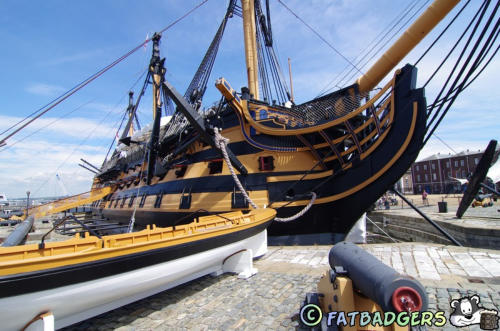
The Battle of Trafalgar was a pivotal naval engagement fought on October 21, 1805, off the southwest coast of Spain, near Cape
Trafalgar. It was a crucial battle during the Napoleonic Wars.
Battle of Trafalgar





 Pubs
Pubs Open Map in New Window
 England
 Scotland
 Wales
Wales Ireland
 County Map
 About Britain
 Pubs
Pubs British Beer
 Perfect Pint
 Beer Glasses
 The Barren Years
 Real Fires
 Breweries
 Brewing
 British Food
 Recipes
 Pub Interiors
 Dog Friendly
 Pub Games
 Strange Pub Names
 Visitor Information
 Oldest Pub
 Pub Signs
 Micropubs
 Buildings
 Cathedrals
 Stately Homes
 Castles
 Listed Buildings
 Scheduled Monuments
 Oak Framing
 Architecture
 Thatching
 Waterways
 Sailing
 Shipbuilding
 Boatbuilding
  Shipping Forecast
 Britain's Coastline
 Coastal Locations
 Piers
Piers Lighthouses
 Harbours
 Beach Safety
 British Beaches
 Canals
 Rivers
 Islands
 Lakes
Lakes Waterfalls
 Historical
 Famous People
 Kings & Queens
 Kings of England
 History of Britain
 Industrial Revolution
 Act of Union
 Beaufort Scale
 British Firsts
 World Heritage Sites
 Historical Periods
 Historical Boundaries
 Tradition & Culture
 Morris Dancing
 Film & Television
 Television
 Calendar of Events
 British Sport
 Scottish Highlands
 Money
Money Dry Stone Walling
 British Wildlife
 Class System
 Geographical
 Pub Boundaries
 Facts 'n' Figures
 British Isles
 Other Areas
 Place Name Origins
 Topography
 Suggest an Inn
 Explanation of symbols
 Why Us?
 Places to Visit
 Long Distance Paths
 National Parks
 Areas of Outstanding Natural Beauty
 Coastal Locations
 Other areas of Britain
 Maps
Maps Our Favourite Locations
 Search
 Focus On...
 News
News Contact
 About Us
 Our History
 Donate