Background:
After his initial defeat and exile to the island of Elba in 1814, Napoleon escaped in March 1815, rallied support and swiftly regained control of France. The European powers, forming the Seventh Coalition, immediately declared him an outlaw and mobilized their armies to confront him. Napoleon's strategy was to defeat the Allied armies piecemeal before they could fully unite.The Commanders:
• French Imperial Army: Commanded by Emperor Napoleon I. • Anglo-Allied Army: A multinational force (British, Dutch-Belgian, Hanoverian, Brunswick and Nassau troops) led by Field Marshal Arthur Wellesley, Duke of Wellington. • Prussian Army: Led by Field Marshal Gebhard Leberecht von Blücher.The Battle:
• Prelude (June 16): Two days before Waterloo, Napoleon aimed to prevent the Anglo-Allied and Prussian armies from linking up. • At the Battle of Ligny, Napoleon defeated Blücher's Prussians, forcing them to retreat. • At the Battle of Quatre Bras, Marshal Ney (leading Napoleon's left wing) fought Wellington's forces to a standstill, preventing them from reinforcing the Prussians at Ligny.Waterloo Day (June 18, 1815):
• Wellington's Defensive Position: Wellington chose a strong defensive position along a ridge, utilizing natural features like the farmhouses of Hougoumont and La Haye Sainte as strongpoints. He positioned many of his troops behind the crest of the ridge, protecting them from French artillery. • Delayed Start: Heavy rain the previous night delayed Napoleon's main attack until late morning, allowing the ground to dry somewhat, which was crucial for moving artillery. • Hougoumont: The battle began with a diversionary French attack on the fortified farmhouse of Hougoumont on Wellington's right flank. This became a brutal, all-day struggle that tied down a significant number of French troops and proved incredibly costly for them. • French Cavalry Charges: Throughout the afternoon, Marshal Ney launched repeated, massive cavalry charges against Wellington's infantry squares. Despite their ferocity, these charges failed to break the disciplined Allied squares, though they inflicted heavy casualties. • Prussian Arrival: Crucially, despite their defeat at Ligny, Blücher's Prussians had regrouped and were marching to join Wellington. Their arrival on Napoleon's right flank in the late afternoon began to put immense pressure on the French. • La Haye Sainte: The French eventually managed to capture La Haye Sainte, a key farmhouse in the centre of Wellington's line, providing them with a dangerous foothold. • Imperial Guard Attack: In a desperate last gamble, Napoleon committed his elite Imperial Guard, previously considered invincible, to a final assault on Wellington's weakened centre. However, met by concentrated volleys from the Allied infantry, the Guard was repulsed. • Rout: With the Imperial Guard in retreat and the Prussians breaking through on the French right, Wellington ordered a general advance. The French army, demoralized and exhausted, broke and fled in a chaotic rout, pursued relentlessly by the Prussian cavalry.Outcome and Impact:
• Final Defeat of Napoleon: Napoleon's defeat at Waterloo was absolute and decisive. He returned to Paris and abdicated four days later, ending his "Hundred Days" and his reign as Emperor of the French. He was subsequently exiled to the remote island of Saint Helena in the South Atlantic, where he died in 1821. • End of the Napoleonic Wars: Waterloo brought to an end over two decades of almost continuous warfare that had convulsed Europe since the French Revolution. • Period of Relative Peace: The defeat of Napoleon ushered in a period of relative peace in Europe, often referred to as the "Pax Britannica," as Britain emerged as the dominant global power. This peace, while punctuated by smaller conflicts, largely lasted until World War I. • Shift in European Power Balance: The battle cemented Britain's position as a major world power and significantly reduced France's ambitions for continental dominance. It also elevated the status of Prussia, contributing to its eventual role in the unification of Germany. • High Casualties: The battle was incredibly bloody. The French suffered approximately 41,000 casualties (killed, wounded, captured), while the Anglo-Allied army had around 24,000 and the Prussians about 7,000. • Cultural Legacy: The Battle of Waterloo has deeply embedded itself in popular culture. The phrase "meeting one's Waterloo" has become a common idiom for experiencing a final, decisive defeat. The new rail link from France which opened on 14 November 1994 via the Channel Tunnel originally terminated at Waterloo railway station which was an amusing little joke until the new London terminus of HS1 changed the destination to St Pancras International.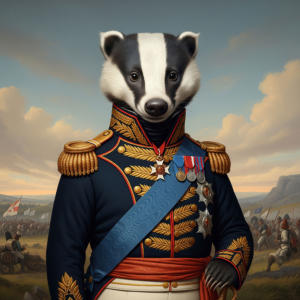
The Battle of Waterloo, fought on Sunday, June 18, 1815, near Waterloo (in what is now Belgium), was one of the most decisive battles in
European history. It marked the definitive end of the Napoleonic Wars and Napoleon Bonaparte's remarkable "Hundred Days" return from
exile.
Battle of Waterloo





 Pubs
Pubs Open Map in New Window
 England
 Scotland
 Wales
Wales Ireland
 County Map
 About Britain
 Pubs
Pubs British Beer
 Perfect Pint
 Beer Glasses
 The Barren Years
 Real Fires
 Breweries
 Brewing
 British Food
 Recipes
 Pub Interiors
 Dog Friendly
 Pub Games
 Strange Pub Names
 Visitor Information
 Oldest Pub
 Pub Signs
 Micropubs
 Buildings
 Cathedrals
 Stately Homes
 Castles
 Listed Buildings
 Scheduled Monuments
 Oak Framing
 Architecture
 Thatching
 Waterways
 Sailing
 Shipbuilding
 Boatbuilding
  Shipping Forecast
 Britain's Coastline
 Coastal Locations
 Piers
Piers Lighthouses
 Harbours
 Beach Safety
 British Beaches
 Canals
 Rivers
 Islands
 Lakes
Lakes Waterfalls
 Historical
 Famous People
 Kings & Queens
 Kings of England
 History of Britain
 Industrial Revolution
 Act of Union
 Beaufort Scale
 British Firsts
 World Heritage Sites
 Historical Periods
 Historical Boundaries
 Tradition & Culture
 Morris Dancing
 Film & Television
 Television
 Calendar of Events
 British Sport
 Scottish Highlands
 Money
Money Dry Stone Walling
 British Wildlife
 Class System
 Geographical
 Pub Boundaries
 Facts 'n' Figures
 British Isles
 Other Areas
 Place Name Origins
 Topography
 Suggest an Inn
 Explanation of symbols
 Why Us?
 Places to Visit
 Long Distance Paths
 National Parks
 Areas of Outstanding Natural Beauty
 Coastal Locations
 Other areas of Britain
 Maps
Maps Our Favourite Locations
 Search
 Focus On...
 News
News Contact
 About Us
 Our History
 Donate