The Father of Aerodynamics and the man who flew a heavier than air aeroplane 50 years before the Wright brothers.
George Cayley
Sir George Cayley (1773–1857) is often referred to as the "Father of Aerodynamics" and is
a pivotal figure in the history of aviation. He was an English engineer, inventor, and pioneer
in the study of flight, making significant contributions that laid the groundwork for modern
aeronautics.
Early Life and Education:
Born:
December 27, 1773, in Scarborough, Yorkshire, England.Education:
Cayley received a typical education for a young man of his status, but his passion for mechanics, engineering, and natural sciences led him to pursue these subjects independently.Key Contributions to Aviation:
Understanding Lift, Drag, and Thrust:
Cayley was the first to identify and describe the four forces of flight: lift, drag, thrust, and weight (gravity). He recognised that in order for an aircraft to fly, lift must overcome weight, and thrust must overcome drag. This understanding is fundamental to the science of aerodynamics.Aerodynamic Principles:
He conducted extensive experiments on the principles of flight, including the study of how air flows over curved surfaces, which led him to develop the concept of the modern airfoil. Cayley's work on the shape of wings to generate lift was revolutionary and is still the basis of wing design today.The First Gliders:
In 1804, Cayley built a small, unmanned glider that is considered the first successful heavier-than-air flying machine. He later constructed larger models and is believed to have built the first glider capable of carrying a human, around 1853. A coachman or a boy employed by Cayley is thought to have been the first person to fly in one of these gliders, making it a landmark event in aviation history.The Cayley Disc (1799):
Cayley's 1799 sketch, known as the "Cayley Disc," is one of the most famous in aviation history. It depicted a fixed-wing aircraft with separate mechanisms for lift, propulsion, and control—a concept that would later become the standard for air plane design.Rotary Wings and Vertical Flight:
Although primarily known for his work on fixed-wing flight, Cayley also explored the concept of rotary wings and vertical flight, laying some of the early groundwork for helicopter design.Published Works:
Cayley published several papers and articles on aerodynamics and flight, including his seminal work "On Aerial Navigation" (1809–1810), in which he detailed his theories on the principles of flight. These publications influenced future generations of inventors and engineers, including those like the Wright brothers.Pioneer of Engineering and Innovation:
Beyond aviation, Cayley was a prolific inventor with interests in various fields, including mechanical engineering, agriculture, and medicine. He invented a caterpillar tractor, a tension-spoke wheel (which influenced modern bicycle wheels), and various other mechanical devices.Legacy:
Influence on Aviation:
George Cayley’s work set the stage for the development of powered flight. His insights into the forces of flight and the design of flying machines were crucial to the eventual success of aviation pioneers in the early 20th century. The Wright brothers, who successfully flew the first powered air plane in 1903, acknowledged Cayley’s contributions as foundational to their own work.Recognition:
Cayley was knighted in 1839 for his contributions to engineering and science. Today, he is remembered as one of the great pioneers of aviation, and his legacy is honoured in various ways, including through the naming of the Royal Aeronautical Society's headquarters in London, which is known as "The Cayley House."Commemoration:
Various memorials and tributes exist in his honour, including a commemorative plaque at Brompton Hall, his family estate, and a statue in his birthplace, Scarborough. Sir George Cayley was a visionary who laid the foundations of modern aerodynamics and flight. His work on the principles of flight, glider designs, and the forces acting on an aircraft were pioneering achievements that made him a key figure in aviation history. Cayley's ideas and inventions bridged the gap between the dreams of human flight and the practical realities that would eventually lead to powered aviation.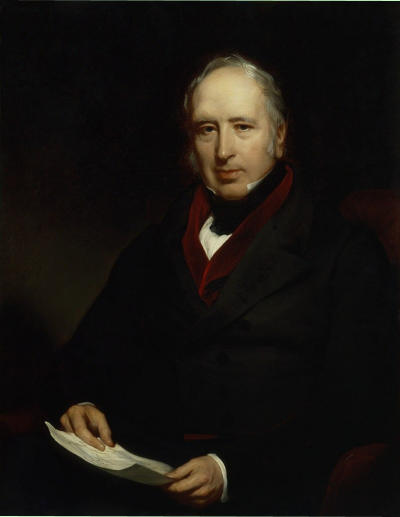
 Pubs
 Open Map in New Window
 England
 Scotland
 Wales
 Ireland
 County Map
 About Britain
 Pubs
 British Beer
 Perfect Pint
 Beer Glasses
 The Barren Years
 Real Fires
 Breweries
 Brewing
 British Food
 Recipes
 Pub Interiors
 Dog Friendly
 Pub Games
 Strange Pub Names
 Visitor Information
 Oldest Pub
 Pub Signs
 Micropubs
 Buildings
 Cathedrals
 Stately Homes
 Castles
 Listed Buildings
 Scheduled Monuments
 Oak Framing
 Architecture
 Thatching
 Waterways
 Sailing
 Shipbuilding
 Boatbuilding
 Shipping Forecast
 Britain's Coastline
 Coastal Locations
 Piers
 Lighthouses
 Harbours
 Beach Safety
 British Beaches
 Canals
 Rivers
 Islands
 Lakes
 Waterfalls
 Historical
 Famous People
 Kings & Queens
 Kings of England
 History of Britain
 Industrial Revolution
 Act of Union
 Beaufort Scale
 British Firsts
 World Heritage Sites
 Historical Periods
 Historical Boundaries
 Tradition & Culture
 Morris Dancing
 Film & Television
 Television
 Calendar of Events
 British Sport
 Scottish Highlands
 Money
 Dry Stone Walling
 British Wildlife
 Class System
 Geographical
 Pub Boundaries
 Facts 'n' Figures
 British Isles
 Other Areas
 Place Name Origins
 Topography
 Suggest an Inn
 Explanation of symbols
 Why Us?
 Places to Visit
 Long Distance Paths
 National Parks
 Areas of Outstanding Natural Beauty
 Coastal Locations
 Other areas of Britain
 Maps
 Our Favourite Locations
 Search
 Focus On...
 News
 Contact
 About Us
 Our History
 Donate
