Folly
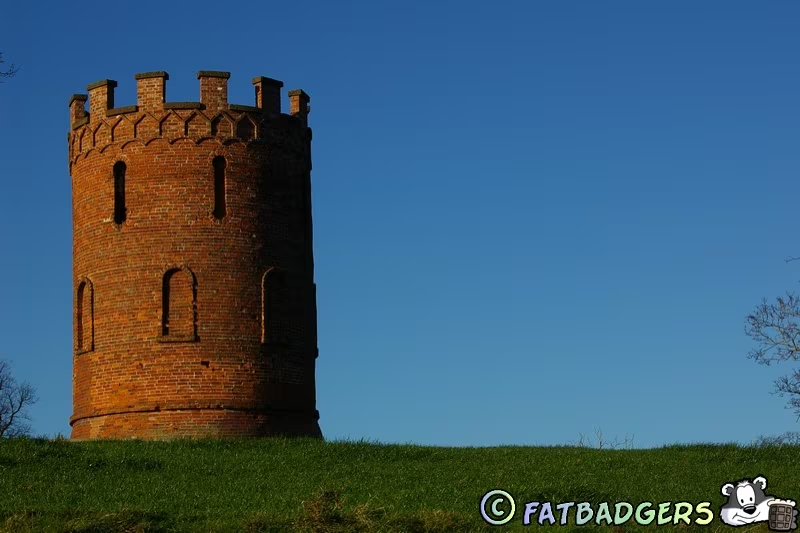
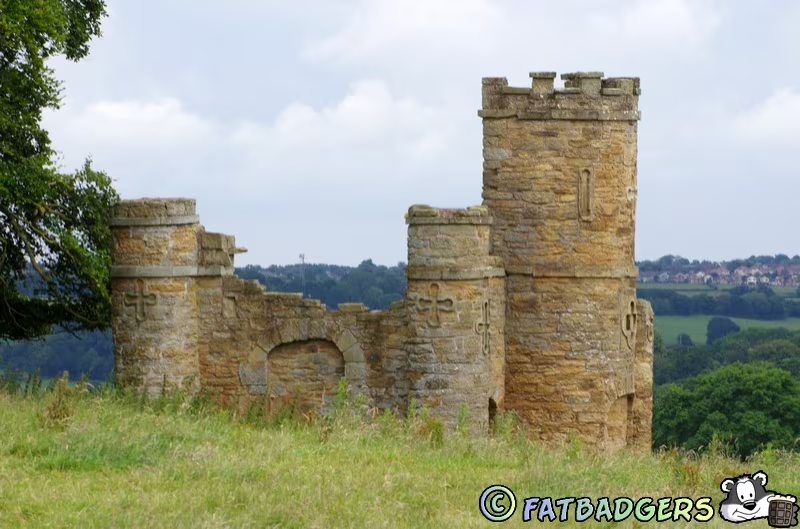
A folly is a decorative building or structure, often found in gardens or parks, that is constructed primarily for aesthetic pleasure rather than for practical purposes.Ornamental Design:
Follies are usually designed to be visually striking and interesting, often reflecting historical, romantic, or whimsical themes.Lack of Functionality:
Unlike most buildings, follies do not serve a functional purpose such as housing, storage, or workspaces. Their main role is to enhance the landscape.Variety of Styles:
Follies can take many forms, including mock ruins, towers, pagodas, temples, grottoes, and hermitages. They often mimic architectural styles from different cultures and periods.Historical Popularity:
Follies were particularly popular in the 18th and 19th centuries in Europe, especially in England, where they were often part of large estates and gardens. An example of a folly might be a small, intricately designed tower that looks like a medieval castle ruin, placed in a garden to add an element of intrigue and beauty.Dovecote
A dovecote, also known as a columbarium, is a structure intended to house pigeons or doves. These structures have a long history and have been used in various cultures around the world.Purpose:
Dovecotes were traditionally built to provide shelter for pigeons or doves, which were kept for their meat, eggs, and manure. Pigeon manure was especially valued as a fertilizer and for use in tanning leather.Design:
Dovecotes come in various shapes and sizes, including free-standing towers, small huts, or integrated into larger buildings like barns. They typically have multiple nesting holes or compartments arranged inside to accommodate many birds. The exterior often features small entrance holes for the birds.Historical Significance:
In medieval Europe, dovecotes were often a sign of wealth and status. Only lords and landowners were allowed to build and maintain them, reflecting the exclusive rights to own pigeons. Some dovecotes from this period still stand today as historical landmarks.Architectural Styles:
Dovecotes exhibit a range of architectural styles, from simple, functional designs to elaborate and ornate structures. In England and France, for instance, dovecotes might be round, square, or polygonal, often with distinctive roofs and sometimes decorative elements.Modern Use:
While the practical need for dovecotes has diminished with changes in agricultural practices and food production, they are sometimes maintained for historical preservation, ornamental purposes, or by hobbyists who raise pigeons. Examples of dovecotes include the large, round stone dovecotes found in the UK, often part of historical estates, and the smaller, more decorative dovecotes found in gardens. Some dovecotes are incorporated into the architecture of farmhouses or manor houses, blending functionality with aesthetic appeal. Dovecotes are still made today albeit usually decorative by companies such as Albion Oak Ltd who offer them as a feature item made in oak.

The British Folly and Dovecote
The British Isles have some weird and wonderful buildings, some serve no real purpose whilst others have a very practical use.















 Pubs
Pubs Open Map in New Window
 England
 Scotland
 Wales
Wales Ireland
 County Map
 About Britain
 Pubs
Pubs British Beer
 Perfect Pint
 Beer Glasses
 The Barren Years
 Real Fires
 Breweries
 Brewing
 British Food
 Recipes
 Pub Interiors
 Dog Friendly
 Pub Games
 Strange Pub Names
 Visitor Information
 Oldest Pub
 Pub Signs
 Micropubs
 Buildings
 Cathedrals
 Stately Homes
 Castles
 Listed Buildings
 Scheduled Monuments
 Oak Framing
 Architecture
 Thatching
 Waterways
 Sailing
 Shipbuilding
 Boatbuilding
  Shipping Forecast
 Britain's Coastline
 Coastal Locations
 Piers
Piers Lighthouses
 Harbours
 Beach Safety
 British Beaches
 Canals
 Rivers
 Islands
 Lakes
Lakes Waterfalls
 Historical
 Famous People
 Kings & Queens
 Kings of England
 History of Britain
 Industrial Revolution
 Act of Union
 Beaufort Scale
 British Firsts
 World Heritage Sites
 Historical Periods
 Historical Boundaries
 Tradition & Culture
 Morris Dancing
 Film & Television
 Television
 Calendar of Events
 British Sport
 Scottish Highlands
 Money
Money Dry Stone Walling
 British Wildlife
 Class System
 Geographical
 Pub Boundaries
 Facts 'n' Figures
 British Isles
 Other Areas
 Place Name Origins
 Topography
 Suggest an Inn
 Explanation of symbols
 Why Us?
 Places to Visit
 Long Distance Paths
 National Parks
 Areas of Outstanding Natural Beauty
 Coastal Locations
 Other areas of Britain
 Maps
Maps Our Favourite Locations
 Search
 Focus On...
 News
News Contact
 About Us
 Our History
 Donate