Causes of the Conflict:
The root cause of the Falklands War was a long-standing and unresolved dispute over the sovereignty of the islands: • Historical Claims: Both the UK and Argentina had historical claims to the islands. Britain asserts its claim based on continuous occupation and administration since 1833, as well as the principle of self- determination for the islanders, who are predominantly of British descent and wish to remain British. Argentina bases its claim on inheriting the Spanish Empire's claims in the region and geographical proximity to the South American mainland although they have never inhabited the islands. • Failed Diplomacy: Decades of diplomatic negotiations had failed to find a peaceful resolution. In the years leading up to 1982, there was a sense in some British government circles that the islands were a "nuisance," and various "leaseback" schemes (where sovereignty would be ceded to Argentina, but the UK would administer the islands for a long period) were explored but met with strong opposition from the islanders. • Argentine Political Situation: In Argentina, a military junta led by General Leopoldo Galtieri was facing severe economic problems and widespread civil unrest. The invasion of the Falklands was a calculated risk, intended to rally nationalist sentiment, distract the populace from domestic issues and assert Argentina's claim by force, gambling that the UK would not respond militarily. • Signals from the UK (Misinterpretation): Some historians suggest that the 1981 British Defence White Paper, which outlined plans to withdraw HMS Endurance (the UK's only naval presence in the South Atlantic), may have sent a signal to Argentina that Britain was unwilling or unable to defend the islands.Key Events and Course of the War:
• Argentine Invasion (April 2, 1982): Argentine forces invaded and quickly occupied the Falkland Islands, overwhelming the small detachment of Royal Marines. The British Governor, Sir Rex Hunt, was expelled. The following day, South Georgia was also taken. • British Response: British Prime Minister Margaret Thatcher swiftly authorized a military operation, codenamed "Operation Corporate," to retake the islands. A formidable naval task force, comprising warships, submarines and requisitioned merchant ships (including the liners Queen Elizabeth 2 and Canberra), was rapidly assembled and set sail for the South Atlantic. • Total Exclusion Zone (April 30): The British declared a 200-mile Total Exclusion Zone around the islands, threatening to sink any Argentine vessel within it. • Sinking of ARA General Belgrano (May 2): The Argentine cruiser ARA General Belgrano was sunk by the British submarine HMS Conqueror outside the exclusion zone, resulting in the loss of 323 Argentine lives – the largest loss of life in a single incident during the war. This controversial sinking led the Argentine Navy to withdraw from direct engagement. • Sinking of HMS Sheffield (May 4): In retaliation, the British destroyer HMS Sheffield was hit by an Argentine Exocet missile, fired from a Super Étendard aircraft. The Sheffield later sank, with 20 crew members killed. This highlighted the vulnerability of surface ships to modern anti-ship missiles. • Recapture of South Georgia (April 25): British special forces and Royal Marines successfully retook South Georgia, demonstrating early British resolve and capability. British forces executed an amphibious landing at San Carlos Water on East Falkland, establishing a beachhead. This area became known as "Bomb Alley" due to intense Argentine air attacks, which resulted in the sinking of several British ships, including HMS Ardent, HMS Antelope, HMS Coventry and the vital logistics ship SS Atlantic Conveyor. • Battle of Goose Green (May 28-29): The 2nd Battalion, Parachute Regiment (2 Para), fought a fierce and costly battle to capture the Argentine garrison at Goose Green and Darwin. It was the first major land battle of the conflict. • The "Dash to Stanley": British forces, including the Parachute Regiment and the Royal Marines, began a series of arduous marches across East Falkland towards the capital, Port Stanley, often carrying heavy equipment over difficult terrain. • Battles for the "Ring of Mountains" (June 11-14): The final, decisive battles involved intense night assaults on the mountains surrounding Port Stanley: Mount Harriet, Two Sisters, Mount Longdon (June 11-12), Wireless Ridge, Mount Tumbledown and Mount William (June 13-14). These were incredibly tough, close-quarters engagements, often fought bayonet-to-bayonet, where British forces ultimately prevailed against determined Argentine defenders. • Argentine Surrender (June 14): With British forces having captured the high ground surrounding Port Stanley, the Argentine garrison, cut off and demoralized, surrendered. General Mario Menéndez signed the surrender document, effectively ending the conflict.Casualties:
• Argentine: 649 military personnel killed, 1,657 wounded and 11,313 captured. • British: 255 military personnel killed (including 86 Royal Navy, 124 Army, 27 Royal Marines), 775 wounded. • Falkland Islanders: 3 civilians killed.Impact and Significance:
• Decisive British Victory: The Falklands War was a clear and decisive British military victory. • Reaffirmation of Sovereignty: It reaffirmed British sovereignty over the Falkland Islands, South Georgia and the South Sandwich Islands. The islanders continue to vote overwhelmingly to remain a British Overseas Territory. • Political Impact in the UK: The victory significantly boosted national morale and support for Prime Minister Margaret Thatcher, contributing to her re-election in 1983 and cementing her image as the "Iron Lady." • Political Impact in Argentina: The defeat led to the collapse of the military junta in Argentina, paving the way for the return to democracy. • Military Lessons: The war provided valuable lessons in modern naval warfare, amphibious operations, air combat and logistics, highlighting the importance of anti-ship missile defence and the vulnerability of ships. It also demonstrated Britain's capacity to project military power globally. • Ongoing Dispute: While militarily resolved, the sovereignty dispute between the UK and Argentina remains unresolved diplomatically.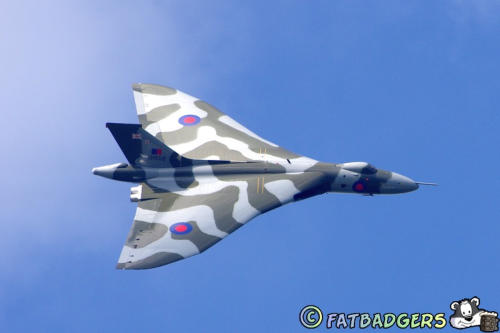

The Falklands War was a short but intense undeclared war fought between Argentina and the United Kingdom in 1982 over the
sovereignty of the Falkland Islands (known as Islas Malvinas in Argentina), South Georgia, and the South Sandwich Islands. The conflict
lasted 74 days, from April 2 to June 14, 1982
Falklands War





 Pubs
Pubs Open Map in New Window
 England
 Scotland
 Wales
Wales Ireland
 County Map
 About Britain
 Pubs
Pubs British Beer
 Perfect Pint
 Beer Glasses
 The Barren Years
 Real Fires
 Breweries
 Brewing
 British Food
 Recipes
 Pub Interiors
 Dog Friendly
 Pub Games
 Strange Pub Names
 Visitor Information
 Oldest Pub
 Pub Signs
 Micropubs
 Buildings
 Cathedrals
 Stately Homes
 Castles
 Listed Buildings
 Scheduled Monuments
 Oak Framing
 Architecture
 Thatching
 Waterways
 Sailing
 Shipbuilding
 Boatbuilding
  Shipping Forecast
 Britain's Coastline
 Coastal Locations
 Piers
Piers Lighthouses
 Harbours
 Beach Safety
 British Beaches
 Canals
 Rivers
 Islands
 Lakes
Lakes Waterfalls
 Historical
 Famous People
 Kings & Queens
 Kings of England
 History of Britain
 Industrial Revolution
 Act of Union
 Beaufort Scale
 British Firsts
 World Heritage Sites
 Historical Periods
 Historical Boundaries
 Tradition & Culture
 Morris Dancing
 Film & Television
 Television
 Calendar of Events
 British Sport
 Scottish Highlands
 Money
Money Dry Stone Walling
 British Wildlife
 Class System
 Geographical
 Pub Boundaries
 Facts 'n' Figures
 British Isles
 Other Areas
 Place Name Origins
 Topography
 Suggest an Inn
 Explanation of symbols
 Why Us?
 Places to Visit
 Long Distance Paths
 National Parks
 Areas of Outstanding Natural Beauty
 Coastal Locations
 Other areas of Britain
 Maps
Maps Our Favourite Locations
 Search
 Focus On...
 News
News Contact
 About Us
 Our History
 Donate