Background:
The English Civil War pitted those loyal to King Charles I (the Royalists or "Cavaliers") against the forces of Parliament (the Parliamentarians or "Roundheads"). By 1645, after several years of fighting, neither side had achieved a decisive victory. Parliament, however, had recently created the New Model Army, a professional, well-trained and highly disciplined force, led by Sir Thomas Fairfax as Commander-in-Chief, with Oliver Cromwell commanding its formidable cavalry. King Charles I, with his nephew Prince Rupert of the Rhine as a key military leader, was hoping to regain momentum. After a Royalist victory at Leicester in May 1645, Charles made the strategic error of dividing his forces, sending some cavalry to the West Country. This left his main army numerically inferior to the newly formed New Model Army.The Battle:
The two armies met near the village of Naseby in Northamptonshire, England. • Deployment: The Parliamentarians took up a strong position on a ridge, initially out of sight of the Royalists. Cromwell, however, advised moving them slightly back to entice the Royalists to attack uphill, believing the Royalists would not risk a frontal assault on such a strong position. • Royalist Advance: The Royalists, confident despite being outnumbered, launched the first attack. • Prince Rupert's Charge: On the Royalist right flank, Prince Rupert led a furious cavalry charge that successfully shattered the Parliamentarian left wing (commanded by Henry Ireton) and pursued them off the battlefield. However, in his characteristic impetuosity, Rupert continued his pursuit too far, even attempting to attack the Parliamentarian baggage train, effectively removing his best cavalry from the crucial main engagement for a significant period. • Cromwell's Discipline: On the Parliamentarian right flank, Oliver Cromwell's "Ironsides" cavalry defeated their Royalist counterparts (led by Sir Marmaduke Langdale). Crucially, unlike Rupert, Cromwell kept his cavalry under control. Instead of pursuing the fleeing enemy far from the field, he wheeled his cavalry back to attack the exposed flank of the Royalist infantry in the centre. • Infantry Struggle: In the centre, the Royalist infantry initially performed well against the Parliamentarian foot soldiers, even pushing them back. However, with Cromwell's cavalry now attacking their flank and the Parliamentarian infantry holding firm, the Royalist infantry became surrounded and overwhelmed. • Rout: When Rupert finally returned, it was too late. The Royalist infantry was broken and their army was in disarray. King Charles I himself was almost captured as his army fled in a chaotic rout. The Parliamentarian cavalry pursued the fleeing Royalists for miles, ensuring a devastating defeat.Outcome and Significance:
• Decisive Parliamentarian Victory: The Battle of Naseby was an overwhelming victory for Parliament. Royalist losses were catastrophic: an estimated 1,000 killed and wounded and critically, around 4,500 Royalist infantrymen captured. Parliamentarian casualties were much lighter, around 150 killed. • Destruction of the Royalist Main Army: Naseby essentially destroyed King Charles I's main field army. He lost his best veteran infantry, a large amount of artillery and crucial supplies. • Turning Point of the First English Civil War: While the war dragged on for another year, Naseby made the ultimate Royalist defeat inevitable. Charles I was left with no effective field army and was forced to move from garrison to garrison, eventually surrendering to the Scots in May 1646. • Ascendancy of the New Model Army: The battle demonstrated the superior training, discipline and leadership of the New Model Army, particularly the effectiveness of Cromwell's cavalry tactics, which prioritized battlefield control over impetuous pursuit. • Shift in Political Power: Naseby ensured that Parliament would win the First English Civil War. This fundamentally shifted the balance of power in England, asserting Parliament's right to a permanent role in government and contributing to the eventual establishment of a constitutional monarchy, rather than absolute rule by the monarch. It also had implications for religious freedom, challenging the monopoly of the Church of England. • Capture of Royalist Papers: After the battle, Parliament captured King Charles's private papers, which revealed his attempts to seek foreign aid (including from Irish Catholics), further alienating many and damaging his reputation. The Battle of Naseby stands as a landmark event in British history, a short but brutal engagement that irrevocably altered the course of the English Civil War and laid foundations for Britain's future political system.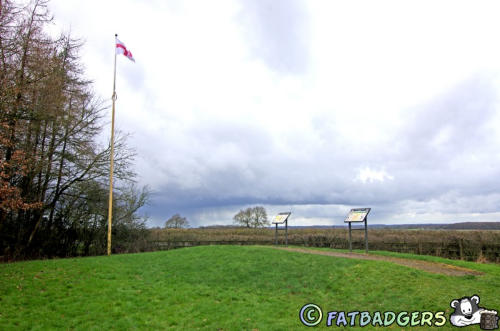
The Battle of Naseby, fought on June 14, 1645, was a crucial engagement in the First English Civil War (1642-1646). It represented a
decisive victory for the Parliamentarian forces over the Royalists and effectively sealed the fate of King Charles I.
Battle of Naseby





 Pubs
 Open Map in New Window
 England
 Scotland
 Wales
 Ireland
 County Map
 About Britain
 Pubs
 British Beer
 Perfect Pint
 Beer Glasses
 The Barren Years
 Real Fires
 Breweries
 Brewing
 British Food
 Recipes
 Pub Interiors
 Dog Friendly
 Pub Games
 Strange Pub Names
 Visitor Information
 Oldest Pub
 Pub Signs
 Micropubs
 Buildings
 Cathedrals
 Stately Homes
 Castles
 Listed Buildings
 Scheduled Monuments
 Oak Framing
 Architecture
 Thatching
 Waterways
 Sailing
 Shipbuilding
 Boatbuilding
 Shipping Forecast
 Britain's Coastline
 Coastal Locations
 Piers
 Lighthouses
 Harbours
 Beach Safety
 British Beaches
 Canals
 Rivers
 Islands
 Lakes
 Waterfalls
 Historical
 Famous People
 Kings & Queens
 Kings of England
 History of Britain
 Industrial Revolution
 Act of Union
 Beaufort Scale
 British Firsts
 World Heritage Sites
 Historical Periods
 Historical Boundaries
 Tradition & Culture
 Morris Dancing
 Film & Television
 Television
 Calendar of Events
 British Sport
 Scottish Highlands
 Money
 Dry Stone Walling
 British Wildlife
 Class System
 Geographical
 Pub Boundaries
 Facts 'n' Figures
 British Isles
 Other Areas
 Place Name Origins
 Topography
 Suggest an Inn
 Explanation of symbols
 Why Us?
 Places to Visit
 Long Distance Paths
 National Parks
 Areas of Outstanding Natural Beauty
 Coastal Locations
 Other areas of Britain
 Maps
 Our Favourite Locations
 Search
 Focus On...
 News
 Contact
 About Us
 Our History
 Donate
