Few figures in British history are as controversial or influential as Oliver Cromwell. Soldier, statesman, religious radical and ruler,
Cromwell emerged from relative obscurity to dominate the political life of Britain during one of its most turbulent periods. His
career was shaped by civil war, revolution and intense religious conviction and his actions permanently altered the relationship
between monarchy and Parliament. To some historians he represents the defence of liberty against tyranny; to others he remains
a symbol of military dictatorship and brutality, particularly in Ireland. His legacy continues to divide opinion more than three
centuries after his death.
Cromwell was born in 1599 in Huntingdon, into a middle-ranking gentry family. Although he was distantly related to the powerful
Tudor minister Thomas Cromwell, his own branch of the family was not especially wealthy or politically important. He briefly
attended University of Cambridge before returning to manage family estates. For much of his early life there was little indication
that he would become one of the most powerful men in Europe. What distinguished him, however, was his intense Puritan faith.
Cromwell believed deeply that God directed human events and that England had a special religious destiny. This conviction
would shape every aspect of his political and military career.
The England into which Cromwell was born was increasingly divided. Under Charles I, tensions grew between the monarchy and
Parliament over taxation, religion and royal authority. Charles believed strongly in the divine right of kings and frequently
attempted to govern without parliamentary consent. Many Protestants, especially Puritans like Cromwell, feared that the king’s
religious policies were moving England closer to Catholicism. Political disagreements gradually deepened into open hostility and
in 1642 civil war broke out between Royalists, who supported the king and Parliamentarians, who opposed him.
It was during the English Civil Wars that Cromwell rose to prominence. Though he began with little formal military experience, he
quickly proved himself an effective cavalry commander. He believed that discipline, religious commitment and merit were more important than noble birth, an idea
that was relatively radical for the time. Cromwell helped create the New Model Army, a professional and highly disciplined force that transformed Parliament’s
military fortunes. Unlike many earlier armies, promotion within the New Model Army was often based on ability rather than aristocratic status. Under Cromwell’s
leadership, the army achieved decisive victories at battles such as Marston Moor and Naseby, eventually destroying the king’s ability to continue the war.
The conflict reached a dramatic climax in 1649 when Charles I was put on
trial for treason against his own people. The idea that a reigning monarch
could be judged by his subjects was extraordinary and shocked much of
Europe. Cromwell supported the decision and signed the king’s death
warrant. Charles was executed outside the Banqueting House in January
1649. With the monarchy abolished, England briefly became a republic
known as the Commonwealth. The execution of the king marked a turning
point in British history, demonstrating that royal authority was no longer
beyond challenge.
Despite the creation of the Commonwealth, stability did not follow easily.
Political divisions continued and Cromwell increasingly relied on the army
to maintain order. His most controversial actions occurred during his
military campaign in Ireland between 1649 and 1650. At towns such as
Drogheda and Wexford, Cromwell’s forces massacred defenders and
civilians after sieges. The campaign also involved widespread
confiscation of Catholic land and harsh repression. In Ireland, Cromwell’s
name remains associated with cruelty and oppression and his actions
there are still remembered with bitterness. Historians continue to debate
whether his conduct reflected the brutal norms of seventeenth-century
warfare or represented exceptional severity even for the time.
In 1653 Cromwell became Lord Protector of England, Scotland and Ireland. Although the country remained officially a republic, Cromwell effectively ruled as a
military head of state. His government introduced administrative reforms and strengthened the navy, helping England become a more significant European power.
At the same time, his rule imposed strict moral standards influenced by Puritan beliefs. Activities considered sinful or disorderly were discouraged and some public
entertainments were restricted. Cromwell believed he was creating a godly society guided by divine principles, though critics accused him of authoritarianism and
hypocrisy. Ironically, a revolution fought partly against absolute power had resulted in one man holding enormous authority.
Cromwell’s foreign policy expanded English influence abroad. Under his leadership the navy grew stronger, England fought successful wars against the Dutch and
Spanish and territories such as Jamaica were captured. These developments contributed to England’s emergence as a major naval and imperial power. Yet despite
military success abroad, Cromwell struggled to create lasting political stability at home. His rule depended heavily on his personal authority and the loyalty of the
army.
When Cromwell died in 1658, the political system he had created quickly weakened. His son Richard lacked both military experience and political influence and
divisions soon re-emerged. In 1660 the monarchy was restored under Charles II. As a symbolic act of revenge, Cromwell’s body was exhumed, hanged and
beheaded, demonstrating the depth of hostility many still felt toward him.
Today Cromwell remains one of the most debated figures in British and
Irish history. Supporters portray him as a defender of Parliament, a
brilliant military leader and a man who challenged the idea of unchecked
royal authority. Critics view him as a dictator whose rule relied on military
force and whose campaigns in Ireland caused immense suffering. Both
interpretations contain elements of truth. Cromwell was neither simply a
hero nor merely a villain; he was a complex figure shaped by an age of
revolution, religious conflict and political upheaval.
What cannot be denied is his historical importance. Cromwell played a
central role in transforming the political structure of Britain. The struggles
of his era helped establish the principle that monarchs could not govern
without Parliament, laying foundations for the later development of
constitutional monarchy and parliamentary democracy. Even now,
debates about Cromwell continue because his life raises enduring
questions about power, religion, liberty and the limits of political violence.
What cannot be disputed is his recognition that politicians can be
corrupted by money and power - something the politicians of today should
be reminded of - regularly!
The population ‘allow’ themselves to be ‘governed’ by members of parliament only because they mostly can’t be bothered with politics and as long as they can go
about their business and pop to the pub for a pint without too much interference from the government, they are happy to let them shout at each other across the
chamber and call each other honourable even though most know they are not - eventually someone will stand up and be counted as Cromwell did in 1653 when he
made his speech to parliament and 50 years previously when Guy Fawkes tried to blow the place to bits!.
Oliver Cromwell:
'In the name of God, go!' speech dismissing Rump Parliament - 165320 April 1653, London, England
It is high time for me to put an end to your sitting in this place, which you have dishonored by your contempt of all virtue and defiled by your practice of every vice. Ye are a factious crew and enemies to all good government. Ye are a pack of mercenary wretches and would like Esau sell your country for a mess of pottage and like Judas betray your God for a few pieces of money. Is there a single virtue now remaining amongst you? Is there one vice you do not possess? Ye have no more religion than my horse. Gold is your God. Which of you have not bartered your conscience for bribes? Is there a man amongst you that has the least care for the good of the Commonwealth? Ye sordid prostitutes have you not defiled this sacred place and turned the Lord's temple into a den of thieves, by your immoral principles and wicked practices? Ye are grown intolerably odious to the whole nation. You were deputed here by the people to get grievances redressed, are yourselves become the greatest grievance. Your country therefore calls upon me to cleanse this Augean stable, by putting a final period to your iniquitous proceedings in this House; and which by God's help and the strength he has given me, I am now come to do. I command ye therefore, upon the peril of your lives, to depart immediately out of this place. Go, get you out! Make haste! Ye venal slaves be gone! So! Take away that shining bauble there and lock up the doors. In the name of God, go!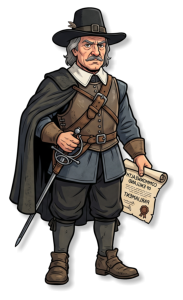
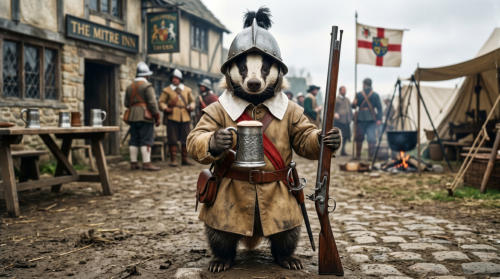
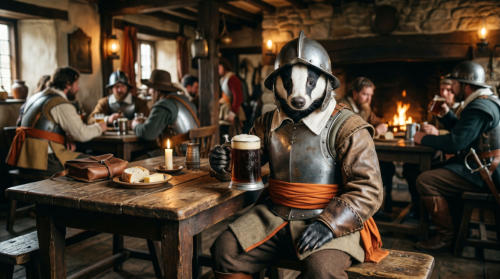
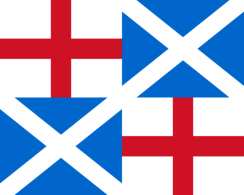
Oliver Cromwell was one of the most influential - and controversial figures in British and Irish history. He led Parliament’s forces during the
English Civil Wars, helped overthrow King Charles I and later ruled England, Scotland and Ireland as Lord Protector during the 1650’s.
Oliver Cromwell





 Pubs
Pubs Open Map in New Window
 England
 Scotland
 Wales
Wales Ireland
 County Map
 About Britain
 Pubs
Pubs British Beer
 Perfect Pint
 Beer Glasses
 The Barren Years
 Real Fires
 Breweries
 Brewing
 British Food
 Recipes
 Pub Interiors
 Dog Friendly
 Pub Games
 Strange Pub Names
 Visitor Information
 Oldest Pub
 Pub Signs
 Micropubs
 Buildings
 Cathedrals
 Stately Homes
 Castles
 Listed Buildings
 Scheduled Monuments
 Oak Framing
 Architecture
 Thatching
 Waterways
 Sailing
 Shipbuilding
 Boatbuilding
  Shipping Forecast
 Britain's Coastline
 Coastal Locations
 Piers
Piers Lighthouses
 Harbours
 Beach Safety
 British Beaches
 Canals
 Rivers
 Islands
 Lakes
Lakes Waterfalls
 Historical
 Famous People
 Kings & Queens
 Kings of England
 History of Britain
 Industrial Revolution
 Act of Union
 Beaufort Scale
 British Firsts
 World Heritage Sites
 Historical Periods
 Historical Boundaries
 Tradition & Culture
 Morris Dancing
 Film & Television
 Television
 Calendar of Events
 British Sport
 Scottish Highlands
 Money
Money Dry Stone Walling
 British Wildlife
 Class System
 Geographical
 Pub Boundaries
 Facts 'n' Figures
 British Isles
 Other Areas
 Place Name Origins
 Topography
 Suggest an Inn
 Explanation of symbols
 Why Us?
 Places to Visit
 Long Distance Paths
 National Parks
 Areas of Outstanding Natural Beauty
 Coastal Locations
 Other areas of Britain
 Maps
Maps Our Favourite Locations
 Search
 Focus On...
 News
News Contact
 About Us
 Our History
 Donate