The United Kingdom
It's worth noting that while these are the traditional patron saints, their importance and the way their feast days are celebrated can vary across the UK. For example, St. George's Day in England is not as widely observed as St. Andrew's Day in Scotland or St. David's Day in Wales, although there have been recent efforts to promote its celebration. Saint Patrick is the patron saint for the entire island of Ireland, and his day is a significant cultural and religious holiday in both Northern Ireland and the Republic of Ireland. England’s patron Saint George is not actually the original Saint of England.England’s First Patron Saint
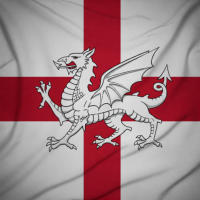
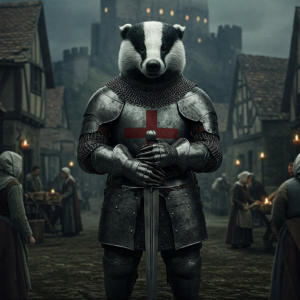
It’s widely accepted that St George is the Patron Saint of England, celebrated each year on April 23rd, when the red cross of St George is proudly flown across the country. But what if the flag we should be raising is not St George’s red cross — but the White Dragon of England on November 20th? Surprisingly, St George wasn’t the original patron saint of England. That honour belonged to St Edmund, also known as Edmund the Martyr, a 9th-century King of East Anglia. Born on Christmas Day in 841 AD, Edmund became king in 856. Raised as a Christian, he fought valiantly alongside King Alfred of Wessex against the invading Great Heathen Army — a coalition of Norse and Viking forces. In 869/70, Edmund’s army was defeated, and he was captured. Offered a chance to share power and renounce his faith, Edmund refused. According to a 10th-century account by Abbo of Fleury, quoting Saint Dunstan, Edmund was tied to a tree, shot with arrows, and beheaded on November 20th. Legend says his severed head was protected by a talking wolf, which led his followers to it by calling out, “Hic! Hic! Hic!” (“Here! Here! Here!”). Though the exact location of his death remains uncertain — possibly Bradfield St Clare, Maldon, or Hoxne — what’s known is that in 902 AD, his remains were moved to Bedricsworth (modern Bury St Edmunds), where a shrine was established. In 1020, King Canute built a stone abbey to house the shrine, which soon became one of England’s most important pilgrimage sites. For centuries, English monarchs patronised Edmund’s shrine, and the town flourished with religious and cultural significance. A key moment came in 1214, when rebel barons met in secret at the shrine on St Edmund’s Day, just before confronting King John with the Charter of Liberties, a forerunner to the Magna Carta. This historic event is reflected in Bury St Edmunds’ motto: “Shrine of a King, Cradle of the Law.” However, St Edmund’s influence began to fade in 1199, during the Third Crusade. When King Richard I visited St George’s tomb in Lydda, he prayed for victory and won the next day’s battle. Inspired by this, Richard adopted St George as his personal patron and military protector. Though the banner of St Edmund continued to be carried into battle, by the time of Edward I, it was joined by St George’s flag. In 1348, Edward III established the Order of the Garter and named St George as both its patron and the Patron Saint of England. What Happened to St Edmund? During Henry VIII’s Dissolution of the Monasteries, Edmund’s remains were taken to France. In 1911, they were returned to England and now rest in the chapel at Arundel Castle. But St Edmund’s legacy hasn’t been forgotten. In 2006, a petition was submitted to Parliament to reinstate him as patron saint — it was rejected. Another campaign followed in 2013, backed by Greene King brewery in Bury St Edmunds. Though partly tongue-in-cheek, the campaign made a serious point: Should England’s patron saint really be a foreign-born figure who never even visited the country? Instead, they argued, why not honour an English king and martyr — St Edmund — under the banner of the White Dragon?
England – Saint George
Feast Day
April 23rd
Symbol
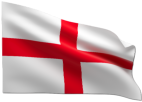
A red cross on a white background (the St George’s Cross)
Story
Saint George was a Roman soldier and Christian martyr. Though he likely never visited England, he became a
legendary figure during the Crusades and was famously said to have slain a dragon to save a princess.
Adopted
He became England’s patron saint in the 14th century, especially after King Edward III founded the Order of the
Garter in 1348 and named St George its patron.
St George is also the patron saint of several other countries, including Georgia, Ethiopia, and parts of Spain.
Ireland (including Northern Ireland) – Saint Patrick
Feast Day
March 17th
Symbol
The shamrock, used by Patrick to explain the Holy Trinity
Story
Patrick was a 5th-century missionary and bishop, credited with converting the Irish to Christianity. Born in Britain, he
was kidnapped by Irish raiders as a child and taken to Ireland as a slave — later returning as a missionary.
Adopted
Widely recognised as Ireland’s patron saint since the 7th century.
St Patrick is often associated with driving snakes out of Ireland — though that’s likely symbolic, as Ireland never had
native snakes.
Scotland – Saint Andrew
Feast Day
November 30th
Symbol
A white diagonal cross (saltire) on a blue background — the St Andrew’s Cross is Scotland’s national flag
Story
Andrew was one of Jesus’s twelve apostles and the brother of Saint Peter. According to legend, his relics were
brought to Scotland in the 8th century and enshrined at the town now called St Andrews.
Adopted
He became Scotland’s official patron saint in the 10th century, and his symbol was later adopted by Scottish armies.
St Andrew is also the patron saint of Greece, Russia, and Romania.
Wales – Saint David (Dewi Sant)
Feast Day
March 1st
Symbol
A leek or a daffodil (both are national emblems); sometimes represented with a white dove or on a black and gold
flag
Story
David was a 6th-century monk, bishop, and preacher. He’s credited with founding monasteries and performing
miracles — most famously causing the ground to rise beneath him so everyone could hear him preach.
Adopted
He became the patron saint of Wales around the 12th century.
His last words are said to have been “Be joyful. Keep the faith. Do the little things.”



The patron saints of Great Britain represent the individual nations that make up the United Kingdom — England, Scotland, Wales, and Ireland
(Northern Ireland). Each has their own unique history, legends, and a dedicated day of celebration.
Patron Saints













 Pubs
Pubs Open Map in New Window
 England
 Scotland
 Wales
Wales Ireland
 County Map
 About Britain
 Pubs
Pubs British Beer
 Perfect Pint
 Beer Glasses
 The Barren Years
 Real Fires
 Breweries
 Brewing
 British Food
 Recipes
 Pub Interiors
 Dog Friendly
 Pub Games
 Strange Pub Names
 Visitor Information
 Oldest Pub
 Pub Signs
 Micropubs
 Buildings
 Cathedrals
 Stately Homes
 Castles
 Listed Buildings
 Scheduled Monuments
 Oak Framing
 Architecture
 Thatching
 Waterways
 Sailing
 Shipbuilding
 Boatbuilding
  Shipping Forecast
 Britain's Coastline
 Coastal Locations
 Piers
Piers Lighthouses
 Harbours
 Beach Safety
 British Beaches
 Canals
 Rivers
 Islands
 Lakes
Lakes Waterfalls
 Historical
 Famous People
 Kings & Queens
 Kings of England
 History of Britain
 Industrial Revolution
 Act of Union
 Beaufort Scale
 British Firsts
 World Heritage Sites
 Historical Periods
 Historical Boundaries
 Tradition & Culture
 Morris Dancing
 Film & Television
 Television
 Calendar of Events
 British Sport
 Scottish Highlands
 Money
Money Dry Stone Walling
 British Wildlife
 Class System
 Geographical
 Pub Boundaries
 Facts 'n' Figures
 British Isles
 Other Areas
 Place Name Origins
 Topography
 Suggest an Inn
 Explanation of symbols
 Why Us?
 Places to Visit
 Long Distance Paths
 National Parks
 Areas of Outstanding Natural Beauty
 Coastal Locations
 Other areas of Britain
 Maps
Maps Our Favourite Locations
 Search
 Focus On...
 News
News Contact
 About Us
 Our History
 Donate