The UK has a rich history of tunnel construction, with numerous tunnels
serving various purposes, from transportation to utilities.
Transportation Tunnels
Channel Tunnel (Eurotunnel)
The Channel Tunnel, often referred to as the "Chunnel," is a significant engineering marvel. Beneath the English Channel, linking Folkestone, Kent in the UK with Coquelles, Pas-de-Calais in France. The concept of a tunnel beneath the English Channel dates back to the early 19th century. Various proposals were made, but serious construction efforts didn't begin until the late 20th century. Construction started in 1988 and took six years to complete. The Channel Tunnel consists of three parallel tunnels: two rail tunnels for passenger and freight trains and a smaller service tunnel in between for maintenance and emergency access. • Purpose: Rail tunnel connecting the UK and France. Length: 50.5 kilometres (31.4 miles), with 37.9 kilometres (23.5 miles) underwater. • Opened: 1994. • Significance: One of the longest underwater tunnels in the world, it facilitates passenger and freight travel between the two countries.Lord Ward's Tunnel
Also known as the Dudley Tunnel, is a historic canal tunnel located in the West Midlands, England. Constructed primarily for the transportation of limestone and other materials mined in the Dudley area. Named after John Ward, 1st Earl of Dudley, who owned the land and was instrumental in the tunnel's creation. At the time of its completion, it was one of the longest canal tunnels in the world. Lord Ward's Tunnel is a key attraction within the Dudley Canal and Tunnel Trust. Visitors can explore the tunnel via guided boat tours, which highlight its historical and geological significance. • Purpose: Constructed primarily for the transportation of limestone and other materials mined in the Dudley area. • Length: 2,888 metres (1.79 miles) • Opened: 1791. • Significance: Played a crucial role in the industrialisation of the Black Country by facilitating the movement of raw materials essential for iron production and other industries.Thames Tunnel
The Thames Tunnel is an engineering marvel located in London, England, running beneath the River Thames. It holds historical significance as the world's first tunnel constructed beneath a navigable river. Designed by the famous engineer Marc Isambard Brunel and his son, Isambard Kingdom Brunel. The construction faced numerous difficulties, including financial issues, flooding, and health hazards. It took almost 18 years to complete. The tunnel was built using the tunnelling shield technique, which was a revolutionary method at the time. The tunnel is a Grade II* listed structure, recognised for its historical and engineering significance. • Purpose: Originally for pedestrians and horse-drawn carriages, now part of the London Overground. • Length: 396 metres (1,299 feet). • Opened: 1843. • Significance: The world's first underwater tunnel.Severn Tunnel
• Purpose: Rail tunnel under the River Severn. • Length: 7.01 kilometres (4.35 miles). • Opened: 1886. • Significance: Key rail link between South Wales and England.Netherton Tunnel
Also known as the Netherton Tunnel Branch Canal, is a significant canal tunnel in the West Midlands, England. At the time of its construction, it was one of the longest canal tunnels in the UK and featured innovations like gas lighting to improve navigation. • Purpose: Built to alleviate congestion on the Dudley Tunnel and improve transportation efficiency in the Black Country. • Length: 2,768 metres (1.72 miles) • Opened: 1858. • Significance: The tunnel played a crucial role during the Industrial Revolution by providing a more efficient route for transporting goods, including coal and iron, essential for the region's industries.Dartford Tunnel
• Purpose: Road tunnels under the River Thames. • Length: Two tunnels, each about 1.43 kilometres (0.89 miles). • Opened: First tunnel in 1963, second in 1980. • Significance: Major traffic route, part of the M25 motorway.Queensway Tunnel (Mersey Tunnel)
• Purpose: Road tunnel under the River Mersey. • Length: 3.24 kilometres (2.01 miles). • Opened: 1934. • Significance: Vital road connection between Liverpool and Birkenhead.Heathrow Express Tunnel
• Purpose: Rail tunnel connecting Heathrow Airport to central London. • Length: Approximately 16 kilometres (10 miles). • Opened: 1998. • Significance: Provides rapid transit to one of the world's busiest airports.Utility Tunnels
London Ring Main
• Purpose: Water supply tunnel encircling London. • Length: 80 kilometres (50 miles). • Opened: Began construction in 1988. • Significance: Ensures water distribution across Greater London.Lee Tunnel
• Purpose: Sewage tunnel to prevent overflow into the River Thames. • Length: 6.9 kilometres (4.3 miles). • Opened: 2016. • Significance: Part of the Thames Tideway Scheme to improve water quality in the Thames.Thames Tideway Tunnel
• Purpose: Sewage tunnel to reduce pollution in the River Thames. • Length: 25 kilometres (16 miles). • Expected Completion: 2025. • Significance: Major infrastructure project to enhance London's sewage system.Historical and Miscellaneous Tunnels
Devil’s Arrows Tunnel
• Purpose: Rail tunnel through the Pennines. • Length: 4.8 kilometres (3 miles). • Opened: 1871. • Significance: Key route for trans-Pennine rail travel.Victoria Tunnel (Newcastle)
• Purpose: Originally a coal transport tunnel, later used as an air-raid shelter. • Length: 3.9 kilometres (2.4 miles). • Opened: 1842. • Significance: Historical tunnel with guided tours available.Drakelow Tunnels
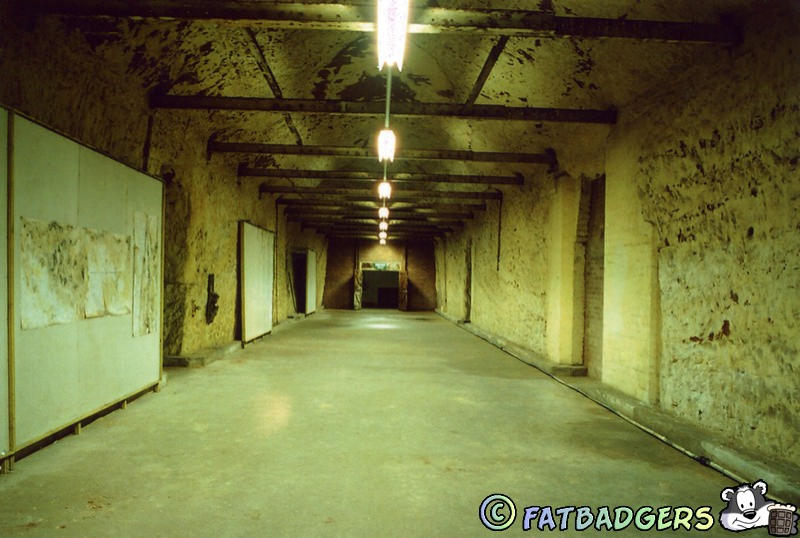
The Drakelow Tunnels are an extensive network of underground tunnels located near Kidderminster, Worcestershire, England. They hold significant historical importance, particularly related to World War II and the Cold War. The tunnels are carved into sandstone and feature extensive underground rooms and corridors. They were designed to be self-sufficient, with their own power supply, water, and air filtration systems. Initially built as a shadow factory for Rover, a British automotive manufacturer, to produce aircraft engines. The facility was designed to ensure continuous production in case Rover's main factories were damaged by enemy action. During the Cold War, the tunnels were repurposed as a Regional Seat of Government (RSG). They were equipped to function as a command centre in the event of a nuclear attack, ensuring the continuity of government operations. • Purpose: The Drakelow Tunnels were constructed during World War II, starting in 1941, as part of the British government's effort to disperse critical industrial production facilities away from urban areas vulnerable to German bombing raids. • Length: The tunnels cover approximately 285,000 square feet • Opened: 1941. • Significance: The Drakelow Tunnels stand as a remarkable example of Britain's wartime ingenuity and Cold War preparedness. These tunnels highlight the UK's engineering prowess and its ability to overcome geographical and environmental challenges to create vital infrastructure.

Tunnels
 Pubs
Pubs Open Map in New Window
 England
 Scotland
 Wales
Wales Ireland
 County Map
 About Britain
 Pubs
Pubs British Beer
 Perfect Pint
 Beer Glasses
 The Barren Years
 Real Fires
 Breweries
 Brewing
 British Food
 Recipes
 Pub Interiors
 Dog Friendly
 Pub Games
 Strange Pub Names
 Visitor Information
 Oldest Pub
 Pub Signs
 Micropubs
 Buildings
 Cathedrals
 Stately Homes
 Castles
 Listed Buildings
 Scheduled Monuments
 Oak Framing
 Architecture
 Thatching
 Waterways
 Sailing
 Shipbuilding
 Boatbuilding
  Shipping Forecast
 Britain's Coastline
 Coastal Locations
 Piers
Piers Lighthouses
 Harbours
 Beach Safety
 British Beaches
 Canals
 Rivers
 Islands
 Lakes
Lakes Waterfalls
 Historical
 Famous People
 Kings & Queens
 Kings of England
 History of Britain
 Industrial Revolution
 Act of Union
 Beaufort Scale
 British Firsts
 World Heritage Sites
 Historical Periods
 Historical Boundaries
 Tradition & Culture
 Morris Dancing
 Film & Television
 Television
 Calendar of Events
 British Sport
 Scottish Highlands
 Money
Money Dry Stone Walling
 British Wildlife
 Class System
 Geographical
 Pub Boundaries
 Facts 'n' Figures
 British Isles
 Other Areas
 Place Name Origins
 Topography
 Suggest an Inn
 Explanation of symbols
 Why Us?
 Places to Visit
 Long Distance Paths
 National Parks
 Areas of Outstanding Natural Beauty
 Coastal Locations
 Other areas of Britain
 Maps
Maps Our Favourite Locations
 Search
 Focus On...
 News
News Contact
 About Us
 Our History
 Donate