Ironbridge is a renowned historical site in Shropshire, England, and is considered the cornerstone of the
Industrial Revolution. It’s named after the famous Iron Bridge, a monumental cast iron structure completed in
1781, which was the first of its kind to be constructed anywhere in the world. This bridge was a testament to
the advancements in iron smelting, particularly by Abraham Darby III and it symbolised the progress of the
era.
The bridge crosses the River Severn and was an engineering
marvel of its time, demonstrating the possibilities of cast iron as
a structural material. The Ironbridge area, referred to as the
Ironbridge Gorge, became a hub for industrial development and
innovation.
Today, Ironbridge is a UNESCO World Heritage Site and is
home to a series of museums that celebrate the region’s
industrial heritage. Visitors can explore the Iron Bridge &
Tollhouse, the Museum of The Gorge, and the interactive Blists
Hill Victorian Town, among others. These attractions provide a
deep dive into the technological and social history of the 18th and 19th centuries.
Ironbridge remains a symbol of ingenuity and the transformative power of the Industrial Revolution, attracting visitors
from around the world who are interested in the roots of modern industry and technology.
Coalbrookdale is a significant area in the Ironbridge Gorge in
Shropshire, England. It holds immense historical importance as
the birthplace of the Industrial Revolution. In 1888 the area was still very heavily industrial with Coalbrookdale
Iron Works dominating the village.
•
Industrial Significance: Coalbrookdale played a pivotal role in the Industrial Revolution, particularly in the
18th century. It was here that Abraham Darby I revolutionised iron smelting by using coke instead of
charcoal in the production of iron, a process that led to the mass production of iron and steel.
•
Ironbridge: Coalbrookdale is famous for the Iron Bridge, which was built in 1779 by Abraham Darby III, the
grandson of Abraham Darby I. It was the first bridge in the world to be made entirely of iron and is
considered a symbol of the Industrial Revolution.
•
Coal and Iron: The area was rich in both coal and iron ore, making it an ideal location for iron production.
The availability of these resources, coupled with technological innovations, fuelled the growth of industry
in Coalbrookdale.
•
Innovation and Industry: The Industrial Revolution brought about significant changes in manufacturing
processes, transportation, and society as a whole. Coalbrookdale was at the forefront of these changes,
with its ironworks, foundries, and factories driving economic development and technological
advancement.
•
Heritage Site: Today, Coalbrookdale is recognised as a UNESCO World Heritage Site, along with the rest of the Ironbridge Gorge. It is a living monument to the
industrial heritage of England and attracts visitors from around the world who come to learn about its history and significance.
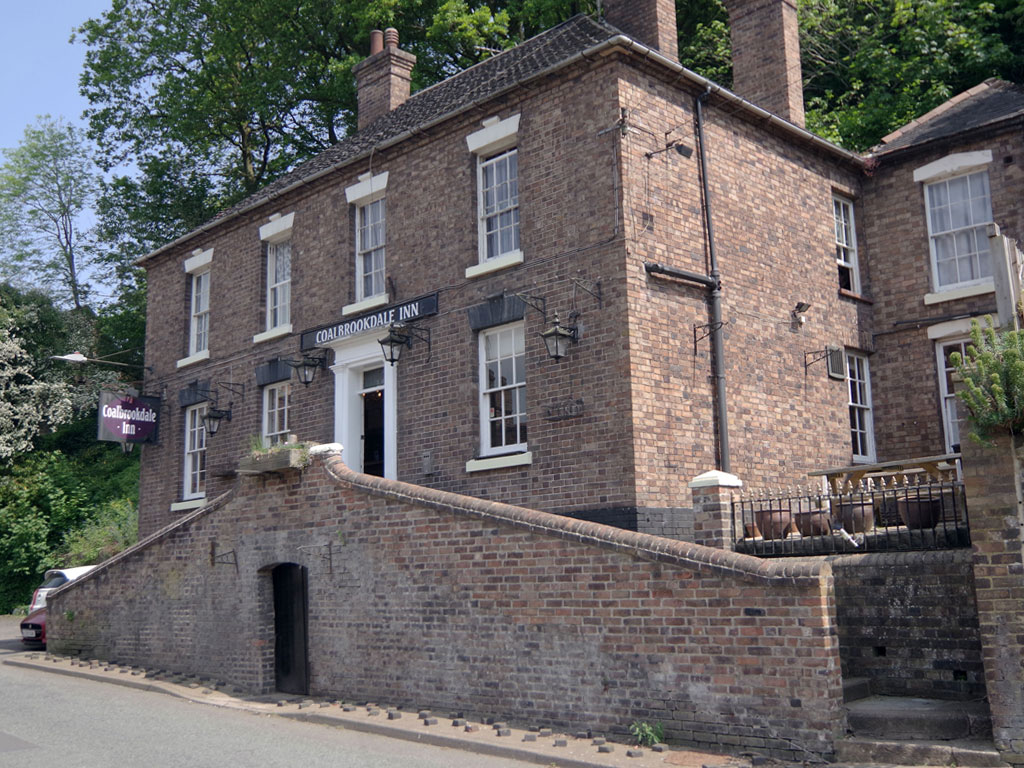
There’s plenty to see and do in the area and lots of pubs to try out
but five of our favourites are the All Nations, The Coalbrookdale and
The Coracle particularly for the quality and selection of ales, The
Boat and Woodbridge Inn particularly for their location and a special
mention for the All Nations for its home brew history.
There’s plenty more to try however:
White Hart
10 Wharfage, Ironbridge, TF8 7AW
Swan Taphouse
21 Wharfage, Ironbridge, TF8 7NH
Golden Ball Inn
1 Newbridge Road, Ironbridge, TF8 7BA
Ye Olde Robin Hood Inn
33 Waterloo Street, Ironbridge, TF8 7HQ
Horse & Jockey
15 Jockey Bank, Ironbridge, TF8 7PD
Water Rat Inn
29 Buildwas Road, Coalbrookdale, TF8 7BJ
The Malthouse
Wharfage, Ironbridge, TF8 7NH
Tontine Hotel
13 Tontine Hill, Ironbridge, TF8 7AL
D’arcys At The Station
Ladywood, Ironbidge TF8 7JU
Half Moon Inn
174 Salthouse Road, TF8 7LP
Shakespeare Inn
High Street, Coalport, TF8 7HT
Brewery Inn
High Street, Coalport, TF8 7HZ
The Hay Inclined Plane
The Hay Inclined Plane is a historic transportation structure that played a significant role in the industrial history of the area. Located at the south end of the gorge, it linked the Shropshire canal to the River Severn. • Purpose: o The Hay Inclined Plane was built in the early 1790s as part of the Shropshire Canal system. Its purpose was to transport canal boats carrying coal and other goods between two levels of the canal, overcoming a significant change in elevation. • Design: o The incline plane consisted of two parallel railway tracks with a series of connected wagons or "carriages" that could carry canal boats. The boats would be loaded onto the carriages at the top or bottom of the incline, and then the carriages were moved up or down the steep slope using a system of pulleys and counterweights. • Operation: o The operation of the incline plane involved a balance between loaded and empty wagons. Loaded wagons descending the incline would pull up empty wagons using a pulley system, and vice versa. This allowed for a relatively efficient transfer of goods between the different levels of the canal. • Importance: o The Hay Inclined Plane was a crucial component of the Shropshire Canal system, facilitating the transportation of coal and other goods between the industrial centres of Shropshire and the wider canal network. It helped to overcome the natural obstacles presented by the hilly terrain of the area. • Legacy: o While the Hay Inclined Plane is no longer in operation, it remains an important historic site, reflecting the ingenuity and innovation of the early industrial era. It is now preserved as a heritage attraction, allowing visitors to learn about its history and significance. Overall, the Hay Inclined Plane at Telford is an example of the engineering feats of the Industrial Revolution and the importance of transportation infrastructure in driving economic development during that period.




Ironbridge & Coalbrookdale, Shropshire


Superb area with immense historical significance.

Focus On... Map
Aberdovey, Wales
Black Country, England
Boscastle, England
Bucklers Hard, England
Cowes, England
Edinburgh, Scotland
Glencoe, Scotland
Gower, Wales
Grasmere, England
Henley-on-Thames, England
Highlands, Scotland
Ironbridge, England
Lake District, England
Liverpool, England
Ludlow, England
Nottingham, England
Oxford, England
Polperro, England
Isle of Purbeck, England
Potteries, England
Salcombe England
Shrewsbury England
Stratford-upon-Avon, England
Windsor & Eton, England
Yarmouth, England
 Pubs
Pubs Open Map in New Window
 England
 Scotland
 Wales
Wales Ireland
 County Map
 About Britain
 Pubs
Pubs British Beer
 Perfect Pint
 Beer Glasses
 The Barren Years
 Real Fires
 Breweries
 Brewing
 British Food
 Recipes
 Pub Interiors
 Dog Friendly
 Pub Games
 Strange Pub Names
 Visitor Information
 Oldest Pub
 Pub Signs
 Micropubs
 Buildings
 Cathedrals
 Stately Homes
 Castles
 Listed Buildings
 Scheduled Monuments
 Oak Framing
 Architecture
 Thatching
 Waterways
 Sailing
 Shipbuilding
 Boatbuilding
  Shipping Forecast
 Britain's Coastline
 Coastal Locations
 Piers
Piers Lighthouses
 Harbours
 Beach Safety
 British Beaches
 Canals
 Rivers
 Islands
 Lakes
Lakes Waterfalls
 Historical
 Famous People
 Kings & Queens
 Kings of England
 History of Britain
 Industrial Revolution
 Act of Union
 Beaufort Scale
 British Firsts
 World Heritage Sites
 Historical Periods
 Historical Boundaries
 Tradition & Culture
 Morris Dancing
 Film & Television
 Television
 Calendar of Events
 British Sport
 Scottish Highlands
 Money
Money Dry Stone Walling
 British Wildlife
 Class System
 Geographical
 Pub Boundaries
 Facts 'n' Figures
 British Isles
 Other Areas
 Place Name Origins
 Topography
 Suggest an Inn
 Explanation of symbols
 Why Us?
 Places to Visit
 Long Distance Paths
 National Parks
 Areas of Outstanding Natural Beauty
 Coastal Locations
 Other areas of Britain
 Maps
Maps Our Favourite Locations
 Search
 Focus On...
 News
News Contact
 About Us
 Our History
 Donate