Although many think of William the Bastard as a French invader who
took the English crown by shooting Harold Godwinson in the Eye with
an arrow, he was actually married to Matilda of Flanders who was the
Great Great Great Great Great Granddaughter of Alfred the Great and
his son Henry I married Matilda of Scotland who was the Daughter of
Malcolm III, the King of Scotland when William invaded England.
Malcolm’s father King Duncan I was killed by Macbeth in 1040 William’s Grandaunt Emma of Normandy was also married to King Æthelred the Unready. William’s Great Great Great Grandfather was Rollo ‘the Walker” - a Viking from Scandinavia. So despite being on holiday from Normandy William did have some claim to take over the throne as King Edward the confessor died childless with the throne being handed over to his brother in law King Harold IIBackground
• Birth name: William of Normandy • Also known as: William I of England, William the Bastard (due to his illegitimate birth) • Born: c. 1028 in Falaise, Normandy (now in France) • Father: Robert I, Duke of Normandy • Mother: Herleva, a tanner’s daughter • Title before conquest: Duke of Normandy (from age 7)The Norman Conquest
The Claim to the English Throne
• In 1066, King Edward the Confessor died childless. • William claimed that Edward had promised him the throne and that Harold Godwinson had sworn to support his claim. • But Harold became king, leading William to invade.Battle of Hastings – 14 October 1066
• William invaded England with around 7,000 troops. • Defeated Harold Godwinson’s army near Hastings. • Harold was killed in the battle - famously (though debatably) by an arrow to the eye. • William was crowned King of England on Christmas Day 1066.Rule as King of England
Feudalism and Control
• Introduced Norman feudalism to England. • Took control of land and redistributed it to loyal Norman barons, displacing much of the Anglo-Saxon elite.The Domesday Book (1086)
• A massive survey of land, property and population across England. • Purpose: tax assessment and legal control. • Still one of the most important historical records of medieval England.Castles and Fortifications
Built castles across England to maintain control: • Tower of London • Warwick Castle • Windsor Castle These were symbols of power and military dominance.Language and Culture
• Norman French became the language of the court and law. • Blended over time with Old English to evolve into Middle English. • Profoundly changed English culture, law and governance.Death and Legacy
• Died in 1087 in Rouen, Normandy, from injuries after falling off his horse. • Buried at Abbaye aux Hommes, Caen, France. • Left Normandy to his eldest son Robert and England to his second son William II (William Rufus).Legacy
• Ended Anglo-Saxon rule in England. • Cemented ties between England and continental Europe. • Laid foundations for a centralised monarchy and common law. • Seen as both a ruthless invader and a founder of modern England.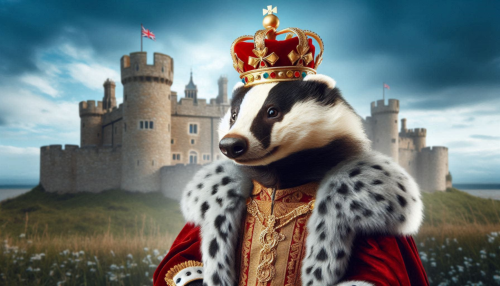
William the Conqueror (c. 1028 – 1087) was a powerful and transformative figure in English and European history. He was the first
Norman King of England, reigning from 1066 until his death in 1087 and is best known for leading the Norman Conquest of England.
William the Conqueror





 Pubs
 Open Map in New Window
 England
 Scotland
 Wales
 Ireland
 County Map
 About Britain
 Pubs
 British Beer
 Perfect Pint
 Beer Glasses
 The Barren Years
 Real Fires
 Breweries
 Brewing
 British Food
 Recipes
 Pub Interiors
 Dog Friendly
 Pub Games
 Strange Pub Names
 Visitor Information
 Oldest Pub
 Pub Signs
 Micropubs
 Buildings
 Cathedrals
 Stately Homes
 Castles
 Listed Buildings
 Scheduled Monuments
 Oak Framing
 Architecture
 Thatching
 Waterways
 Sailing
 Shipbuilding
 Boatbuilding
 Shipping Forecast
 Britain's Coastline
 Coastal Locations
 Piers
 Lighthouses
 Harbours
 Beach Safety
 British Beaches
 Canals
 Rivers
 Islands
 Lakes
 Waterfalls
 Historical
 Famous People
 Kings & Queens
 Kings of England
 History of Britain
 Industrial Revolution
 Act of Union
 Beaufort Scale
 British Firsts
 World Heritage Sites
 Historical Periods
 Historical Boundaries
 Tradition & Culture
 Morris Dancing
 Film & Television
 Television
 Calendar of Events
 British Sport
 Scottish Highlands
 Money
 Dry Stone Walling
 British Wildlife
 Class System
 Geographical
 Pub Boundaries
 Facts 'n' Figures
 British Isles
 Other Areas
 Place Name Origins
 Topography
 Suggest an Inn
 Explanation of symbols
 Why Us?
 Places to Visit
 Long Distance Paths
 National Parks
 Areas of Outstanding Natural Beauty
 Coastal Locations
 Other areas of Britain
 Maps
 Our Favourite Locations
 Search
 Focus On...
 News
 Contact
 About Us
 Our History
 Donate
