The Tudor Monarchs
Henry VII (r. 1485 - 1509)
• Won the Battle of Bosworth Field, ending the Wars of the Roses. • Founded the Tudor dynasty. • Stabilised England after decades of civil war.Henry VIII (r. 1509 - 1547)
• Famous for six marriages. • Broke with the Catholic Church and created the Church of England during the English Reformation. • Dissolved the monasteries, seizing their wealth and land.Edward VI (r. 1547 - 1553)
• Henry VIII's only son. Became king at 9. • England became more Protestant during his short reign. • Died at 15.Mary I (r. 1553 - 1558)
• Henry’s Catholic daughter. • Tried to restore Roman Catholicism; earned the nickname "Bloody Mary" for burning Protestants. • Married Philip II of Spain — unpopular in England.Elizabeth I (r. 1558 - 1603)
• Known as the "Virgin Queen." • Re-established Protestantism. • Defeated the Spanish Armada in 1588. • Presided over a Golden Age of exploration, theatre (Shakespeare) and national pride.Religion in Tudor Britain
• Huge shifts between Catholicism and Protestantism: • Henry VIII’s break from Rome (1534) • Edward VI's Protestant reforms • Mary I’s Catholic revival • Elizabeth I’s Religious Settlement (1559), making England officially ProtestantSociety and Daily Life
• Feudalism was fading; power became more centralised. • Nobles and gentry gained influence through royal service and land ownership. • The poor faced harsh laws and punishments; workhouses and poor laws emerged. • The Renaissance brought new ideas in art, science and education. • People lived in timber-framed houses — many still survive today.Law and Order
• Harsh punishments: executions, public whippings, stocks. • The Tudors used propaganda and power to suppress rebellion and religious dissent. • Famous figures like Thomas More and Anne Boleyn were executed for opposing royal authority.Key Events
• 1485: Battle of Bosworth – Henry VII crowned. • 1534: Act of Supremacy – Henry VIII becomes head of Church. • 1536–1541: Dissolution of the Monasteries. • 1588: Defeat of the Spanish Armada. • 1603: Elizabeth I dies – Tudor era ends, Stuart era begins.Culture and Legacy
• Theatres flourished: Shakespeare, Marlowe, Globe Theatre. • Exploration: Sir Francis Drake, Sir Walter Raleigh, beginnings of British seafaring empire. • Education expanded among the wealthy. • The Tudor rose became a national symbol - merging the red rose of Lancaster and white of York.Key Features of the Elizabethan Age:
The Elizabethan Age refers to the period of Queen Elizabeth I's reign over England, from 1558 to 1603. It's often considered a golden age in English history, particularly in terms of culture, exploration and national pride.1. Politics and Monarchy
Queen Elizabeth I was a strong and charismatic ruler who stabilized England after periods of religious and political turmoil. • Her reign saw relative internal peace, allowing the arts and economy to flourish. • She skilfully navigated religious divisions between Catholics and Protestants.2. The Renaissance in England
• The Elizabethan Age is part of the broader English Renaissance, which saw a revival of classical learning and values. • There was a flowering of literature, music and drama.3. Literature and Drama
This era produced some of England’s greatest writers and playwrights, most notably: • William Shakespeare • Christopher Marlowe • Ben Jonson The Globe Theatre became a cultural landmark.4. Exploration and Expansion
England became a major maritime power, thanks to explorers like: • Sir Francis Drake • Sir Walter Raleigh The defeat of the Spanish Armada in 1588 marked England’s rise as a naval force.5. Science and Discovery
Though not yet a scientific revolution, the seeds of inquiry and empirical thought began to take hold. Figures like John Dee were important as early scientists and philosophers.6. Fashion and Society
The nobility wore elaborate and highly decorative clothing, symbolizing wealth and status. Society was still very hierarchical, but the growing middle class had increasing influence.7. Religion
The Church of England was firmly established after years of fluctuation. Elizabeth adopted a moderate approach, known as the Elizabethan Religious Settlement, to maintain peace.Legacy of the Elizabethan Age:
Set the stage for the British Empire and future exploration. Left a profound impact on English literature, particularly through Shakespeare. Still remembered as a time of national pride, cultural richness and artistic achievement.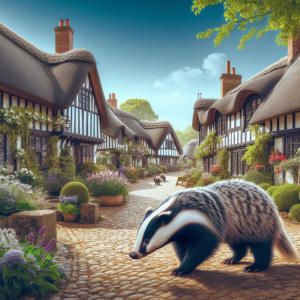

Tudor Britain refers to the period when the Tudor dynasty ruled England and Wales - from 1485 to 1603. It was a time of huge change: the
end of the Middle Ages, the rise of strong monarchy, religious revolution and the beginnings of the British Empire.
Tudor Britain





 Pubs
Pubs Open Map in New Window
 England
 Scotland
 Wales
Wales Ireland
 County Map
 About Britain
 Pubs
Pubs British Beer
 Perfect Pint
 Beer Glasses
 The Barren Years
 Real Fires
 Breweries
 Brewing
 British Food
 Recipes
 Pub Interiors
 Dog Friendly
 Pub Games
 Strange Pub Names
 Visitor Information
 Oldest Pub
 Pub Signs
 Micropubs
 Buildings
 Cathedrals
 Stately Homes
 Castles
 Listed Buildings
 Scheduled Monuments
 Oak Framing
 Architecture
 Thatching
 Waterways
 Sailing
 Shipbuilding
 Boatbuilding
  Shipping Forecast
 Britain's Coastline
 Coastal Locations
 Piers
Piers Lighthouses
 Harbours
 Beach Safety
 British Beaches
 Canals
 Rivers
 Islands
 Lakes
Lakes Waterfalls
 Historical
 Famous People
 Kings & Queens
 Kings of England
 History of Britain
 Industrial Revolution
 Act of Union
 Beaufort Scale
 British Firsts
 World Heritage Sites
 Historical Periods
 Historical Boundaries
 Tradition & Culture
 Morris Dancing
 Film & Television
 Television
 Calendar of Events
 British Sport
 Scottish Highlands
 Money
Money Dry Stone Walling
 British Wildlife
 Class System
 Geographical
 Pub Boundaries
 Facts 'n' Figures
 British Isles
 Other Areas
 Place Name Origins
 Topography
 Suggest an Inn
 Explanation of symbols
 Why Us?
 Places to Visit
 Long Distance Paths
 National Parks
 Areas of Outstanding Natural Beauty
 Coastal Locations
 Other areas of Britain
 Maps
Maps Our Favourite Locations
 Search
 Focus On...
 News
News Contact
 About Us
 Our History
 Donate