The English Civil War (1642–1651) was one of the most significant events
in British history. It was a conflict between King Charles I and Parliament
over who should hold political authority in England. The war not only led
to the execution of a reigning monarch but also transformed the
relationship between the Crown and Parliament, laying foundations for
Britain's modern constitutional system.
The origins of the war can be traced to long-standing disagreements
between Charles I and Parliament. Charles believed strongly in the
doctrine of the divine right of kings, arguing that monarchs received their
authority from God and therefore should not be constrained by elected
representatives.
Parliament, however, increasingly challenged this view and sought a
greater role in government, particularly concerning taxation and
legislation. Tensions grew as Charles repeatedly attempted to raise
money without parliamentary approval and ruled without Parliament for
eleven years between 1629 and 1640.
Religious disputes also played an important role. Many Protestants feared that Charles and his advisers were introducing practices that resembled Roman
Catholicism. His attempts to impose religious reforms in Scotland provoked resistance and eventually forced him to recall Parliament to raise funds for military
campaigns. Instead of cooperation, this led to further conflict and mutual distrust.
In 1642, relations finally broke down. After Charles attempted to arrest five members of Parliament, both sides began raising armies. Those who supported the king
became known as the Royalists or Cavaliers, while supporters of Parliament were called Parliamentarians or Roundheads. The country was effectively divided,
with different regions and social groups supporting different sides.
The war was fought in several phases. Initially, neither side gained a decisive advantage. However, Parliament gradually improved its military organisation. In 1645,
it created the New Model Army, a disciplined and professional force led in part by Oliver Cromwell. The army achieved a decisive victory over the Royalists at the
Battle of Naseby, effectively ending Charles's chances of winning the war.
Although Charles surrendered, political disagreements continued. Many believed that he could not be trusted because he had secretly negotiated with opponents
of Parliament and encouraged further conflict. Following a second civil war, Charles was put on trial for treason. In January 1649 he was found guilty and executed
outside the Banqueting House in London. This was a remarkable event, as it marked the first time an English monarch had been publicly tried and executed by his
own subjects.
After the king's death, England was declared a republic known as the Commonwealth of England. In practice, power increasingly rested with the army and with
Cromwell. In 1653 Cromwell became Lord Protector and ruled the country until his death in 1658. Although the republic survived for a short period after his death, it
lacked stability and broad support.
In 1660 the monarchy was restored under Charles II, the son of Charles I, during the Restoration. However, the monarchy that returned was different from the one
that had existed before the war. The conflict had demonstrated that kings could not govern without regard for Parliament and public opinion.
The long-term significance of the English Civil War was profound. It challenged the idea of absolute monarchy and contributed to the development of constitutional
government. The issues raised during the conflict continued to shape British politics and influenced later events such as the Glorious Revolution and the Bill of
Rights 1689. For this reason, the English Civil War is often regarded as a turning point in the evolution of parliamentary democracy and the modern British state.
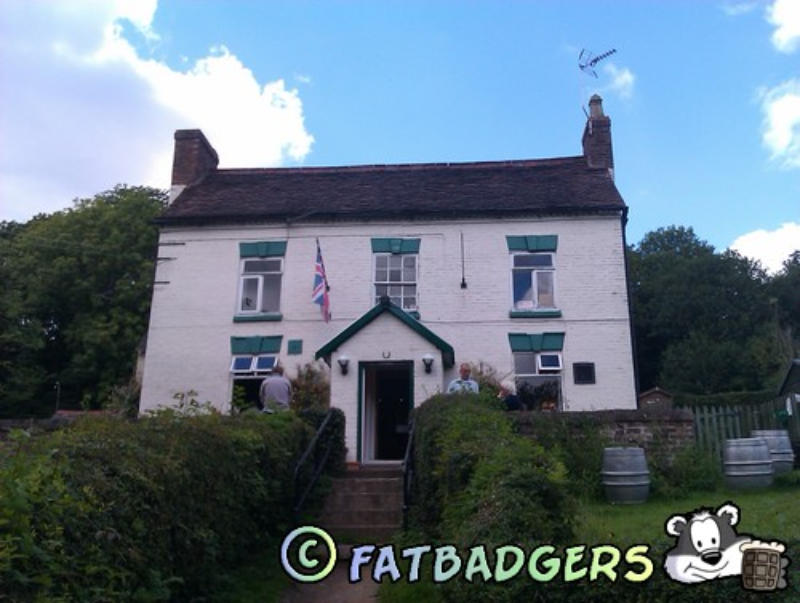
On 3 September 1651, Charles II's army was defeated by the forces of Oliver Cromwell at Worcester. After the battle, Charles became a fugitive. Parliamentarian soldiers searched extensively for him, and a substantial reward was offered for his capture. For about six weeks, he travelled secretly across England, aided by loyal supporters, before eventually escaping to France. The Monarch's Way is a long-distance footpath in England that follows the route taken by Charles II after his defeat at the Battle of Worcester, the final major battle of the English Civil War. The route is approximately 615 miles (990 km) long, making it one of the longest waymarked footpaths in Britain so there are quite a few good pubs along the route!. Including the fabulous All Nations in Madeley, Shropshire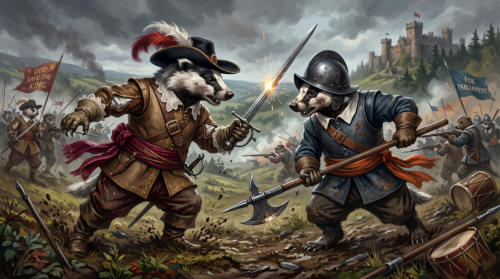
A series of conflicts fought between 1642 and 1651 between supporters of King Charles I (the Royalists or "Cavaliers") and supporters of
Parliament (the Parliamentarians or "Roundheads").
English Civil War





 Pubs
Pubs Open Map in New Window
 England
 Scotland
 Wales
Wales Ireland
 County Map
 About Britain
 Pubs
Pubs British Beer
 Perfect Pint
 Beer Glasses
 The Barren Years
 Real Fires
 Breweries
 Brewing
 British Food
 Recipes
 Pub Interiors
 Dog Friendly
 Pub Games
 Strange Pub Names
 Visitor Information
 Oldest Pub
 Pub Signs
 Micropubs
 Buildings
 Cathedrals
 Stately Homes
 Castles
 Listed Buildings
 Scheduled Monuments
 Oak Framing
 Architecture
 Thatching
 Waterways
 Sailing
 Shipbuilding
 Boatbuilding
  Shipping Forecast
 Britain's Coastline
 Coastal Locations
 Piers
Piers Lighthouses
 Harbours
 Beach Safety
 British Beaches
 Canals
 Rivers
 Islands
 Lakes
Lakes Waterfalls
 Historical
 Famous People
 Kings & Queens
 Kings of England
 History of Britain
 Industrial Revolution
 Act of Union
 Beaufort Scale
 British Firsts
 World Heritage Sites
 Historical Periods
 Historical Boundaries
 Tradition & Culture
 Morris Dancing
 Film & Television
 Television
 Calendar of Events
 British Sport
 Scottish Highlands
 Money
Money Dry Stone Walling
 British Wildlife
 Class System
 Geographical
 Pub Boundaries
 Facts 'n' Figures
 British Isles
 Other Areas
 Place Name Origins
 Topography
 Suggest an Inn
 Explanation of symbols
 Why Us?
 Places to Visit
 Long Distance Paths
 National Parks
 Areas of Outstanding Natural Beauty
 Coastal Locations
 Other areas of Britain
 Maps
Maps Our Favourite Locations
 Search
 Focus On...
 News
News Contact
 About Us
 Our History
 Donate