Prehistoric and Ancient Crossings:
The earliest "crossings" were simply natural fords – shallow points in rivers where people and animals could walk across. The Romans sometimes paved these to make them easier. The earliest bridges were made from timber before stone became the preferred material. • Testwood Bridge, Hampshire (c. 1500 BC): Archaeological discoveries in 1998 revealed parallel timber rows, believed to be the remains of an ancient wooden bridge. Carbon dating places its construction around 1500 BC, making it one of the earliest known bridges in Britain. • Clapper Bridges: These are among the earliest known bridge types, found primarily on the moors of the English West Country (Dartmoor, Exmoor, Bodmin Moor) and other upland areas. They consist of large, flat slabs of stone (often granite) supported by stone piers or resting directly on the riverbanks. While many surviving examples date from the medieval period, the concept is believed to be prehistoric. • Tarr Steps, Exmoor: Considered the longest clapper bridge in Britain (around 55 meters), its exact age is debated, but some believe it dates back 3,000 years. Its construction uses stones without mortar. • Postbridge Clapper Bridge, Dartmoor: A well-known example with massive slabs (over 4 meters long and weighing over 8 tonnes each), first recorded in 1380, built for tin transportation. Roman Bridges (from 43 AD onwards): The Romans introduced more sophisticated bridge-building techniques, primarily using timber and stone. While many of their bridges no longer stand, archaeological evidence and historical records confirm their existence. London Bridge (Roman era): The first crossings at the site of London Bridge were likely Roman, possibly a wooden pontoon bridge around 43 AD, followed by permanent timber structures. These were crucial for their road network, particularly Watling Street. Rochester Bridge, River Medway: Built soon after the Roman conquest (43 AD) on the line of Watling Street, this bridge had nine stone piers with timber roadways. Archaeological evidence of its robust foundations has been found. Piercebridge Roman Bridge, River Tees: Remains of this large bridge, which carried a Roman road, are now high and dry on the south bank as the river has shifted. Corbridge Roman Bridge, River Tyne (part of Hadrian's Wall): While seemingly unspectacular today, the remains were once part of the largest stone bridge known in Roman Britain, with an estimated 11 stone arches. Early Medieval and Medieval Bridges (Anglo-Saxon to 1500s): After the Roman departure, many Roman bridges collapsed. Early medieval bridges were primarily timber, but stone construction gradually returned. Timber Bridges: Historical records frequently mention wooden bridges throughout the early medieval period. Events like the Battle of Stamford Bridge (1066) and the destruction of London's wooden bridge by the Danes in 1008 highlight their prevalence. High Bridge, Lincoln (c. 1160): This is considered the oldest surviving waterway bridge of medieval origin in Britain, still carrying High Street over the Witham Navigation. It likely replaced an earlier Roman timber bridge. Old London Bridge (stone construction began 1176, completed 1209): Commissioned by Henry II, this was a monumental undertaking for its time, featuring 19 pointed arches and becoming a bustling commercial and residential area with shops and houses built upon it. It was a pioneering stone bridge in England. Old Exe Bridge, Exeter (begun c. 1190, completed by 1214): This ruined medieval arch bridge is the oldest surviving bridge of its size in England and the oldest in Britain with a chapel still on it. It also uniquely featured secular buildings. Packhorse Bridges: Common in rural areas, these charming stone bridges were designed with narrow widths and often a single arch to accommodate packhorses carrying goods along trade routes. Many date from the medieval period.Tower Bridge, London, England:
• Description: Perhaps the most recognizable bridge in the UK, Tower Bridge is a Grade I listed combined bascule and suspension bridge that crosses the River Thames. Its distinctive Victorian Gothic architecture and twin towers make it a global icon. • History: Built between 1886 and 1894, it was designed by Horace Jones and engineered by John Wolfe Barry. The bridge was constructed to ease road traffic in the East End of London while maintaining river access for tall ships to the Pool of London. Its bascules (movable sections) were originally operated by steam-powered hydraulics, now by oil and electricity. • Significance: It's a testament to Victorian engineering ingenuity, balancing functionality with an ornate aesthetic. It remains a vital transport link and a major tourist attraction, housing an exhibition within its towers and walkways.Forth Bridge, Firth of Forth, Scotland:
• Description: A cantilever railway bridge, the Forth Bridge is a UNESCO World Heritage Site and a powerful symbol of Scotland. Its striking red-painted steel structure is instantly recognizable. • History: Designed by English engineers Sir John Fowler and Sir Benjamin Baker, construction began in 1882 and it was opened on March 4, 1890. • Significance: At the time of its completion, it was a marvel of civil engineering, showcasing the use of steel on an unprecedented scale. It's renowned for its innovative cantilever design, which allowed for a long span over a challenging waterway.Clifton Suspension Bridge, Bristol, England:
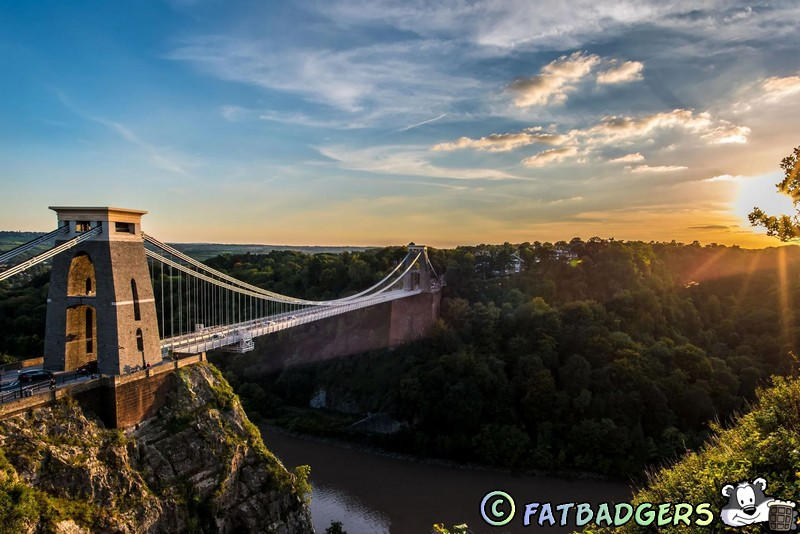
• Description: Spanning the Avon Gorge and the River Avon, this elegant suspension bridge links Clifton in Bristol to Leigh Woods in North Somerset. • History: Designed by the famous engineer Isambard Kingdom Brunel, construction began in 1831, but it wasn't opened until 1864, after Brunel's death. • Significance: It's considered one of Brunel's masterpieces and a significant achievement in early suspension bridge design. Its graceful lines and dramatic setting make it a much-loved landmark and a symbol of Bristol. It remains a toll bridge, with the income funding its ongoing maintenance.Menai Suspension Bridge, Menai Strait, Wales:
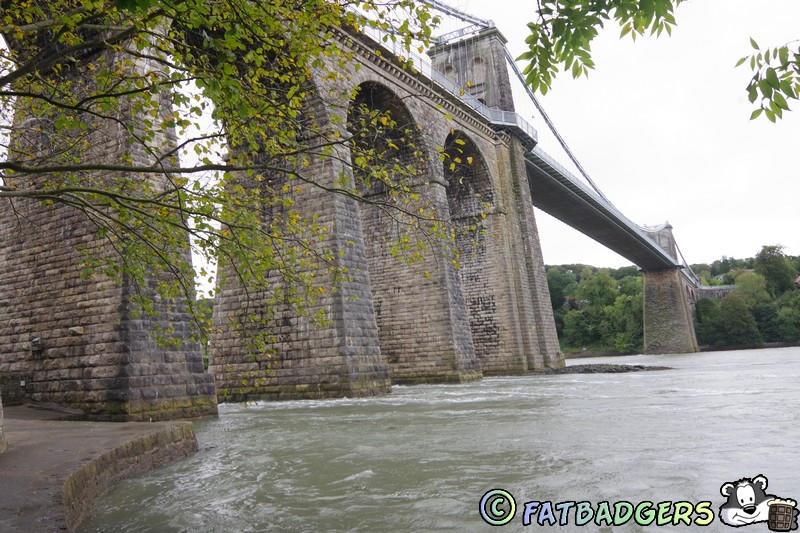
• Description: This historic suspension bridge connects the island of Anglesey to mainland Wales across the Menai Strait. • History: Designed by Thomas Telford and completed in 1826, it was the world's first major suspension bridge. It significantly reduced the journey time between London and Holyhead, a key port for travel to Dublin. • Significance: Telford's design was groundbreaking for its time, demonstrating the feasibility of large- scale suspension bridges. It played a crucial role in improving communication and transport between Britain and Ireland and remains an impressive feat of early 19th-century engineering.The Iron Bridge, Shropshire, England:
• Description: This pioneering cast-iron arch bridge crosses the River Severn in Shropshire. • History: Built in 1779 by Abraham Darby III, it was the first arch bridge in the world to be made of cast iron. • Significance: The Iron Bridge is a UNESCO World Heritage Site and marks a pivotal moment in the history of civil engineering and the Industrial Revolution. It showcased the potential of iron as a structural material, leading to its widespread use in bridge building and other constructions. favour cereal crops.Carrick-a-Rede Bridge, County Antrim, Northern Ireland:
Famous rope bridge located near Ballintoy connecting
the mainland to the tiny island of Carrickarede, spanning 20 meters (66 ft) and hanging 30 meters (98 ft)
above the rocks and sea below. The name "Carrick-a-Rede" comes from the Irish "Carraig a' Ráid," meaning
"rock of the casting," referring to its historical use by salmon fishermen.
• History: Salmon fishing has been practised at Carrick-a-Rede since 1620, with the first rope bridge being erected in 1755 to provide easier access to the island. Historically, the bridge was a simple rope structure with a single handrail and large gaps between slats. The current wire rope and Douglas fir bridge was constructed in 2008 by Heyn Construction in Belfast. It's built to withstand 10 tons, making it much safer than earlier versions, though it still offers an exhilarating experience. The salmon fishing industry at Carrick-a-Rede declined due to pollution and overfishing, with the last fish caught in 2002.Tees Transporter Bridge, Middlesbrough, England:
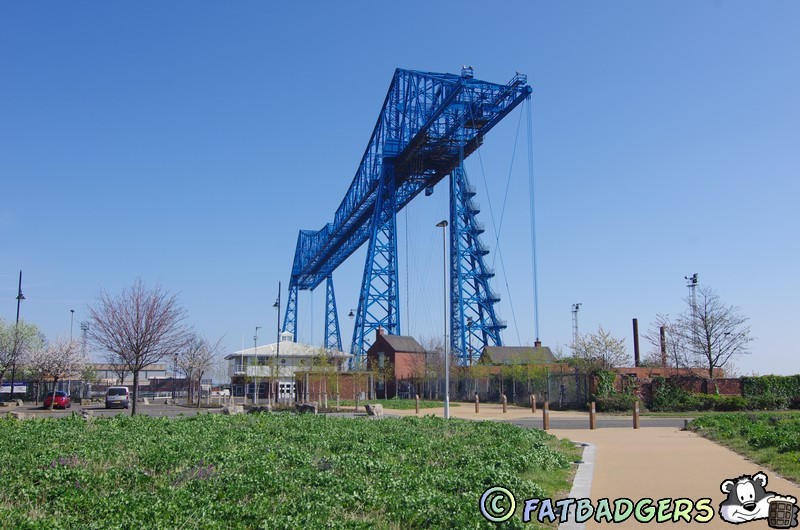
One of the most iconic engineering landmarks in the UK. Opened in 1911, it was designed to carry vehicles and pedestrians across the River Tees using a gondola suspended from a high steel structure, allowing ships to pass underneath without obstruction. • Opened: October 17, 1911, by Prince Arthur of Connaught. • Design: A transporter bridge, a rare type of movable bridge where a gondola (or "car") suspended from the structure carries vehicles and pedestrians across the river in about 90 seconds. It was chosen to avoid disrupting river navigation, as mandated by Parliament. • Dimensions: The bridge is 851 feet (259 meters) long, making it the longest operational transporter bridge in the world when functional. It stands 225 feet (69 meters) at its tallest point. The gondola can carry up to 9 cars or 200 people. • Construction: Built by Sir William Arrol & Co. of Glasgow between 1909 and 1911 at a cost of £68,026 (equivalent to ~£9 million in 2023). Designed by Cleveland Bridge & Engineering Co., with foundations using caissons sunk deep into the riverbed. • Grade II Listed*: Recognised for its historical and engineering significance, with its winch house and piers also listed. The concept of a transporter bridge was first proposed in 1872 by Charles Smith of Hartlepool Iron Works but wasn’t pursued until the early 20th century due to the need to replace hazardous ferry services ("Hugh Bell" and "Erimus") for workers in the booming iron and steel industries. It survived bomb damage during both World Wars, including a Zeppelin raid in 1916 and a WWII hit to its superstructure. In 1953, the gondola got stuck mid-river during gale-force winds.Hertford Bridge, Oxford, England:
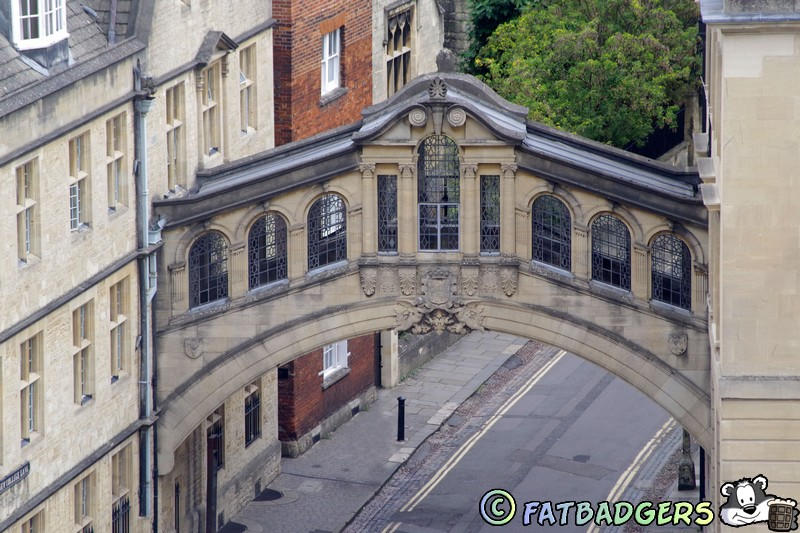
The Bridge of Sighs in Oxford, officially named Hertford Bridge, is a famous landmark in Oxford, connecting two parts of Hertford College over New College Lane. It spans New College Lane, linking the Old and New Quadrangles of Hertford College. Built in 1913–1914, designed by architect Sir Thomas Graham Jackson, it is a skyway bridge with a distinctive Venetian Gothic style, featuring arched openings and intricate stonework. It’s constructed from stone and measures about 15 meters long. It is dubbed the "Bridge of Sighs" due to its visual resemblance to the Ponte dei Sospiri in Venice, though the Oxford bridge has no historical connection to prisoners or executions, unlike its Venetian counterpart. The bridge was built to accommodate Hertford College’s expansion, connecting its buildings across the narrow lane. The nickname emerged from its aesthetic similarity to Venice’s bridge, with myths suggesting it was named because students sighed crossing it to exams (untrue, as exams are held elsewhere). It’s a Grade II listed structure, recognised for its architectural and historical significance. The Bridge of Sighs is one of Oxford’s most photographed landmarks, often featured in media, guidebooks, and popular culture as a symbol of the city’s academic heritage. It’s a focal point for tourists and students, offering picturesque views, especially when illuminated at night. Local lore includes humorous tales, like students attempting to cross it to avoid exams or as part of college traditions, though these are largely apocryphal. The bridge is not generally open to the public for crossing as it’s part of Hertford College’s private infrastructure, although the Fat Badgers have special visiting rights. However, it can be viewed from New College Lane, and guided tours of Hertford College occasionally include access.Tyne Bridges, Newcastle upon Tyne, England:
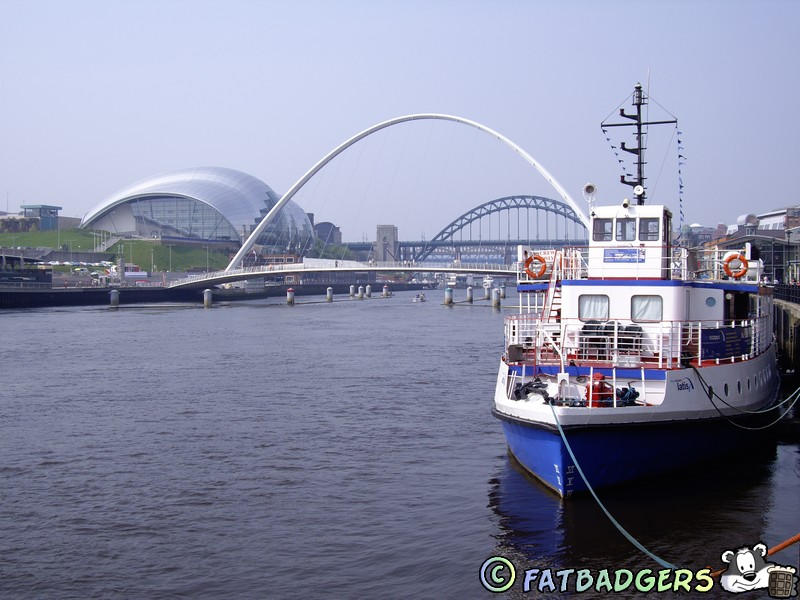
The River Tyne, flowing through North East England, is spanned by numerous bridges, with seven iconic road and rail bridges connecting Newcastle upon Tyne and Gateshead within a 2-km stretch of the Quayside, often referred to as the "magnificent seven." These bridges are celebrated for their engineering, historical significance, and cultural impact. Tyne Bridge (1928) Design: A through-arch bridge, designed by Mott, Hay and Anderson, with a parabolic steel arch inspired by New York’s Hell Gate Bridge and a precursor to the Sydney Harbour Bridge (built later in 1932 by the same firm, Dorman Long & Co. of Middlesbrough). It was the world’s longest single-span bridge at the time, with a span of 162 meters and a height of 59 meters above the river. Construction began in August 1925 and was completed in February 1928, with King George V and Queen Mary opening it on October 10, 1928. Built to ease traffic congestion and support the rise of motorised vehicles, it cost £1.2 million (far exceeding the initial £571,225 estimate). Only one worker, Nathaniel Collins, died during construction. The Bridge is a Grade II* listed structure and Tyneside’s defining symbol, it carries the A167 road and sees over 70,000 vehicles daily. It’s a key feature in the Great North Run, with 60,000 runners crossing annually, often accompanied by Red Arrows displays and is also home to the world’s furthest inland kittiwake colony. Its Cornish granite towers were designed as five-story warehouses, but the inner floors were never completed. Lifts in the towers (now unused) once provided Quayside access. Gateshead Millennium Bridge (2001): A tilting pedestrian and cycle bridge, nicknamed the “Blinking Eye” for its unique tilting mechanism to allow ships to pass. Designed by Wilkinson Eyre, it’s 126 meters long and won the 2002 RIBA Stirling Prize for architecture. Opened in June 2001 at a cost of £22 million, it was lifted into place by one of the world’s largest floating cranes. Its tilting takes 4.5 minutes and is self-cleaning, with litter traps at each end. A symbol of Tyneside’s regeneration, it’s lit white on weekdays and in colour on weekends, enhancing its aesthetic appeal. Thousands cross it daily to access cultural sites like the Baltic Centre. High Level Bridge (1850): A double-deck bridge by Robert Stephenson, with rail on the upper deck and road on the lower, spanning 408 meters. Made of cast iron to reduce costs, it was a vital link for the London-Edinburgh railway. Swing Bridge (1876): A hydraulic swing bridge, 171 meters long, designed by Sir W.G. Armstrong to replace the Georgian Bridge (1781). It pivots to allow larger ships to navigate upstream, improving trade. King Edward VII Bridge (1906): A steel lattice girder railway bridge with a double Warren truss design, carrying four tracks of the East Coast Main Line. It spans 275 meters. Redheugh Bridge (1983): A modern concrete and steel bridge carrying the A189 road, 897 meters long, with a low profile to allow river navigation. Metro Bridge (1981): A steel truss bridge, painted blue, carrying the Tyne and Wear Metro. It spans 360 meters and emerges from tunnels on both sides of the river.Glenfinnan Viaduct, Scottish Highlands:
Situated in the West Highlands of Scotland, it spans the valley of the River Finnan and offers breathtaking views of Loch Shiel and the Glenfinnan Monument and part of the scenic West Highland Line, which connects Fort William to Mallaig. Built between 1897 and 1901 by Sir Robert McAlpine, it's considered a pioneering example of mass concrete construction. The viaduct is 380 meters (1,248 feet) long and rises 30 meters (100 feet) above the River Finnan and features 21 elegant arches, each spanning 15 meters (50 feet), and is built on a gentle curve, adding to its aesthetic appeal. The construction was challenging due to the rugged terrain, and the use of concrete was chosen over local hard rock. Beyond its engineering marvel, the viaduct is located in an area with significant historical importance. The nearby Glenfinnan Monument commemorates the Jacobite Rising of 1745, where Bonnie Prince Charlie raised his standard. The railway line itself played a crucial role in the economic recovery of the Highlands after the Highland Clearances. The Glenfinnan Viaduct achieved worldwide fame after being featured as the "Hogwarts Express" bridge in several of the Harry Potter films.London Bridge, London, England:
London Bridge has a long and fascinating history, spanning over 2,000 years and numerous iterations. The first known crossing, likely a timber pontoon bridge, was built by the Romans as part of their settlement of Londinium. After the Romans, various wooden bridges were built and destroyed over centuries due to fires, storms, ice, and even Viking attacks (leading to the famous nursery rhyme "London Bridge Is Falling Down"). Old London Bridge (1209-1831): This was the most famous and longest-standing version. Built of stone, it featured fortified gates, a drawbridge, and, remarkably, was lined with houses and shops, making it a bustling street over the Thames. It also had a grim reputation for displaying the heads of traitors on spikes at its southern gateway. This bridge survived for over 600 years, even through the Great Fire of London (due to a firebreak caused by an earlier blaze). Rennie's London Bridge (1831-1968): Designed by Scottish civil engineer John Rennie, this stone-arched bridge replaced the medieval structure. It was wider and more functional, designed to cope with increasing traffic. Rennie's bridge was eventually deemed insufficient for modern traffic and began to sink. It was famously purchased by American entrepreneur Robert Paxton McCulloch in 1968, dismantled, and reassembled in Lake Havasu City, Arizona, where it stands today as a tourist attraction. The current London Bridge, made of concrete and steel, was built between 1968 and 1972 and opened in 1973 by Queen Elizabeth II. It stands slightly upstream from its predecessors.Chapel of St Leger, St Ives, Cambridgeshire:
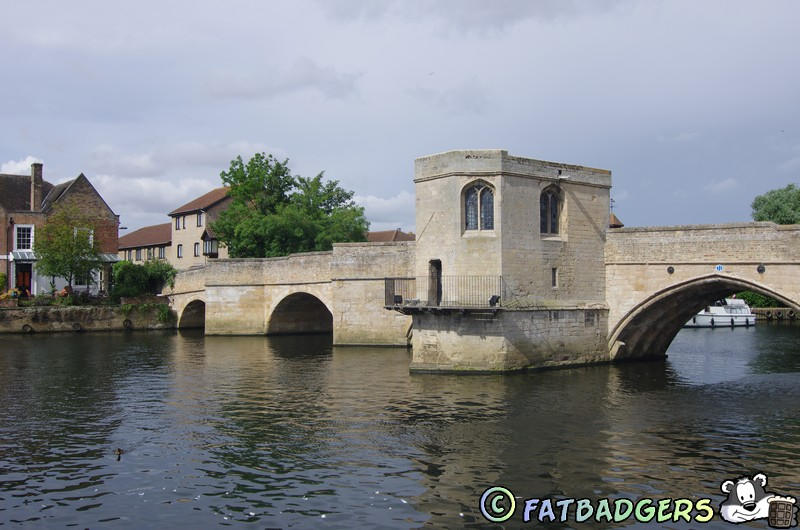
15th-Century Stone Arch Bridge built between 1415 and 1426, crossing the River Great Ouse. It replaced an earlier wooden bridge from 1107. What truly sets this bridge apart is the two-story chapel built directly into its structure, consecrated in 1426. Bridge chapels were common in medieval times, serving as places for travellers and pilgrims to pray for a safe journey or give thanks. They were also often chantry chapels, where prayers were said for the souls of the bridge's founders and benefactors, and sometimes even used for collecting tolls. The St Ives Bridge chapel is one of only a handful of bridge chapels that still exist in England, making it a rare and important historical example. Other notable surviving bridge chapels include those in Rotherham and Wakefield. In 1645, during the English Civil War, Oliver Cromwell's troops partially blew up the southern end of the bridge to prevent Royalist forces from advancing towards London. A drawbridge was installed in its place and remained there for about 70 years. After the Dissolution of the Monasteries in 1539, the chapel lost its religious function. It has since served as a private dwelling, a toll house, and even a pub with a dubious reputation known as "Little Hell" in the 1800s (reportedly even keeping pigs in the cellar!).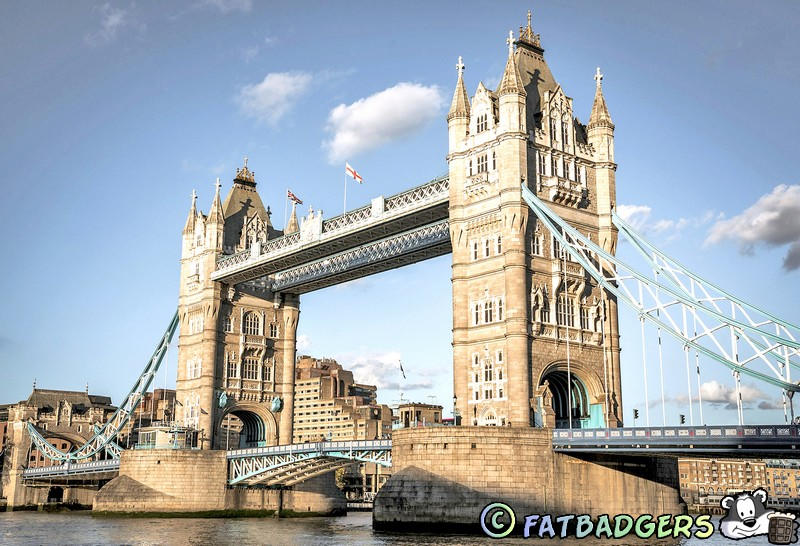






The United Kingdom is home to a remarkable collection of bridges, spanning centuries of engineering innovation and boasting iconic designs.
Iconic British Bridges

 Pubs
Pubs Open Map in New Window
 England
 Scotland
 Wales
Wales Ireland
 County Map
 About Britain
 Pubs
Pubs British Beer
 Perfect Pint
 Beer Glasses
 The Barren Years
 Real Fires
 Breweries
 Brewing
 British Food
 Recipes
 Pub Interiors
 Dog Friendly
 Pub Games
 Strange Pub Names
 Visitor Information
 Oldest Pub
 Pub Signs
 Micropubs
 Buildings
 Cathedrals
 Stately Homes
 Castles
 Listed Buildings
 Scheduled Monuments
 Oak Framing
 Architecture
 Thatching
 Waterways
 Sailing
 Shipbuilding
 Boatbuilding
  Shipping Forecast
 Britain's Coastline
 Coastal Locations
 Piers
Piers Lighthouses
 Harbours
 Beach Safety
 British Beaches
 Canals
 Rivers
 Islands
 Lakes
Lakes Waterfalls
 Historical
 Famous People
 Kings & Queens
 Kings of England
 History of Britain
 Industrial Revolution
 Act of Union
 Beaufort Scale
 British Firsts
 World Heritage Sites
 Historical Periods
 Historical Boundaries
 Tradition & Culture
 Morris Dancing
 Film & Television
 Television
 Calendar of Events
 British Sport
 Scottish Highlands
 Money
Money Dry Stone Walling
 British Wildlife
 Class System
 Geographical
 Pub Boundaries
 Facts 'n' Figures
 British Isles
 Other Areas
 Place Name Origins
 Topography
 Suggest an Inn
 Explanation of symbols
 Why Us?
 Places to Visit
 Long Distance Paths
 National Parks
 Areas of Outstanding Natural Beauty
 Coastal Locations
 Other areas of Britain
 Maps
Maps Our Favourite Locations
 Search
 Focus On...
 News
News Contact
 About Us
 Our History
 Donate