Their aim was to destroy the Protestant government and replace it with a Catholic monarch. Although the plot failed, it left
a lasting mark on British politics, religion and culture. It is still remembered every year on Bonfire Night.
The roots of the conspiracy lay in the deep religious tensions that divided England after the Protestant Reformation.
During the sixteenth century, England had broken away from the authority of the Pope under Henry VIII and later
monarchs strengthened Protestant rule. Catholics were often treated with suspicion and faced heavy restrictions. They
could be fined for refusing to attend Protestant church services, excluded from public office and sometimes imprisoned
for practising their faith openly.
When James I became king in 1603, many Catholics hoped he would be more tolerant than his predecessor, Elizabeth I.
At first, James appeared willing to ease some penalties, but these hopes quickly faded. Anti-Catholic laws remained in
force and some Catholics became increasingly frustrated and desperate. Out of this atmosphere of disappointment and
persecution emerged the Gunpowder Plot.
The conspiracy was organised by Robert Catesby, a charismatic and determined Catholic gentleman. Catesby believed
that only violent action could end Protestant rule in England. He gathered a small group of conspirators, including
Thomas Percy, John Wright and the man who would later become the most famous figure associated with the plot:
Guy Fawkes.
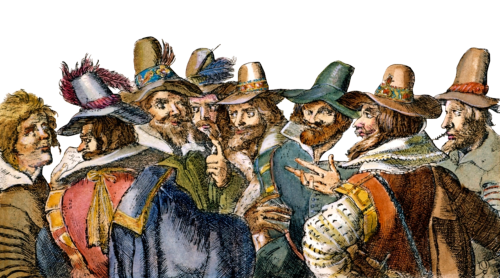
Guy Fawkes was an experienced soldier who had fought for Catholic Spain in the Netherlands. Because of his military background and knowledge of explosives, he was chosen to manage the gunpowder itself. Contrary to popular belief, Fawkes was not the leader of the conspiracy, though his name eventually became the most remembered. The conspirators rented a cellar beneath the Palace of Westminster, where Parliament met. Over time, they secretly moved thirty-six barrels of gunpowder into the cellar, enough to destroy the entire building. The plan was simple but devastating: when the king, members of Parliament, bishops and leading nobles gathered for the State Opening of Parliament on 5 November 1605, the gunpowder would be ignited, killing much of England’s political leadership in a single explosion. The conspirators hoped that the resulting chaos would trigger a Catholic uprising. They planned to kidnap the king’s young daughter, Princess Elizabeth and place her on the throne as a Catholic monarch. However, despite the careful planning, the plot began to unravel shortly before it was due to take place. A mysterious anonymous letter was sent to William Parker, 4th Baron Monteagle, warning him not to attend Parliament because a terrible blow was coming. The letter was eventually shown to the king’s advisers, who ordered a search of the Parliament buildings. In the early hours of 5 November, guards discovered Guy Fawkes in the cellar beside the barrels of gunpowder, carrying matches and firewood. Fawkes was arrested and taken to the Tower of London. At first he refused to reveal the names of the other conspirators, showing considerable determination under interrogation. However, after being tortured on the orders of James I, he eventually confessed and signed statements with a visibly weakened signature. Meanwhile, several conspirators attempted to flee from London and raise support in the Midlands, but the effort collapsed quickly. Robert Catesby and several others were killed during a final confrontation with government forces. The surviving plotters were captured, tried for treason and sentenced to brutal executions. As was customary for traitors at the time, they were hanged, drawn and quartered. The group of plotters that fled to Holbeche House in Staffordshire on the evening of 7 November: • Robert Catesby • Thomas Percy • Francis Tresham • John and Christopher Wright • Thomas and Robert Winter • Thomas Bates • Ambrose Rookwood • Sir Everard Digby • Robert Keyes • John Grant Knowing Guy Fawkes had been captured and their plot to kill the Protestant king discovered, they went on the run, arriving at Holbeche House where they had been offered a hiding place. Chaos then ensued, some of the group’s gunpowder had got wet whilst the gang were crossing the River Stour at Amblecote, this had then be laid out in front of an open fire to dry. Rather unsurprisingly it was ignited by a stray spark, causing a much larger bag of gunpowder to be jettisoned through the roof of the house, landing outside in Holbeche’s courtyard. This explosion injured Robert Catesby, the plot’s mastermind and led to further desertions from the band of rebels, some of whom thought that the explosion was divine intervention.Holbeche House
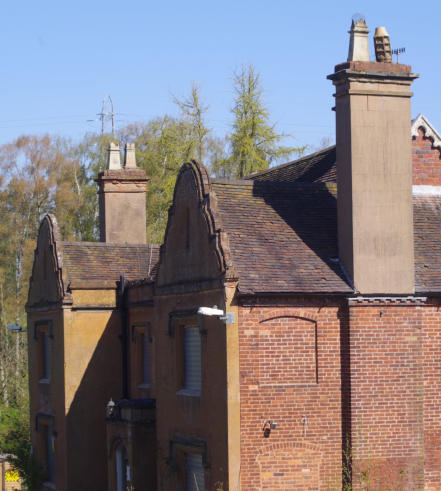
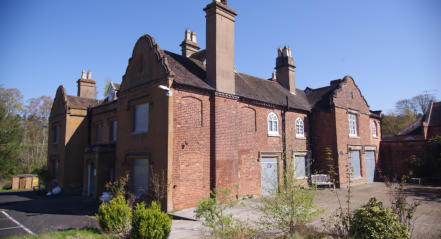
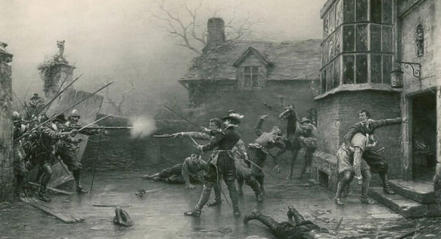
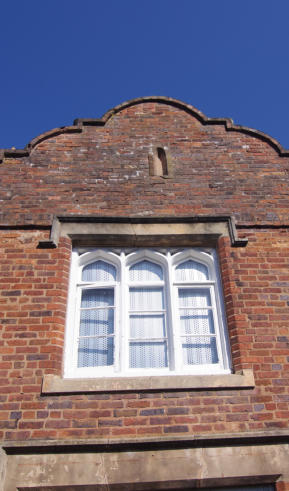
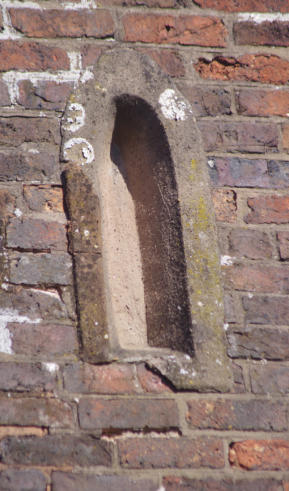
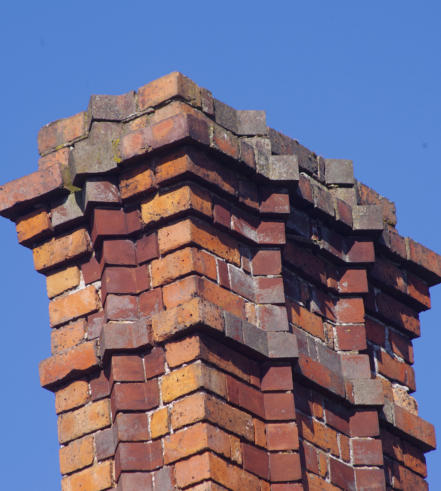
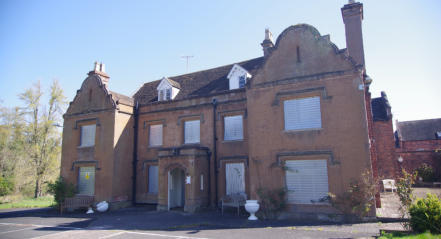
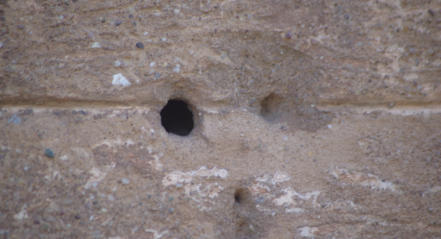
Holbeche House is a Grade II* listed mansion located 1 mile north of Kingswinford and a short walk from Himley Hall. The building was constructed circa 1600, largely refaced in the early nineteenth century. The original house has a central Stucco block of three bays, with two stories and an attic with dormer windows and projecting side wings with Dutch gables at each end. Five windows with rustic glazing and hood moulds, arched rusticated porch, early 19th century stacks and one restored stack with diagonal brick shafts. Some original wood panelling remains inside. New façades were added in the early 19th century and the house was later expanded. The Pitt family were owners in the mid 20 century where they lived in splendour. In 1951, it became a Grade II* listed building and later became a private nursing home operated by Four Seasons Health Care. In 1605 the House was owned by Stephen Lyttleton, part of the extensive Catholic Lyttleton family who owned numerous estates in the area. It became the last bloody stand of the Gunpowder Plotters as they retreated from London. The building was partly destroyed when the conspirators were arrested and still has bullet holes in the front elevation from the shoot out. Local militia led by the Sheriff of Worcestershire caught up with the last of the “rebellious persons” at Holbeche on the morning of 8 November. The soldiers included some of the Sheriff of Staffordshire’s men as this was border country. In the bloody siege that ensued, arch plotter Robert Catesby and fellow gang member Thomas Percy were caught with a single musket shot. Catesby died instantly, though Percy survived for a few days. They were buried nearby but their bodies were later exhumed and decapitated, with the severed heads put on display outside Parliament. Two other plotters, John and Christopher Wright also perished in the siege, that led to squabbles between the competing militias. Arguments about who was taking who as prisoner, who grabbed who first, lead to a scuffle between the different forces in a local alehouse. Eventually, it was settled and the two plotters that survived – Wintour and Rookwood – were carted off to Worcester Town Hall to meet their trial and an eventual ghastly fate. Robert Keyes was captured several days later in Warwickshire, Ambrose Rookwood was imprisoned in the Tower of London after being caught at Holbeche, Sir Everard Digby managed to evade officials for a while longer but was eventually arrested along with Francis Tresham, who had remained in the city. Holbeche’s owner Stephen Lyttelton had managed to flee Holbeche before the siege famously trying to warn Thomas Wintour to avoid the house. In his confession, Wintour explained he had insisted on travelling on to Holbeche to speak to Catesby and the remaining plotters who confirmed to him that they would not flee and, “we mean here to die.” Lyttelton hid in various locations in Worcestershire for 8 weeks, staying with sympathetic friends in Wordsley, Rowley Village and at his Uncle Humphrey Lyttelton’s Hagley Hall. He was eventually caught in January 1606 after being betrayed by a member of the hall’s household staff. It is believed that the first farm they hid at was Cooper’s Bank Farm in Gornal. Those that were captured at Holbeche or arrested in the days and months that followed were convicted at their trial and sentenced to be hanged, drawn and quartered. Months later, January 30th and 31st, the entire group of conspirators were executed in front of hundreds of people in London. Their heads were displayed on poles around the city as a warning of what would happen to others if they too committed treason. Both Stephen and Humphrey were to be eventually executed for their connections to what is the most infamous terror plot hatched on English soil. Lyttelton was regarded as a prominent figure in the catholic community in the Midlands and was the grandson of Sir John Littleton, who purchased the manor of Clent and Kingswinford Parish in the mid-16th century. Two farmers Thomas Smart and John Holyhead, both from Rowley Regis, who had helped to shelter two of the runaways, met a gruesome end at High Green, now Queen Square, in Wolverhampton where they were executed. The failure of the Gunpowder Plot had major consequences for English Catholics. The government introduced even harsher anti-Catholic laws and suspicion toward Catholics increased for generations. The event strengthened Protestant identity in England and reinforced fears of Catholic conspiracies, especially at a time when religious conflict was widespread across Europe. The plot also became deeply embedded in English national culture. Parliament declared that 5 November should be celebrated each year as a day of thanksgiving for the king’s survival. Over time this evolved into Bonfire Night, or Guy Fawkes Night, marked by bonfires, fireworks and the burning of effigies. Children traditionally asked for “a penny for the Guy” while carrying home made figures of Guy Fawkes through the streets. Today, the Gunpowder Plot remains one of the most famous acts of political conspiracy in British history. It has inspired countless books, films and works of popular culture. The image of Guy Fawkes, particularly through the stylised mask popularised by the graphic novel and film V for Vendetta, has become an international symbol of rebellion and protest. Yet behind the legends and fireworks lies a story shaped by fear, religious division and political extremism. The Gunpowder Plot reflected the deep instability of early seventeenth-century England, where questions of faith and loyalty could lead individuals to consider extraordinary acts of violence. Even more than four hundred years later, it continues to capture the imagination because it combines secrecy, danger, ideology and dramatic failure in a single unforgettable event.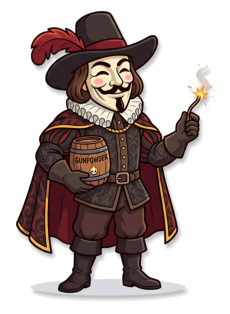
The Gunpowder Plot was one of the most dramatic and infamous conspiracies in British history. In 1605, a group of English Catholics
attempted to blow up the English Parliament and kill James I during the State Opening of Parliament.
The Gunpowder Plot





 Pubs
Pubs Open Map in New Window
 England
 Scotland
 Wales
Wales Ireland
 County Map
 About Britain
 Pubs
Pubs British Beer
 Perfect Pint
 Beer Glasses
 The Barren Years
 Real Fires
 Breweries
 Brewing
 British Food
 Recipes
 Pub Interiors
 Dog Friendly
 Pub Games
 Strange Pub Names
 Visitor Information
 Oldest Pub
 Pub Signs
 Micropubs
 Buildings
 Cathedrals
 Stately Homes
 Castles
 Listed Buildings
 Scheduled Monuments
 Oak Framing
 Architecture
 Thatching
 Waterways
 Sailing
 Shipbuilding
 Boatbuilding
  Shipping Forecast
 Britain's Coastline
 Coastal Locations
 Piers
Piers Lighthouses
 Harbours
 Beach Safety
 British Beaches
 Canals
 Rivers
 Islands
 Lakes
Lakes Waterfalls
 Historical
 Famous People
 Kings & Queens
 Kings of England
 History of Britain
 Industrial Revolution
 Act of Union
 Beaufort Scale
 British Firsts
 World Heritage Sites
 Historical Periods
 Historical Boundaries
 Tradition & Culture
 Morris Dancing
 Film & Television
 Television
 Calendar of Events
 British Sport
 Scottish Highlands
 Money
Money Dry Stone Walling
 British Wildlife
 Class System
 Geographical
 Pub Boundaries
 Facts 'n' Figures
 British Isles
 Other Areas
 Place Name Origins
 Topography
 Suggest an Inn
 Explanation of symbols
 Why Us?
 Places to Visit
 Long Distance Paths
 National Parks
 Areas of Outstanding Natural Beauty
 Coastal Locations
 Other areas of Britain
 Maps
Maps Our Favourite Locations
 Search
 Focus On...
 News
News Contact
 About Us
 Our History
 Donate