News
Dolphin
Dolphins are a common sight in UK waters, and several species can be found around the British coastline. These marine mammals are known for their intelligence, playful behaviour, and social nature.Common Dolphin (Delphinus delphis)
Description:
The Common Dolphin is easily recognizable by its distinctive hourglass pattern, with dark grey on the back and white or yellowish patches on the sides. They are medium-sized dolphins, usually reaching lengths of 2 to 2.5 meters (6.5 to 8 feet).Habitat:
Common Dolphins are often found in deeper offshore waters but can also be seen closer to shore in areas like the English Channel and Celtic Sea.Behaviour:
These dolphins are highly social and often seen in large groups, sometimes numbering in the hundreds. They are known for their acrobatic displays and often ride the bow waves of boats.Bottlenose Dolphin (Tursiops truncatus)
Description:
Bottlenose Dolphins are one of the most familiar dolphin species, with a robust body, a curved dorsal fin, and a characteristic "smile" due to their curved mouths. They can grow up to 4 meters (13 feet) in length.Habitat:
These dolphins are found in coastal and offshore waters around the UK, particularly along the west coast of Scotland, the Moray Firth, and Cardigan Bay in Wales.Behaviour:
Bottlenose Dolphins are known for their intelligence and are often observed interacting with boats and even humans. They live in complex social groups and are highly communicative.Harbour Porpoise (Phocoena phocoena)
Description:
Although technically a porpoise and not a dolphin, the Harbour Porpoise is often included in discussions about dolphins due to its similar appearance and behaviour. They are smaller than most dolphins, usually around 1.5 to 1.9 meters (5 to 6 feet) long, with a rounded head and a small, triangular dorsal fin.Habitat:
Harbour Porpoises are found in coastal waters around the UK, especially in the North Sea, Irish Sea, and around the Hebrides.Behaviour:
These porpoises are shy and less likely to approach boats. They tend to travel alone or in small groups and are more frequently seen in shallow waters.Risso's Dolphin (Grampus griseus)
Description:
Risso's Dolphins are large, reaching up to 4 meters (13 feet) in length, with a robust body and a blunt head. They are grey or white, with many individuals covered in scars, which are a result of social interactions and encounters with prey.Habitat:
These dolphins are found in deeper offshore waters, particularly off the west coast of Scotland, around the Shetland Islands, and occasionally in the Irish Sea.Behaviour:
Risso's Dolphins are less acrobatic than some other species, but they are still social and often seen in groups. They are known for their deep dives and are often spotted surfacing slowly.Long-finned Pilot Whale (Globicephala melas)
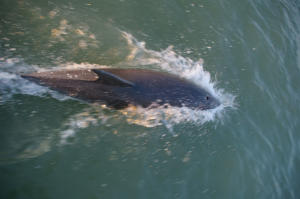
Remarkable marine mammal found in the waters around the UK and other parts of the North Atlantic. Known for its social behaviour and strong family bonds, the long-finned pilot whale is one of the most widely distributed species of whales. Despite its common name, the long-finned pilot whale is actually a large species of dolphin.Description
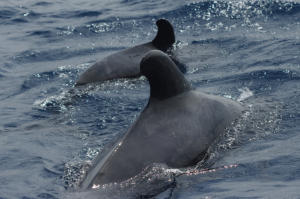
Long-finned pilot whales have a distinctive, bulbous forehead called a "melon," which is rounded and prominent. Their bodies are robust and streamlined, typically black or dark grey with a lighter grey or white patch behind the dorsal fin, known as the "saddle patch." They have long, curved pectoral fins, which are characteristic of the species and give them their name. These whales can grow up to 6.5 meters (21 feet) in length for males and around 5.8 meters (19 feet) for females. They can weigh between 1,000 and 3,000 kilograms (2,200 to 6,600 pounds).Habitat
Found in the colder waters of the North Atlantic, including around the UK, the North Sea, and the waters off Scotland and Ireland. They prefer deep offshore waters, particularly near the continental shelf, but can sometimes be seen closer to shore.Behaviour
Long-finned pilot whales are highly social animals, living in tight-knit groups known as pods, which can consist of up to 20 to 100 individuals. These pods are often made up of extended family members, and they maintain strong social bonds throughout their lives. They communicate using a series of clicks, whistles, and other vocalizations, which help them coordinate hunting and maintain group cohesion. Long-finned pilot whales primarily feed on squid, but they also consume fish such as mackerel, herring, and other small to medium-sized marine species. They are deep divers, capable of reaching depths of up to 600 meters (2,000 feet) to hunt their prey.Where to See Long-Finned Pilot Whales in the UK
• Scotland: The waters around Scotland, particularly the Outer Hebrides and Shetland, are known for sightings of long-finned pilot whales. • Northern Ireland: Pilot whales can also be seen off the coast of Northern Ireland, especially around the Antrim coast.White-Beaked Dolphin (Lagenorhynchus albirostris)
Description:
The White-Beaked Dolphin has a robust body, a short beak, and striking black and white colouration, with a prominent white patch on the beak. They can grow up to 3 meters (10 feet) in length.Habitat:
Commonly found in colder waters, White-Beaked Dolphins are often seen around the northern and eastern coasts of the UK, particularly in the North Sea and around Scotland.Behaviour:
These dolphins are social and often seen in groups. They are known for their energetic behaviour, including breaching and bow-riding.Atlantic White-Sided Dolphin (Lagenorhynchus acutus)
Description:
Similar in appearance to the White-Beaked Dolphin, the Atlantic White-Sided Dolphin has a distinctive colour pattern with a dark back, white belly, and yellowish patches on the sides. They can reach lengths of up to 2.8 meters (9 feet).Habitat:
These dolphins are found in deeper waters off the northern and western coasts of the UK, particularly in the North Atlantic.Behaviour:
Atlantic White-Sided Dolphins are highly social and often seen in large groups. They are known for their playful behaviour and often associate with other dolphin species.Striped Dolphin (Stenella coeruleoalba)
Description:
Striped Dolphins are sleek and streamlined, with distinctive blue and white stripes running along their bodies. They are smaller dolphins, usually around 2 to 2.6 meters (6.5 to 8.5 feet) long.Habitat:
These dolphins prefer warmer waters, so they are less common in the UK, but they are occasionally spotted in the English Channel and the Celtic Sea.Behaviour:
Striped Dolphins are acrobatic and fast swimmers, often seen leaping out of the water and riding bow waves.Orca (Killer Whale) (Orcinus orca)
Description:
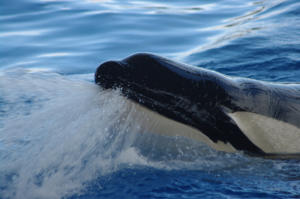
Orcas are the largest members of the dolphin family, easily recognized by their black and white colouration and large dorsal fin. Males can reach lengths of up to 9 meters (30 feet).Habitat:
Orcas are occasionally spotted around the UK, particularly in the waters off Scotland, the Shetland Islands, and Orkney. They are more commonly seen in the North Atlantic and Arctic regions.Behaviour:
Orcas are highly social and live in complex family groups known as pods. They are apex predators, hunting a wide range of prey, including fish, seals, and even other whales.Dusky Dolphin (Lagenorhynchus obscurus)
Description:
Though more commonly found in the Southern Hemisphere, Dusky Dolphins are occasionally spotted in UK waters. They are smaller dolphins, usually around 2 meters (6.5 feet) long, with dark backs and lighter undersides.Habitat:
Typically found in temperate and subantarctic waters, Dusky Dolphins are rare visitors to the UK, usually seen off the south-west coast.Behaviour:
Dusky Dolphins are known for their acrobatic displays and high-speed swimming, often performing flips and spins.Conservation Status
Dolphins in the UK face various threats, including pollution, fishing gear entanglement, habitat loss, and climate change. Conservation efforts are underway to protect these species, with organizations monitoring populations and advocating for marine protection zones. The UK is home to a rich diversity of dolphin species, from the familiar Bottlenose Dolphin to the occasional sightings of Orcas and other rare visitors. These dolphins contribute to the biodiversity of UK waters and are a joy to observe in their natural habitats. Protecting their environments ensures that these magnificent creatures continue to thrive around the British Isles.
 Pubs
Pubs Open Map in New Window
 England
 Scotland
 Wales
Wales Ireland
 County Map
 About Britain
 Pubs
Pubs British Beer
 Perfect Pint
 Beer Glasses
 The Barren Years
 Real Fires
 Breweries
 Brewing
 British Food
 Recipes
 Pub Interiors
 Dog Friendly
 Pub Games
 Strange Pub Names
 Visitor Information
 Oldest Pub
 Pub Signs
 Micropubs
 Buildings
 Cathedrals
 Stately Homes
 Castles
 Listed Buildings
 Scheduled Monuments
 Oak Framing
 Architecture
 Thatching
 Waterways
 Sailing
 Shipbuilding
 Boatbuilding
  Shipping Forecast
 Britain's Coastline
 Coastal Locations
 Piers
Piers Lighthouses
 Harbours
 Beach Safety
 British Beaches
 Canals
 Rivers
 Islands
 Lakes
Lakes Waterfalls
 Historical
 Famous People
 Kings & Queens
 Kings of England
 History of Britain
 Industrial Revolution
 Act of Union
 Beaufort Scale
 British Firsts
 World Heritage Sites
 Historical Periods
 Historical Boundaries
 Tradition & Culture
 Morris Dancing
 Film & Television
 Television
 Calendar of Events
 British Sport
 Scottish Highlands
 Money
Money Dry Stone Walling
 British Wildlife
 Class System
 Geographical
 Pub Boundaries
 Facts 'n' Figures
 British Isles
 Other Areas
 Place Name Origins
 Topography
 Suggest an Inn
 Explanation of symbols
 Why Us?
 Places to Visit
 Long Distance Paths
 National Parks
 Areas of Outstanding Natural Beauty
 Coastal Locations
 Other areas of Britain
 Maps
Maps Our Favourite Locations
 Search
 Focus On...
 News
News Contact
 About Us
 Our History
 Donate