News
Sea Birds
The UK is home to a remarkable variety of seabirds, with its extensive coastline, cliffs, and islands providing ideal nesting and feeding grounds. These seabirds are not only important for the ecosystem but also a key part of the UK's natural heritage. You can expect to be picked up by some people if you refer to these birds as ‘Seagulls’ as there is no such thing - they are just gulls. It’s a little like adults using the terms Moo Cows or Treetits. Not all sea birds are gulls and not all gulls just hang out at the seaside.Black-headed Gull (Chroicocephalus ridibundus)
Description:
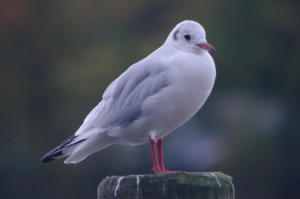
The Black-headed Gull is one of the most common and familiar gulls found across the UK. Despite its name, the bird’s head is only black during the breeding season; at other times, it appears white with dark smudges. It is a medium-sized gull, with a wingspan of about 94-105 cm (37-41 inches) and a body length of 37-44 cm (14.5-17.5 inches). It weighs around 200-400 grams (7-14 oz).Habitat:
During the breeding season, Black-headed Gulls are found in a variety of wetland habitats, including marshes, lakes, reservoirs, rivers, and coastal estuaries. They prefer areas with dense vegetation where they can nest in colonies. In winter, Black-headed Gulls are more commonly seen inland, foraging in urban areas, agricultural fields, rubbish tips, and along shorelines. They are highly adaptable and can thrive in a wide range of environments. They are widely distributed throughout the UK and across Europe, and they migrate to southern Europe, North Africa, and parts of the Middle East during the winter.Behaviour:
Black-headed Gulls are opportunistic feeders with a varied diet. They eat insects, worms, fish, small mammals, and even human food scraps. They are often seen foraging in fields, following ploughs to catch disturbed insects, or scavenging in urban areas.Atlantic Puffin (Fratercula arctica)
Description:
Puffins are easily recognizable with their colourful beaks, black and white plumage, and stocky bodies. Known as "clowns of the sea," they are popular among birdwatchers.Habitat:
Puffins nest in burrows on grassy cliffs and islands, particularly in Scotland, Wales, and northern England. They spend most of their lives at sea, only coming ashore to breed.Behaviour:
Puffins feed primarily on small fish, which they catch by diving underwater. They are skilled swimmers and can carry multiple fish in their beaks at once.Gannet (Morus bassanus)
Description:
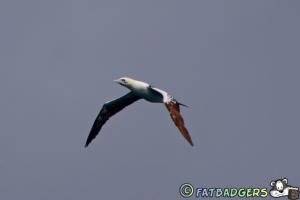
The Northern Gannet is the largest seabird in the North Atlantic, with a wingspan of up to 2 meters (6.5 feet). They are white with black wing tips and a yellowish head.Habitat:
Gannets nest in large colonies on steep cliffs and rocky islands, such as Bass Rock in Scotland and Grassholm in Wales. They are often seen offshore, diving spectacularly into the sea to catch fish.Behaviour:
Gannets are expert divers, plunging from heights of up to 30 meters (100 feet) to catch fish. They are highly social and breed in dense colonies.Kittiwake (Rissa tridactyla)
Description:
Kittiwakes are medium-sized gulls with white bodies, grey wings, and a black "W" pattern on their wings. They have a distinctive black leg and yellow bill.Habitat:
These gulls nest on narrow cliff ledges along the coast, particularly in northern Scotland, the Farne Islands, and the English Channel. They are pelagic outside the breeding season, spending most of their time at sea.Behaviour:
Kittiwakes feed on small fish and marine invertebrates, which they catch by dipping or plunging into the water. Their nests, made of seaweed and mud, are often precariously perched on cliffs.Cormorant (Phalacrocorax carbo)
Description:
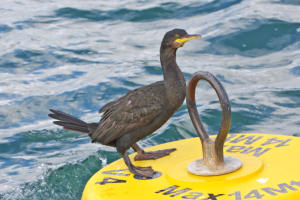
Cormorants are large birds, with a wingspan of about 120-150 cm (47-59 inches) and a body length of 80-100 cm (31-39 inches). They typically weigh between 2-3 kg (4.4-6.6 pounds).Habitat:
• Coastal Areas: Cormorants are commonly found along the UK’s coastlines, where they breed on cliffs, islands, and rocky shores. They are often seen perched on rocks, buoys, or piers near the water. • Inland Waters: In addition to coastal areas, cormorants are increasingly found on inland water bodies such as lakes, rivers, reservoirs, and wetlands. They have adapted well to freshwater environments and can be seen fishing in these areas.Behaviour:
• Feeding: Cormorants are expert fishers and can dive to impressive depths to catch their prey. They use their powerful legs and webbed feet to propel themselves underwater, where they hunt fish, crustaceans, and other aquatic creatures. After a dive, they often come to the surface with a fish in their beak, which they swallow head first. • Wing-Drying: Unlike many waterbirds, cormorants’ feathers are not fully waterproof, which helps them dive but requires them to dry their wings after each fishing session. They are often seen perched with wings spread out, a characteristic pose that makes them easily recognizable.Guillemot (Uria aalge)
Description:
The Common Guillemot is a black-and-white seabird with a slender body and pointed bill. In flight, they appear dark above and white below.Habitat:
Guillemots nest in large colonies on cliffs and rocky islands, such as Skomer Island in Wales and Bempton Cliffs in England. They prefer steep, inaccessible cliffs for nesting.Behaviour:
These birds are excellent swimmers and divers, using their wings to "fly" underwater while pursuing fish. Their eggs are pear-shaped to prevent them from rolling off narrow cliff ledges.Razorbill (Alca torda)
Description:
Razorbills are black-and-white seabirds with a thick, blunt bill and a distinctive white line running from the eye to the beak. They are slightly larger than guillemots.Habitat:
Like guillemots, razorbills nest on cliffs and rocky shores, often in the same colonies. They are found in northern Scotland, Wales, and the Farne Islands.Behaviour:
Razorbills are strong swimmers and divers, catching fish underwater. They are monogamous and return to the same nesting site each year.Fulmar (Fulmarus glacialis)
Description:
The Northern Fulmar resembles a gull but is more robust with a thick neck and tube-like nostrils on its beak. They have a grey and white plumage.Habitat:
Fulmars nest on cliffs and rocky ledges, particularly in northern Scotland, Shetland, Orkney, and the Hebrides. They are pelagic outside the breeding season, spending most of their lives at sea.Behaviour:
Fulmars are surface feeders, picking up food from the water's surface. They can produce a foul- smelling oil to defend themselves from predators.Arctic Tern (Sterna paradisaea)
Description:
Arctic Terns are sleek, white seabirds with a black cap, red beak, and long tail streamers. They are renowned for their incredible long-distance migration.Habitat:
Arctic Terns breed in coastal areas, including islands, beaches, and marshes, particularly in northern Scotland and the Farne Islands. They migrate from the Arctic to the Antarctic, covering thousands of miles.Behaviour:
These terns are agile fliers and plunge-dive for fish and invertebrates. They are highly territorial and will aggressively defend their nesting sites.Manx Shearwater (Puffinus puffinus)
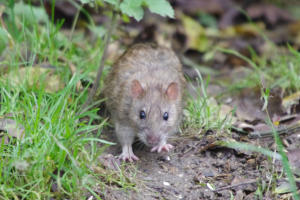
Manx Shearwater’s have been our favourite quiz question when chatting to people in a pub as almost everybody gets it wrong ! We tell people that the Latin name for the House Rat is Rattus rattus and then ask them what they think Puffinus puffinus is. Most people obviously guess at the Puffin but there have been a few clever one’s over the years who have got it correct!Description:
Manx Shearwaters are medium-sized seabirds with long wings and a dark upper body and white underside. They are known for their graceful, gliding flight close to the water's surface.Habitat:
These birds nest in burrows on remote islands such as Skomer Island in Wales and the Isle of Rum in Scotland. They are pelagic and spend most of their lives at sea, only coming ashore to breed.Behaviour:
Manx Shearwaters feed on fish and squid, often travelling long distances to find food. They are nocturnal at their breeding sites, returning to their burrows under the cover of darkness to avoid predators.Shag (Phalacrocorax aristotelis)
Description:
The European Shag is a dark, slender seabird with a greenish-black plumage, a long neck, and a thin, hooked bill. In breeding season, they develop a distinctive crest on their head.Habitat:
Shags nest on rocky cliffs and islands around the UK, particularly in Scotland, northern England, and Wales. They are often seen perching on rocks or diving for fish near the shore.Behaviour:
Shags are excellent divers, using their webbed feet to swim underwater in pursuit of fish. They are often seen drying their wings in the sun after a dive.Great Skua (Stercorarius skua)
Description:
The Great Skua, also known as the "Bonxie," is a large, brown seabird with a powerful build and a hooked bill. They have distinctive white wing patches that are visible in flight.Habitat:
Great Skuas breed on moorland and coastal cliffs, particularly in northern Scotland, Shetland, and Orkney. Outside the breeding season, they are found at sea.Behaviour:
Great Skuas are aggressive predators and scavengers, often stealing food from other seabirds or even preying on them. They are known for their fierce defence of their nests, often attacking intruders.Lesser Black-backed Gull (Larus fuscus)
Description:
The Lesser Black-backed Gull is a medium-sized gull with dark grey wings, a white body, and yellow legs. They are slightly smaller and more slender than the similar Herring Gull.Habitat:
These gulls breed on coastal cliffs, islands, and rooftops in urban areas. They are found throughout the UK but are more common in the west and north.Behaviour:
Lesser Black-backed Gulls are omnivorous, feeding on fish, invertebrates, and scavenged food. They are opportunistic and often seen following fishing boats or foraging in fields and towns.Herring Gull (Larus argentatus)
Description:
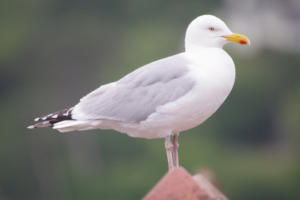
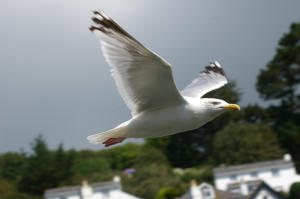
Herring Gulls are large, robust gulls with grey wings, white bodies, and pink legs. They are one of the most familiar gulls in the UK, often seen in coastal and urban areas. The Herring Gull is a large gull, with a wingspan of 120-150 cm (47-59 inches) and a body length of 54-60 cm (21-24 inches). They typically weigh between 800-1,250 grams (1.8-2.75 pounds).Habitat:
• Coastal Areas: Herring Gulls are commonly found along the UK’s coasts, where they breed on cliffs, islands, and beaches. They are particularly abundant in seaside towns, where they exploit human food sources. • Inland: While traditionally coastal birds, Herring Gulls have increasingly moved inland, where they can be found around lakes, rivers, and urban areas. They are often seen in parks, rubbish tips, and even rooftops, where they nest and forage for food. • Breeding Grounds: Their breeding colonies are typically on cliffs, shingle beaches, and rooftops in urban areas.Behaviour:
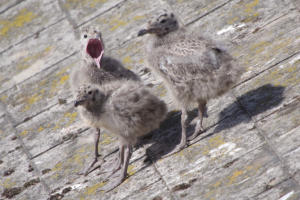
Herring Gulls are omnivorous and opportunistic feeders. They have a varied diet that includes fish, marine invertebrates, eggs, small mammals, and carrion. In urban areas, they are notorious for scavenging food scraps, raiding bins, and even stealing food from humans. • Nesting: Herring Gulls nest in colonies, and their nests are usually built on the ground, cliffs, or rooftops. The nests are made from vegetation and lined with softer materials like feathers. • Eggs: The female typically lays 2-3 eggs, which are incubated by both parents for about 28-30 days. The eggs are olive-brown with dark spots, providing camouflage. • Chicks: The chicks are downy and camouflaged to blend in with their surroundings. Both parents feed and protect the chicks, which fledge after about 6-7 weeks.Whimbrel (Numenius phaeopus)
Description:
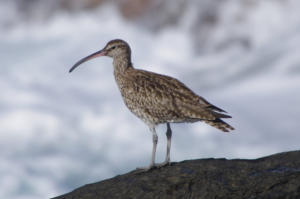
Medium-sized migratory wading bird known for its distinctive curved bill and striking call. It is a member of the curlew family and is often seen along the UK’s coastlines, especially during migration periods. The whimbrel is slightly smaller than the Eurasian curlew, with a length of about 37-47 cm (15-19 inches) and a wingspan of 75-90 cm (30-35 inches).Habitat:
The whimbrel breeds in the northern tundra and moorlands, particularly in Iceland, Scandinavia, and northern Russia. During the breeding season, it prefers open landscapes with sparse vegetation. Whimbrels are long-distance migrants, travelling from their breeding grounds in the Arctic and sub- Arctic to wintering sites in the southern hemisphere. In the UK, they are primarily seen during their spring and autumn migrations, with peak numbers occurring in April-May and July-September.Behaviour:
Whimbrels forage by probing the ground with their long bills, searching for a variety of invertebrates. They primarily feed on crabs, small mollusks, marine worms, and other invertebrates found in mud and sand. They often feed along tidal mudflats and estuaries during low tide, using their bills to extract prey from deep within the substrate. On breeding grounds, they also eat insects, berries, and other small terrestrial prey.Conservation Status
Many of these seabirds face threats from habitat loss, climate change, pollution, and overfishing. Conservation efforts are underway to protect important breeding sites and marine environments to ensure the survival of these species. Best Places to See Seabirds in the UK • Farne Islands, Northumberland: Famous for puffins, guillemots, and Arctic Terns. • RSPB Bempton Cliffs, Yorkshire: Home to gannets, kittiwakes, and razorbills. • Skomer Island, Wales: A great spot for puffins, Manx Shearwaters, and razorbills. • Bass Rock, Scotland: One of the world's largest gannet colonies. • Shetland Islands: A haven for seabirds, including puffins, skuas, and fulmars.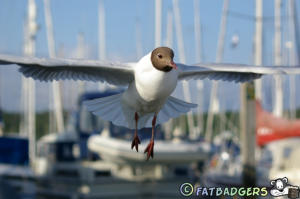



 Pubs
Pubs Open Map in New Window
 England
 Scotland
 Wales
Wales Ireland
 County Map
 About Britain
 Pubs
Pubs British Beer
 Perfect Pint
 Beer Glasses
 The Barren Years
 Real Fires
 Breweries
 Brewing
 British Food
 Recipes
 Pub Interiors
 Dog Friendly
 Pub Games
 Strange Pub Names
 Visitor Information
 Oldest Pub
 Pub Signs
 Micropubs
 Buildings
 Cathedrals
 Stately Homes
 Castles
 Listed Buildings
 Scheduled Monuments
 Oak Framing
 Architecture
 Thatching
 Waterways
 Sailing
 Shipbuilding
 Boatbuilding
  Shipping Forecast
 Britain's Coastline
 Coastal Locations
 Piers
Piers Lighthouses
 Harbours
 Beach Safety
 British Beaches
 Canals
 Rivers
 Islands
 Lakes
Lakes Waterfalls
 Historical
 Famous People
 Kings & Queens
 Kings of England
 History of Britain
 Industrial Revolution
 Act of Union
 Beaufort Scale
 British Firsts
 World Heritage Sites
 Historical Periods
 Historical Boundaries
 Tradition & Culture
 Morris Dancing
 Film & Television
 Television
 Calendar of Events
 British Sport
 Scottish Highlands
 Money
Money Dry Stone Walling
 British Wildlife
 Class System
 Geographical
 Pub Boundaries
 Facts 'n' Figures
 British Isles
 Other Areas
 Place Name Origins
 Topography
 Suggest an Inn
 Explanation of symbols
 Why Us?
 Places to Visit
 Long Distance Paths
 National Parks
 Areas of Outstanding Natural Beauty
 Coastal Locations
 Other areas of Britain
 Maps
Maps Our Favourite Locations
 Search
 Focus On...
 News
News Contact
 About Us
 Our History
 Donate