Unlike commercial networks, the BBC is a public service broadcaster, meaning it is funded by the British public and operates independently of commercial
advertising and direct political control.
The Core Mission and History
The BBC was founded on October 18, 1922, by a group of wireless manufacturers, led by its first Director-General, John Reith. Reith established a strict ethos for the broadcaster that remains its guiding mission statement to this day: "To inform, educate, and entertain." Initially a radio-only service, the BBC launched the world’s first high-definition television service in 1936. During World War II, its radio broadcasts became a vital lifeline of trusted news across occupied Europe, establishing its global reputation for journalistic integrity.How the BBC is Funded: The Licence Fee
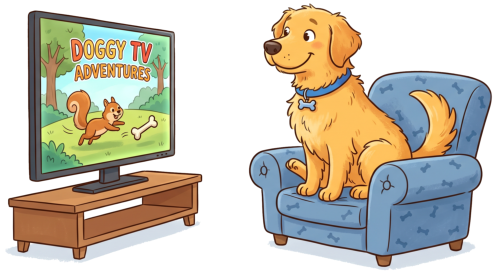
The most unique - and increasingly controversial - aspect of the BBC is its funding model. The BBC does not show commercials on its domestic UK channels or websites. Instead, it is funded primarily by the Television Licence Fee. • Who pays it? Any household in the UK watching or recording live TV transmissions (on any channel, not just the BBC) or using the BBC's streaming platform, iPlayer, must pay an annual fee (roughly £180 per year). • Where does the money go? The funds are pooled directly into the BBC to pay for its massive network of TV channels, radio stations, digital services, local journalism and Gary Lineker’s Boxer shorts. • International Services: Abroad, the model is different. BBC World News, BBC Studios and BBC websites outside the UK do run advertisements or require subscriptions to generate commercial revenue. The very first iteration of the licence fee was actually for radio sets, introduced under the Wireless Telegraphy Act. It cost 10 shillings (which is 50p in decimal money) per year. By the end of 1923, around 200,000 had been issued. When the BBC launched its television service in 1936, it was initially covered under the standard radio licence. However, after TV broadcasts were paused during WWII and resumed after the war, the government officially extended the system to include a dedicated television licence costing £2 per year (which included radio privileges). Following the launch of colour broadcasts on BBC2 in 1967, a supplementary colour TV licence fee was introduced. It cost an extra £5 on top of the monochrome (black and white) rate, bringing a colour licence to £10. In 1971, the government officially abolished the requirement to have a licence just for listening to the radio (including car radios). From this point onward, it became purely a Television Licence. The national dog licence was officially abolished in Great Britain (England, Scotland, and Wales) in 1987 - yes, in the UK you needed a licence to own a dog. It was absurdly cheap: The final rate for a dog licence was frozen at 37½p (which became 37p when the halfpenny coin was withdrawn in 1984). The price hadn't been substantially raised since the late 1800s. Because it was so cheap and poorly enforced, it was widely ignored. It was estimated that fewer than half of the UK's dog owners actually bothered to buy one. The BBC went in the opposite direction: 1 January 1968: £10 (Introduction of the Colour supplement) 1 January 1969: £11 1 July 1971: £12 (Radio-only licence abolished) 1 April 1975: £18 1 July 1977: £21 1 November 1978: £25 1 November 1979: £34 1 December 1981: £46 27 March 1985: £58 1 April 1988 £62.50 1 April 1989 £66.00 1 April 1990 £71.00 1 April 1991 £77.00 1 April 1992 £80.00 1 April 1993 £83.00 1 April 1994 £84.50 1 April 1995 £86.50 1 April 1996 £89.50 1 April 1997 £91.50 1 April 1998 £97.50 1 April 1999 £101.00 1 April 2000 £104.00 1 April 2001 £109.00 1 April 2002 £112.00 1 April 2003 £116.00 1 April 2004 £121.00 1 April 2005 £126.50 1 April 2006 £131.50 1 April 2007 £135.50 1 April 2008 £139.50 1 April 2009 £142.50 1 April 2010 £145.50 1 April 2017: £147.00 (End of the 6-year freeze; policy shifted to rise with inflation) 1 April 2018: £150.50 1 April 2019: £154.50 1 April 2020: £157.50 1 April 2021: £159.00 1 April 2024: £169.50 (Increase based on CPI inflation) 1 April 2026: £180.00 So, if the dog licence hadn’t been abolished in 1987 and you had a dog that liked to watch TV it would have cost you £180.37 a yearScale and Services
The BBC is a media behemoth, operating a vast ecosystem of services across multiple media formats: Television (UK) • BBC One: The flagship channel, home to major news, prime-time dramas (Doctor Who, Sherlock) and massive entertainment shows (Strictly Come Dancing). • BBC Two: Focuses on more specialized programming, documentaries, arts and comedy. • BBC Three & Four: Targeted at youth culture/new talent and intellectual/niche programming respectively. • BBC News & BBC Parliament: Dedicated 24-hour news and political coverage. Radio & Audio The BBC operates 10 national radio networks, including Radio 1 (youth music), Radio 2 (adult contemporary), Radio 4 (speech, news and drama) and Radio 5 Live (live news and sports), alongside dozens of local radio stations across the UK's nations and regions. BBC Sounds serves as its global podcast and audio streaming app. The BBC World Service Broadcasting in over 40 languages across radio, TV and digital platforms, the World Service reaches an estimated global audience of hundreds of millions of people weekly, often operating in countries where free press is restricted.The BBC's Constitutional Position
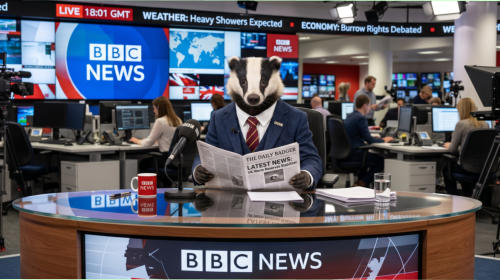
The BBC is not state-controlled media, nor is it a government mouthpiece. It operates under a Royal Charter, a constitutional document granted by the Monarch that is renewed every 10 years. The Charter guarantees the BBC’s editorial independence from the government of the day. It is governed by a Board and regulated by Ofcom (the UK's independent communications regulator). By law, the BBC is strictly required to remain politically impartial in its news coverage. However, anybody who has watched its news programmes will tell you they are absolutely NOT impartial and many presenters (those that are not in prison or in hiding) will often give their own opinion particularly on political matters.Modern Criticisms and the "Culture War"
Despite its prestige, the BBC finds itself under intense scrutiny from all sides of the political and cultural spectrum in modern Britain: • Accusations of Political Bias: The BBC is routinely caught in a crossfire. Right-wing critics and politicians often accuse it of harbouring a metropolitan, socially liberal bias (frequently labelling it "woke"). Conversely, left-wing critics frequently accuse it of being too deferential to the ruling government and establishment. • The Funding Debate: The mandatory nature of the licence fee is highly contested. Critics argue that in an era dominated by streaming giants like Netflix, Amazon Prime and YouTube, forcing citizens to pay a flat fee for a television service under threat of criminal prosecution is an outdated concept. • The Streaming Challenge: The BBC faces intense competition for younger audiences, who increasingly bypass traditional linear television in favour of on- demand digital content, putting pressure on the BBC to innovate via its iPlayer and BBC Sounds platforms. Ultimately, the BBC remains an essential British institution. While it faces significant financial and political hurdles regarding its future funding model, it remains one of the world's most trusted sources of news and a cornerstone of global broadcasting history - although less and less so in the UK.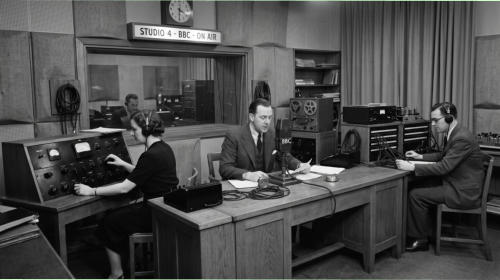
British Broadcasting Corporation











The BBC is the world’s oldest national broadcaster and one of the UK’s most significant cultural exports. Fondly known within Britain as "the Beeb" or
"Auntie," it holds a unique place in British life and global media - or at least it did!

 Pubs
Pubs Open Map in New Window
 England
 Scotland
 Wales
Wales Ireland
 County Map
 About Britain
 Pubs
Pubs British Beer
 Perfect Pint
 Beer Glasses
 The Barren Years
 Real Fires
 Breweries
 Brewing
 British Food
 Recipes
 Pub Interiors
 Dog Friendly
 Pub Games
 Strange Pub Names
 Visitor Information
 Oldest Pub
 Pub Signs
 Micropubs
 Buildings
 Cathedrals
 Stately Homes
 Castles
 Listed Buildings
 Scheduled Monuments
 Oak Framing
 Architecture
 Thatching
 Waterways
 Sailing
 Shipbuilding
 Boatbuilding
  Shipping Forecast
 Britain's Coastline
 Coastal Locations
 Piers
Piers Lighthouses
 Harbours
 Beach Safety
 British Beaches
 Canals
 Rivers
 Islands
 Lakes
Lakes Waterfalls
 Historical
 Famous People
 Kings & Queens
 Kings of England
 History of Britain
 Industrial Revolution
 Act of Union
 Beaufort Scale
 British Firsts
 World Heritage Sites
 Historical Periods
 Historical Boundaries
 Tradition & Culture
 Morris Dancing
 Film & Television
 Television
 Calendar of Events
 British Sport
 Scottish Highlands
 Money
Money Dry Stone Walling
 British Wildlife
 Class System
 Geographical
 Pub Boundaries
 Facts 'n' Figures
 British Isles
 Other Areas
 Place Name Origins
 Topography
 Suggest an Inn
 Explanation of symbols
 Why Us?
 Places to Visit
 Long Distance Paths
 National Parks
 Areas of Outstanding Natural Beauty
 Coastal Locations
 Other areas of Britain
 Maps
Maps Our Favourite Locations
 Search
 Focus On...
 News
News Contact
 About Us
 Our History
 Donate