Where Does the Name Come From?
The word "hackney" predates motor vehicles by centuries. There are two main theories: • It derives from the French word haquenée, meaning a horse available for hire. • It may be connected to the former village of Hackney, which was known for horses in medieval times. Today, Hackney is a large and vibrant part of East London, but for most of its history it was a small rural village surrounded by fields, market gardens and countryside. Hackney was once completely separate from London and only gradually became absorbed into the expanding metropolis. By the 16th century, "hackney" referred to horses that could be rented, and later to horse-drawn vehicles for hire.The First Hackney Carriages
Horse-Drawn Cabs The first licensed hackney coaches appeared in London during the early 1600s. In 1634, around 50 coaches were licensed to carry passengers for hire around the city. As London grew, so did the number of carriages. By the Victorian era, two common types were: • The Hackney Coach • The Hansom Cab The Hansom Cab, introduced in 1834, was faster, lighter and became an iconic sight in Victorian London. Its features included: Two wheels, usually one horse, enclosed seating for two passengers, driver seated high at the rear and lightweight construction It became the most popular taxi in Victorian London.Regulation and Licensing
Hackney carriages have long been heavily regulated. A major historical authority was the Worshipful Company of Hackney Carriage Drivers, while modern regulation is carried out by local authorities and transport bodies. In London, licensing is overseen by Transport for London. Key regulations typically cover: • Vehicle safety • Driver licensing • Insurance • Accessibility requirements • Fare controlsThe Famous London Black Cab
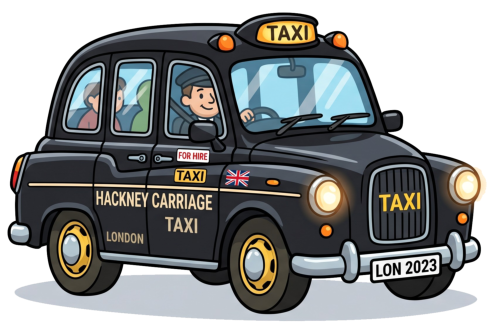
The black cab became one of London's most recognisable symbols. Important models include: • Austin FX3 • Austin FX4 • TX4 • LEVC TX Although many are no longer black, people still commonly call them "black cabs." Today, most of London's iconic hackney carriages (black cabs) are made by LEVC (London Electric Vehicle Company) at its factory in Ansty, near Coventry in the West Midlands. The current TX electric taxi has been produced there since 2017. Coventry has a long history of vehicle manufacturing. The predecessors of LEVC, including companies such as Carbodies and LTI, built London taxis in the city for decades before production moved to the modern Ansty facility. So although people associate the black cab with London, its manufacturing home has long been Coventry, one of Britain's most important historic motor-industry cities.Why Are London Taxis Unique?
The Knowledge One of the most famous requirements for London taxi drivers is The Knowledge. Drivers must learn: • Tens of thousands of streets • Major landmarks • Routes across Greater London The process can take several years and is considered one of the most demanding taxi qualifications in the world. Turning Circle London hackney carriages must have an unusually tight turning circle, originally intended to allow them to navigate areas such as the approaches to The Savoy Hotel. Accessibility Modern hackney carriages are designed to: • Accommodate wheelchairs • Provide ramps • Offer improved access for passengers with disabilitiesHackney Carriages vs Private Hire Vehicles
Many people confuse the two. Hackney Carriages Can: • Be hailed on the street • Wait at taxi ranks • Be pre-booked Private Hire Vehicles (PHVs) Examples include vehicles working through apps. They: • Must be booked in advance • Cannot legally pick up street hails Companies operating PHVs include Uber UK and many local minicab firms.Hackney Carriages Around the UK
Hackney carriages are not unique to London. Cities such as: • Manchester • Birmingham • Liverpool • Leeds all license hackney carriages, though vehicle designs and colours vary by local authority.Cultural Significance
The London black cab has appeared in countless films, television programmes and photographs. Alongside red telephone boxes and double-decker buses, it is one of the most recognisable symbols of Britain. It has featured in: • Mary Poppins • Harry Potter and the Prisoner of Azkaban • SkyfallInteresting Facts
• London's first hackney coach licences date back nearly 400 years. • The term "taxi" comes from the taximeter used to calculate fares. • The famous black cab design evolved from horse-drawn carriages. • Modern London taxis are increasingly electric, helping reduce emissions. • A licensed hackney carriage can legally be hailed from the street; a private hire vehicle cannot.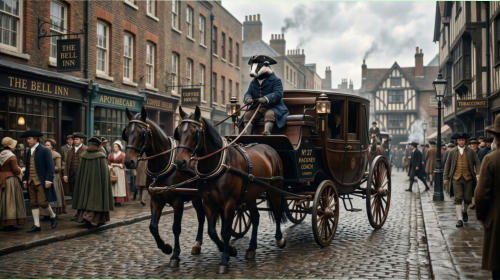

Hackney Carriages











A hackney carriage is a licensed vehicle that can legally pick up passengers who hail it from the street or hire it from a designated taxi rank. In
everyday British usage, the term is most closely associated with London's famous black cabs, but hackney carriages exist throughout the UK.

 Pubs
Pubs Open Map in New Window
 England
 Scotland
 Wales
Wales Ireland
 County Map
 About Britain
 Pubs
Pubs British Beer
 Perfect Pint
 Beer Glasses
 The Barren Years
 Real Fires
 Breweries
 Brewing
 British Food
 Recipes
 Pub Interiors
 Dog Friendly
 Pub Games
 Strange Pub Names
 Visitor Information
 Oldest Pub
 Pub Signs
 Micropubs
 Buildings
 Cathedrals
 Stately Homes
 Castles
 Listed Buildings
 Scheduled Monuments
 Oak Framing
 Architecture
 Thatching
 Waterways
 Sailing
 Shipbuilding
 Boatbuilding
  Shipping Forecast
 Britain's Coastline
 Coastal Locations
 Piers
Piers Lighthouses
 Harbours
 Beach Safety
 British Beaches
 Canals
 Rivers
 Islands
 Lakes
Lakes Waterfalls
 Historical
 Famous People
 Kings & Queens
 Kings of England
 History of Britain
 Industrial Revolution
 Act of Union
 Beaufort Scale
 British Firsts
 World Heritage Sites
 Historical Periods
 Historical Boundaries
 Tradition & Culture
 Morris Dancing
 Film & Television
 Television
 Calendar of Events
 British Sport
 Scottish Highlands
 Money
Money Dry Stone Walling
 British Wildlife
 Class System
 Geographical
 Pub Boundaries
 Facts 'n' Figures
 British Isles
 Other Areas
 Place Name Origins
 Topography
 Suggest an Inn
 Explanation of symbols
 Why Us?
 Places to Visit
 Long Distance Paths
 National Parks
 Areas of Outstanding Natural Beauty
 Coastal Locations
 Other areas of Britain
 Maps
Maps Our Favourite Locations
 Search
 Focus On...
 News
News Contact
 About Us
 Our History
 Donate