What she looks like
• She is usually depicted with: • a helmet • a trident (symbol of naval power) • a shield bearing the Union flag or earlier British symbols • sometimes a lion beside her, representing courage and strength She often sits facing the sea, emphasizing Britain’s identity as a maritime power.Origins
The name comes from the Latin Britannia, used by the Romans for the province of Britain after the Roman conquest under Emperor Claudius in AD 43. The Romans themselves used Britannia as a symbolic female figure on coins.Revival
The image was revived in the 17th century, especially during the reign of Charles II, and became strongly associated with British naval strength and empire. She appeared on: • coins (especially the penny and later the 50p) • patriotic art • government symbolism • propaganda posters“Rule, Britannia!”
She is also linked to the famous patriotic song Rule, Britannia!, first performed in 1740 as part of the masque Alfred, created by: • James Thomson (lyrics) • Thomas Arne (music) The work celebrated Alfred the Great, and the song quickly became far more famous than the rest of the piece. whose famous line is: “Rule, Britannia! Britannia rule the waves: Britons never, never, never shall be slaves.” This helped cement her as a symbol of national pride and imperial confidence. It is still traditionally performed at the Last Night of the Proms, often with enthusiastic audience participation.Today
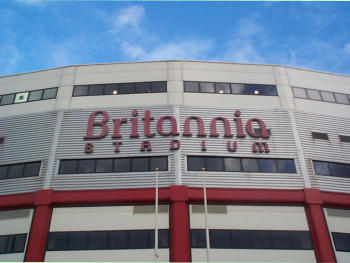
Britannia still appears on some British coins and in political or cultural symbolism, though she is less central than in the height of the British Empire. She remains one of the classic national symbols of Britain, alongside the lion, the bulldog and figures like John Bull. Stoke City’s football stadium was originally called the Britannia stadium when it was built in 1997 although it was named after the sponsors Britannia Building Society which merged with The Co- operative Banking Group in 2009. The building society was founded as the Leek & Moorlands Building Society in Leek in 1856 and wasn’t named Britannia until 1975 so it’s highly unlikely that Britannia herself ever worked there or had anything to do with it - Three of Fat Badger Kilo’s cousins did work there though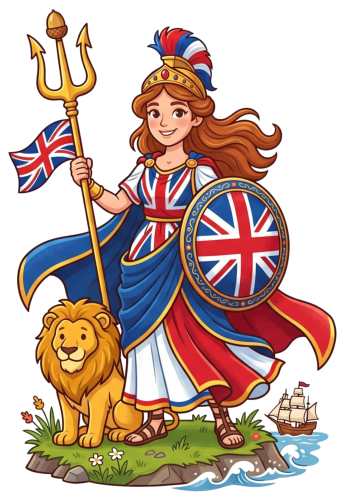
Britannia











Britannia is the female personification of Britain, often shown as a strong, calm warrior figure representing the nation.

 Pubs
Pubs Open Map in New Window
 England
 Scotland
 Wales
Wales Ireland
 County Map
 About Britain
 Pubs
Pubs British Beer
 Perfect Pint
 Beer Glasses
 The Barren Years
 Real Fires
 Breweries
 Brewing
 British Food
 Recipes
 Pub Interiors
 Dog Friendly
 Pub Games
 Strange Pub Names
 Visitor Information
 Oldest Pub
 Pub Signs
 Micropubs
 Buildings
 Cathedrals
 Stately Homes
 Castles
 Listed Buildings
 Scheduled Monuments
 Oak Framing
 Architecture
 Thatching
 Waterways
 Sailing
 Shipbuilding
 Boatbuilding
  Shipping Forecast
 Britain's Coastline
 Coastal Locations
 Piers
Piers Lighthouses
 Harbours
 Beach Safety
 British Beaches
 Canals
 Rivers
 Islands
 Lakes
Lakes Waterfalls
 Historical
 Famous People
 Kings & Queens
 Kings of England
 History of Britain
 Industrial Revolution
 Act of Union
 Beaufort Scale
 British Firsts
 World Heritage Sites
 Historical Periods
 Historical Boundaries
 Tradition & Culture
 Morris Dancing
 Film & Television
 Television
 Calendar of Events
 British Sport
 Scottish Highlands
 Money
Money Dry Stone Walling
 British Wildlife
 Class System
 Geographical
 Pub Boundaries
 Facts 'n' Figures
 British Isles
 Other Areas
 Place Name Origins
 Topography
 Suggest an Inn
 Explanation of symbols
 Why Us?
 Places to Visit
 Long Distance Paths
 National Parks
 Areas of Outstanding Natural Beauty
 Coastal Locations
 Other areas of Britain
 Maps
Maps Our Favourite Locations
 Search
 Focus On...
 News
News Contact
 About Us
 Our History
 Donate