Origins of Modern Policing
Modern policing is often traced to 1829, when Sir Robert Peel established the Metropolitan Police Service in London. Before this, law enforcement relied on: • Parish constables • Night watchmen • Local magistrates Peel's force introduced the idea of professional, uniformed officers who prevented crime through their presence. Because of Peel, British police officers are sometimes nicknamed: • "Bobbies" • "Peelers"How Policing Is Organised
England and Wales There are dozens of territorial police forces, including: • Metropolitan Police Service • Greater Manchester Police • West Midlands Police • Merseyside Police The Metropolitan Police is the largest force in the UK. Scotland Policing is provided by: • Police Scotland Created in 2013 by merging regional forces. Northern Ireland Policing is provided by: • Police Service of Northern IrelandThe Principle of Policing by Consent
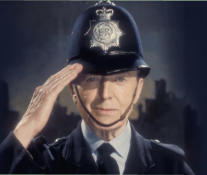
A distinctive feature of British policing is the principle of policing by consent. This idea holds that police derive their authority from public approval and cooperation rather than from military force. The concept is often associated with Sir Robert Peel's policing principles. Back in the 1950’s and 60’s the Police were seen as helpful bobbies where they could be asked directions, this was largely due to a BBC television programme, Dixon of Dock Green. Dixon of Dock Green was one of the most famous and influential police dramas in British television history. It ran from 1955 to 1976 on the BBC and starred Jack Warner as the friendly police constable PC George Dixon. For many people, Dixon became the image of the ideal British policeman: approachable, honest, fair and deeply connected to his local community. Every episode began with Dixon standing outside the police station saying: "Evening all." This became one of the best-known catchphrases in British television. At the end of the programme he would often offer viewers a brief moral reflection before signing off. George Dixon first appeared in the 1950 film: The Blue Lamp In that film, Dixon was a respected London police constable. The character became so popular with audiences that the BBC created an entire television series around him - even though the film had originally killed the character off. "Dock Green" was a fictional district of London. It was intended to represent a working-class urban neighbourhood where police officers knew local residents personally. The show focused less on major crimes and more on: • Neighbourhood disputes • Missing persons • Youth issues • Community relations • Everyday policing Newer police dramas such as The Sweeney presented a grittier and more modern view of crime and policing until American TV shows took over such as Starsky & Hutch where all the girls fancied David Soul and all the boys liked Paul Michael Glaser because he was the funny one. Everybody liked Antonio Fargas as Huggy Bear as he was a cool dude wearing flares and walking with a swagger. Another popular American police show was “Columbo” played by actor Peter Falk as Lieutenant Columbo, a seemingly absent-minded Los Angeles homicide detective who was actually brilliant at spotting tiny inconsistencies. This added to British humour as it became a common ironic saying to say “Well done, Columbo” to anyone who’d spotted something or solved a problem that everybody else had already worked out.Uniforms and Equipment
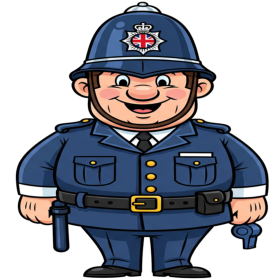
Traditional features include: • Custodian helmets (worn by many forces in England and Wales) • High-visibility jackets • Marked patrol cars and vans Most officers carry: • Radios • Handcuffs • Baton • Incapacitant spray Unlike many countries, most British police officers do not routinely carry firearms. They also used to salute people but most modern day police officers won’t even speak to you, even if they speak English.Armed Police
Specially trained firearms officers respond to incidents involving guns or high-risk threats. Units include: • Authorised Firearms Officers (AFOs) • Specialist firearms teams Although armed officers are visible at airports and some major locations, they represent a minority of police personnel.Specialist Units
Police forces have specialist departments dealing with: • Counter-terrorism • Cybercrime • Major investigations • Roads policing • Public order • Fraud • Child protection Counter-terrorism policing is coordinated nationally across multiple forces.Famous Cases and Events
British policing has been shaped by major historical events, including: • Jack the Ripper murders • Great Train Robbery • 7 July 2005 London bombings These events influenced investigative techniques, forensic science, and security practices.Challenges Today
Modern British policing faces issues such as: • Cybercrime • Online fraud • Terrorism • Knife crime • Domestic abuse • Public trust and accountability • Recruitment and funding pressures Different regions experience different policing priorities. The UK has over 150,000 police officers across its various forces, supported by civilian staff, community support officers, and volunteers. The Metropolitan Police Metropolitan Police Service is often the force people think of when they picture British policing. Its responsibilities include: • Most of Greater London • Protection of senior government figures • Royal protection duties • National counter-terrorism leadership It is one of the largest police organisations in the world. Sadly, these days it’s not possible to ask a police officer directions as you can’t hear his response from behind his mask and visor. The police in general have mostly lost the confidence of the general public and particularly if your name is David Lammy, they are nowhere to be seen - you can go all day walking the streets of London and not see one police officer. We think David Lammy was told that by David Blunkett. The police have been told, presumably by politicians that they can arrest anybody, particularly on racist or homophobic grounds purely on whether somebody complaining to them was offended. It won’t matter if it actually happened or whether it was exaggerated by the complainant, the arrest will still be made. Meanwhile, no burglaries are ever solved any more presumably as the officers are policing tweets and have no time to investigate other crimes - police officers also used to have to be a certain height to join up but these days you can join the police if you’re two foot six and weight twenty stone because most of your work is looking at a computer screen so you can always put a cushion on your chair so you can see it.

Police Force











The British police service is a network of regional forces built on the principle of policing by consent, originating with Sir Robert Peel's Metropolitan
Police in 1829 and evolving into a modern system responsible for everything from neighbourhood patrols to counter-terrorism and cybercrime.

 Pubs
Pubs Open Map in New Window
 England
 Scotland
 Wales
Wales Ireland
 County Map
 About Britain
 Pubs
Pubs British Beer
 Perfect Pint
 Beer Glasses
 The Barren Years
 Real Fires
 Breweries
 Brewing
 British Food
 Recipes
 Pub Interiors
 Dog Friendly
 Pub Games
 Strange Pub Names
 Visitor Information
 Oldest Pub
 Pub Signs
 Micropubs
 Buildings
 Cathedrals
 Stately Homes
 Castles
 Listed Buildings
 Scheduled Monuments
 Oak Framing
 Architecture
 Thatching
 Waterways
 Sailing
 Shipbuilding
 Boatbuilding
  Shipping Forecast
 Britain's Coastline
 Coastal Locations
 Piers
Piers Lighthouses
 Harbours
 Beach Safety
 British Beaches
 Canals
 Rivers
 Islands
 Lakes
Lakes Waterfalls
 Historical
 Famous People
 Kings & Queens
 Kings of England
 History of Britain
 Industrial Revolution
 Act of Union
 Beaufort Scale
 British Firsts
 World Heritage Sites
 Historical Periods
 Historical Boundaries
 Tradition & Culture
 Morris Dancing
 Film & Television
 Television
 Calendar of Events
 British Sport
 Scottish Highlands
 Money
Money Dry Stone Walling
 British Wildlife
 Class System
 Geographical
 Pub Boundaries
 Facts 'n' Figures
 British Isles
 Other Areas
 Place Name Origins
 Topography
 Suggest an Inn
 Explanation of symbols
 Why Us?
 Places to Visit
 Long Distance Paths
 National Parks
 Areas of Outstanding Natural Beauty
 Coastal Locations
 Other areas of Britain
 Maps
Maps Our Favourite Locations
 Search
 Focus On...
 News
News Contact
 About Us
 Our History
 Donate