Key Characteristics
Understatement One of the most distinctive features is making something dramatic sound ordinary. For example, after a major mishap, someone might say: "Well, that could have gone better." The humour comes from deliberately downplaying the situation.Self-Deprecation
Britons often make jokes at their own expense. Rather than boasting, people may joke about: • Their mistakes • Their appearance • Their bad luck • Their hometown This can make someone seem more approachable and less self- important.Irony and Sarcasm
British humour frequently relies on saying one thing while meaning another. For example: Standing in heavy rain and saying, "Lovely weather." The listener is expected to understand the contradiction.Deadpan Delivery
A joke may be delivered with a completely serious expression, making the contrast funnier.Absurd and Surreal Comedy
Monty Python helped make absurdist humour famous. Their sketches often featured: • Illogical situations • Nonsensical dialogue • Unexpected twists Examples include: • The Dead Parrot Sketch • The Ministry of Silly Walks However, they were not only way beyond their time but they also predicted the future. In 1979 they produced the masterpiece film “Monty Python's Life of Brian” At the time, the scene “The Right to have babies” was the height of absurdity. In modern day Britain, this has become reality for people with a certain type of mental disorder even though there’s nowhere for the foetus to gestate. Back in the 1970’s it was acceptable to ridicule all sorts of races and religions and lots of jokes started with “there was an Englishman, an Irishman and a Scotsman” - the joke was usually either the Scotsman didn’t like spending his money or that the Irishman was stupid - it wasn’t meant to be an insult, it was just said to try and make you smile. Even up to the 1990’s you could get away with asking why a woman had never been to the moon before jumping in and proclaiming that it didn’t need cleaning yet. These days, you’d probably get a knock on your door from the local constabulary before being handcuffed and ruffed up a bit.Comedy of Class and Social Observation
Many British comedies explore social class, manners and awkwardness. Examples include: • Only Fools and Horses • Blackadder • Keeping Up Appearances These shows often draw humour from people trying to improve their social standing or navigating class differences. Although Keeping up Appearances did rely on telling the same joke time and time and time again and the canned laughter found it funny every time… “It’s pronounced bucket not BUCKET”Awkwardness and Cringe Comedy
Modern British comedy often finds humour in uncomfortable situations. Examples include: • The Office • Peep Show Characters frequently embarrass themselves, misunderstand social cues, or make situations worse.Panel Shows
A particularly British television format is the comedy panel show. Popular examples include: • Have I Got News for You (although this ceased to be funny in 1989) • QI • Would I Lie to You? • Taskmaster These rely heavily on quick wit, wordplay and banter.Famous British Comedians
Some influential figures include: • Peter Sellers • Rowan Atkinson • Billy Connolly • Victoria Wood • Ricky Gervais Many actors play comedy roles but in real life are not in the slightest bit funny whereas James Blunt, a singer is one of the funniest people we know on Twitter (Sorry Elon, we can’t be bothered to call it X) We know who the funny comedians are but everyone else is also entitled to have their own opinion - and that’s OK. For instance, some people find Miranda or Mrs Brown’s Boys funny as everybody laughs at different things. You only need to fart to make Fat Badger Ade laugh and as we all know, somebody falling over or getting hit in the bollocks is always going to be funny.Why It Can Be Misunderstood
British humour often assumes the audience will: • Detect irony without explanation • Recognise understatement • Understand cultural references • Notice subtle facial expressions or tone As a result, jokes can sometimes be missed by people unfamiliar with the style. In the 21st Century, some people who claim to be comedians decided they would join the “Woke” brigade and started telling other comedians what they should be telling jokes about and what was “off limits” to comedy. Back in the late 20th century comedians like Bernard Manning and Roy “Chubby” Brown made very offensive jokes - but about anything and everyone. Sometimes they were funny, sometimes they weren’t. These days some people have ‘decided’ what’s funny and what isn’t and as Mr Gervais said “They don’t bloody want guitar lessons” and they’re very angry about it.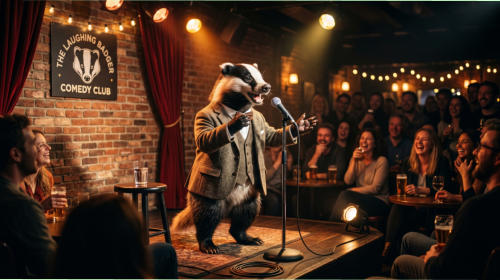

British Humour











British humour is often characterised by dry wit, understatement, irony, sarcasm, self-deprecation and absurdity. While it's hard to generalise an entire
nation's sense of humour, these traits appear frequently in British comedy and are part of what many people around the world associate with it.

 Pubs
Pubs Open Map in New Window
 England
 Scotland
 Wales
Wales Ireland
 County Map
 About Britain
 Pubs
Pubs British Beer
 Perfect Pint
 Beer Glasses
 The Barren Years
 Real Fires
 Breweries
 Brewing
 British Food
 Recipes
 Pub Interiors
 Dog Friendly
 Pub Games
 Strange Pub Names
 Visitor Information
 Oldest Pub
 Pub Signs
 Micropubs
 Buildings
 Cathedrals
 Stately Homes
 Castles
 Listed Buildings
 Scheduled Monuments
 Oak Framing
 Architecture
 Thatching
 Waterways
 Sailing
 Shipbuilding
 Boatbuilding
  Shipping Forecast
 Britain's Coastline
 Coastal Locations
 Piers
Piers Lighthouses
 Harbours
 Beach Safety
 British Beaches
 Canals
 Rivers
 Islands
 Lakes
Lakes Waterfalls
 Historical
 Famous People
 Kings & Queens
 Kings of England
 History of Britain
 Industrial Revolution
 Act of Union
 Beaufort Scale
 British Firsts
 World Heritage Sites
 Historical Periods
 Historical Boundaries
 Tradition & Culture
 Morris Dancing
 Film & Television
 Television
 Calendar of Events
 British Sport
 Scottish Highlands
 Money
Money Dry Stone Walling
 British Wildlife
 Class System
 Geographical
 Pub Boundaries
 Facts 'n' Figures
 British Isles
 Other Areas
 Place Name Origins
 Topography
 Suggest an Inn
 Explanation of symbols
 Why Us?
 Places to Visit
 Long Distance Paths
 National Parks
 Areas of Outstanding Natural Beauty
 Coastal Locations
 Other areas of Britain
 Maps
Maps Our Favourite Locations
 Search
 Focus On...
 News
News Contact
 About Us
 Our History
 Donate