Creation of the NHS
The NHS was launched on 5 July 1948 under the post-war Labour government of Clement Attlee. The driving force behind its creation was: • Aneurin Bevan who served as Minister of Health. Before 1948, healthcare in Britain was a mixture of: • private doctors, • charity hospitals, • local authority services, • and insurance schemes. Many people could not afford medical treatment.Founding principles
Although the Labour party frequently mention how ‘they’ created the NHS, it had been discussed for many years previously by all the main political parties. Calls for a "unified medical service" can be dated back to the Minority Report of the Royal Commission on the Poor Law in 1909. Following the publication of the Beveridge Report in 1942, which called for the establishment of "comprehensive health and rehabilitation services for the prevention and treatment of disease," broad political support emerged for the creation of a national healthcare system. In 1944, Conservative Health Minister Henry Willink developed these proposals further in his White Paper, A National Health Service. The document outlined plans for a state-organised health service and was distributed to government colleagues in both full and summary versions, as well as being promoted through newsreels to inform the wider public. Labour won the 1945 election shortly after the end of the second world war and implemented the proposals three years later. The NHS was established on three core principles: • It should meet the needs of everyone. • It should be free at the point of use. • It should be based on clinical need, not ability to pay. These principles remain central to the NHS today.How it works
The NHS provides services including: • general practitioners (GPs) • hospital treatment • emergency care • maternity services • mental health services • vaccinations and public health programmes Most services are funded through general taxation.The NHS across the UK
Although people often speak of "the NHS" as one organization, there are separate systems for: • England • Scotland • Wales • Northern Ireland Each is managed separately, though they share the same basic principles.Importance in British society
The NHS is often regarded as one of Britain's most significant post-war achievements. It provides healthcare to millions of people and is one of the world's largest publicly funded health systems. It has become a major part of British national identity and frequently ranks among the institutions that the public values most highly.Challenges
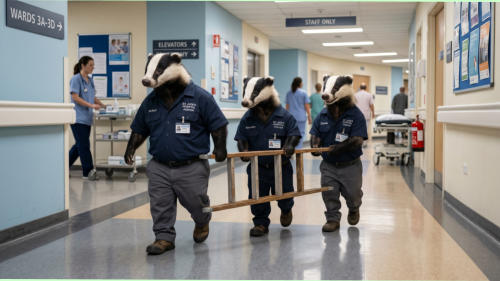
Like many healthcare systems, the NHS faces ongoing challenges, including: • an ageing population, • staff shortages, • rising demand for services, • and funding pressures. The NHS provides some excellent health care amongst some world class facilities however it is hugely bloated and the scene of some quite frankly stupid decision making. Some departments still use a fax system to communicate, workers can be seen carrying the same piece of paper around all day and if a fuse has failed in the plug of a ward television in Dudley, an engineer has to travel up from London to change it. You may even witness three porters carrying the worlds smallest step ladder when one person could lift it with a single finger. We are prone to the odd bit of exaggeration on occasions but sadly not this time! Despite these challenges, it remains one of the largest employers in the world and the cornerstone of healthcare provision in the UK.Legacy
The NHS transformed access to healthcare by making medical treatment a universal public service rather than something largely dependent on personal wealth. Its creation in 1948 marked a major change in British social policy and helped establish the modern welfare state.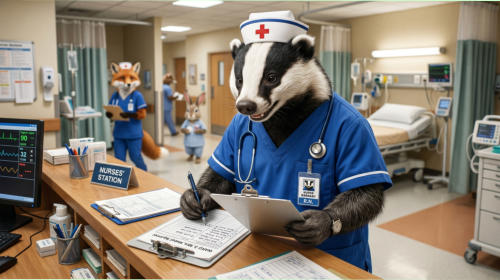



The National Health Service











The NHS is the publicly funded healthcare system of the United Kingdom. It was founded in 1948 with the principle that healthcare should be
available to everyone, regardless of their ability to pay.

 Pubs
Pubs Open Map in New Window
 England
 Scotland
 Wales
Wales Ireland
 County Map
 About Britain
 Pubs
Pubs British Beer
 Perfect Pint
 Beer Glasses
 The Barren Years
 Real Fires
 Breweries
 Brewing
 British Food
 Recipes
 Pub Interiors
 Dog Friendly
 Pub Games
 Strange Pub Names
 Visitor Information
 Oldest Pub
 Pub Signs
 Micropubs
 Buildings
 Cathedrals
 Stately Homes
 Castles
 Listed Buildings
 Scheduled Monuments
 Oak Framing
 Architecture
 Thatching
 Waterways
 Sailing
 Shipbuilding
 Boatbuilding
  Shipping Forecast
 Britain's Coastline
 Coastal Locations
 Piers
Piers Lighthouses
 Harbours
 Beach Safety
 British Beaches
 Canals
 Rivers
 Islands
 Lakes
Lakes Waterfalls
 Historical
 Famous People
 Kings & Queens
 Kings of England
 History of Britain
 Industrial Revolution
 Act of Union
 Beaufort Scale
 British Firsts
 World Heritage Sites
 Historical Periods
 Historical Boundaries
 Tradition & Culture
 Morris Dancing
 Film & Television
 Television
 Calendar of Events
 British Sport
 Scottish Highlands
 Money
Money Dry Stone Walling
 British Wildlife
 Class System
 Geographical
 Pub Boundaries
 Facts 'n' Figures
 British Isles
 Other Areas
 Place Name Origins
 Topography
 Suggest an Inn
 Explanation of symbols
 Why Us?
 Places to Visit
 Long Distance Paths
 National Parks
 Areas of Outstanding Natural Beauty
 Coastal Locations
 Other areas of Britain
 Maps
Maps Our Favourite Locations
 Search
 Focus On...
 News
News Contact
 About Us
 Our History
 Donate