News
Adder
The adder (Vipera berus) is the UK's only native venomous snake and one of the most well-known reptiles in the country. Though generally shy and non-aggressive, the adder holds a special place in British wildlife due to its unique status and striking appearance.Description
Appearance:
Adders are relatively small snakes, usually growing up to 60-80 cm (24-31 inches) in length. They have a distinctive zigzag pattern running along their backs, which is black or dark brown on a grey or brown background. Males tend to be lighter in colour, often grey, while females are usually more brownish.Head:
The adder has a broad, flat head that is distinct from its neck. They also have vertical, slit-like pupils, which is characteristic of venomous snakes.Colour Variation:
Some adders can be entirely black, a condition known as melanism. These black adders are more common in some regions and are still identifiable by their shape and behaviour.Habitat
Preferred Habitats:
Adders are found in a variety of habitats, including heathlands, moorlands, woodland edges, grasslands, and coastal dunes. They prefer areas with plenty of ground cover for shelter and sun-exposed spots for basking.Range:
Adders are widespread across the UK, particularly in Scotland, Wales, and parts of southern and eastern England. However, they are less common in the Midlands and are absent from Ireland.Behaviour
Basking:
Being cold-blooded reptiles, adders rely on external heat sources and are often seen basking in the sun to regulate their body temperature. They are most active during warm weather, typically from March to October.Diet:
Adders primarily feed on small mammals such as voles and mice, as well as lizards, frogs, and birds. They use their venom to immobilize and kill their prey before swallowing it whole.Hibernation:
During the colder months, adders hibernate in burrows or under logs and rocks. They often return to the same hibernation sites year after year, sometimes sharing them with other snakes.Breeding
Mating Season:
The mating season for adders occurs in spring, shortly after they emerge from hibernation. Males engage in "combat dances" to compete for females, where they entwine their bodies and push against each other.Reproduction:
Adders are ovoviviparous, meaning they give birth to live young rather than laying eggs. Females give birth to between 5 and 20 young in late summer, and the newborn adders are fully independent from birth.Venom and Safety
Venom:
Although adders are venomous, their bites are rarely life-threatening to humans. The venom is used primarily for subduing prey, and bites to humans usually occur only when the snake is provoked or accidentally stepped on. Symptoms of a bite can include pain, swelling, and nausea, but serious complications are uncommon.Safety Precautions:
If you encounter an adder in the wild, it's important to give it space and avoid disturbing it. Adders will usually retreat if given the opportunity, and bites are very rare.Conservation Status
Population:
While adders are still relatively widespread in the UK, their numbers are declining in some areas due to habitat loss, fragmentation, and human disturbance. They are listed as a Priority Species under the UK Biodiversity Action Plan.Protection:
Adders are legally protected in the UK under the Wildlife and Countryside Act 1981. This makes it illegal to intentionally kill, injure, or sell them.Interesting Facts
Symbolism:
The adder has been featured in British folklore and symbolism for centuries, often associated with healing and protection but also with danger.Moulting:
Adders, like all snakes, periodically shed their skin as they grow. This process, known as moulting, happens several times a year and is an important part of their life cycle.Where to See Adders in the UK
Heathlands and Moorlands:
Places like the Cannock Chase, New Forest, North York Moors, and the Scottish Highlands are good locations to spot adders.Nature Reserves:
Various nature reserves across the UK, such as those managed by the RSPB and local wildlife trusts, are known for their adder populations.Spring and Early Summer:
The best time to see adders is during spring and early summer when they are most active. The adder is a fascinating and vital part of the UK's natural heritage. Despite their venomous reputation, they are generally harmless to humans and play an important role in controlling small mammal populations. Protecting their habitats and understanding their behaviour is key to ensuring that these remarkable reptiles continue to thrive in the UK.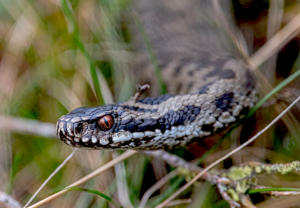

 Pubs
 Open Map in New Window
 England
 Scotland
 Wales
 Ireland
 County Map
 About Britain
 Pubs
 British Beer
 Perfect Pint
 Beer Glasses
 The Barren Years
 Real Fires
 Breweries
 Brewing
 British Food
 Recipes
 Pub Interiors
 Dog Friendly
 Pub Games
 Strange Pub Names
 Visitor Information
 Oldest Pub
 Pub Signs
 Micropubs
 Buildings
 Cathedrals
 Stately Homes
 Castles
 Listed Buildings
 Scheduled Monuments
 Oak Framing
 Architecture
 Thatching
 Waterways
 Sailing
 Shipbuilding
 Boatbuilding
 Shipping Forecast
 Britain's Coastline
 Coastal Locations
 Piers
 Lighthouses
 Harbours
 Beach Safety
 British Beaches
 Canals
 Rivers
 Islands
 Lakes
 Waterfalls
 Historical
 Famous People
 Kings & Queens
 Kings of England
 History of Britain
 Industrial Revolution
 Act of Union
 Beaufort Scale
 British Firsts
 World Heritage Sites
 Historical Periods
 Historical Boundaries
 Tradition & Culture
 Morris Dancing
 Film & Television
 Television
 Calendar of Events
 British Sport
 Scottish Highlands
 Money
 Dry Stone Walling
 British Wildlife
 Class System
 Geographical
 Pub Boundaries
 Facts 'n' Figures
 British Isles
 Other Areas
 Place Name Origins
 Topography
 Suggest an Inn
 Explanation of symbols
 Why Us?
 Places to Visit
 Long Distance Paths
 National Parks
 Areas of Outstanding Natural Beauty
 Coastal Locations
 Other areas of Britain
 Maps
 Our Favourite Locations
 Search
 Focus On...
 News
 Contact
 About Us
 Our History
 Donate