News
Waterfowl
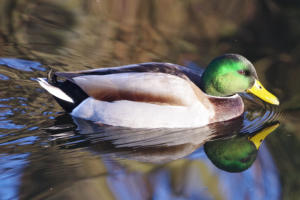
The UK is home to a diverse array of waterfowl species, which can be found in various habitats, including lakes, rivers, marshes, and coastal wetlands. These birds are an important part of the British ecosystem, contributing to biodiversity and providing opportunities for birdwatching. The term Waterfowl generally covers around 180 species of birds such as ducks, geese, and swans. There are other species which don’t fall into the waterfowl category such as Grebes, Divers, Waders and of course sea birds. We include a few here that aren’t actually classed as waterfowl until such time we decide we need to split them into two pages as we pub crawl around the country and manage to photograph more birds around water. We like pubs close to water especially pubs next to canals or by the sea so it’s a distinct possibility that we might see something new and grab a quick shot.Mallard (Anas platyrhynchos)
Description:
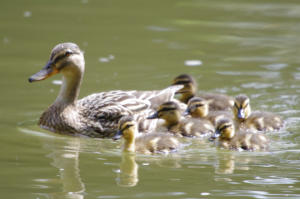
The Mallard is perhaps the most recognizable duck in the UK, with the male having a glossy green head, white neck ring, and chestnut- brown chest, while the female is mottled brown.Habitat:
Found in almost any wetland habitat, including ponds, rivers, lakes, and even urban parks.Diet:
Omnivorous, feeding on aquatic plants, insects, and small fish.Mute Swan (Cygnus olor)
Description:
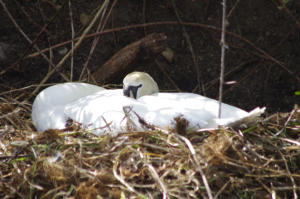
A large, graceful swan with a long neck and white plumage. It has an orange bill with a black knob at the base.Habitat:
Commonly seen on lakes, rivers, and canals throughout the UK.Diet:
Herbivorous, feeding mainly on aquatic plants.Canada Goose (Branta
canadensis)
Description:
A large goose with a black head and neck, white chinstrap, and brown body. Introduced from North America, it is now widespread across the UK.Habitat:
Found in a variety of wetland habitats, including lakes, rivers, reservoirs, and parks.Diet:
Primarily herbivorous, grazing on grass and aquatic plants.Tufted Duck (Aythya fuligula)
Description:
A medium-sized diving duck with a distinctive tuft of feathers on the head. Males are black with white flanks, while females are brown with a paler belly.Habitat:
Prefers deeper lakes, reservoirs, and large rivers.Diet:
Feeds mainly on aquatic invertebrates, as well as plants.Eurasian Wigeon (Mareca penelope)
Description:
A medium-sized duck with a chestnut-brown head, cream forehead, and grey body (male). Females are mottled brown.Habitat:
Found in freshwater lakes, marshes, and estuaries.Diet:
Feeds on aquatic plants and grasses, often grazing on land.Water Rail (Rallus aquaticus)
Description:
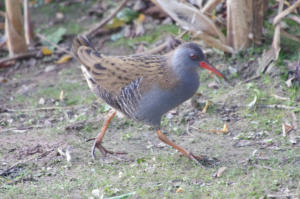
A medium-sized bird, measuring about 23-28 cm (9-11 inches) in length with a wingspan of 38-45 cm (15-18 inches). It is similar in size to a Moorhen but more slender and elongated.Habitat:
Water Rails are typically found in wetland habitats such as marshes, reed beds, bogs, and the edges of lakes and rivers. They prefer areas with dense vegetation, where they can remain hidden from predators.Diet:
Water Rails are omnivorous and have a varied diet that includes small fish, insects, molluscs, worms, and plant material. They feed by probing the mud and shallow water with their long beak, searching for food among the vegetation.Northern Shoveler (Spatula clypeata)
Description:
Recognizable by its large, spatula-shaped bill. Males have a green head, white chest, and chestnut sides, while females are mottled brown.Habitat:
Prefers shallow wetlands, marshes, and lagoons.Diet:
Feeds by sifting through water for aquatic invertebrates and plant material.Aylesbury Duck
Description:
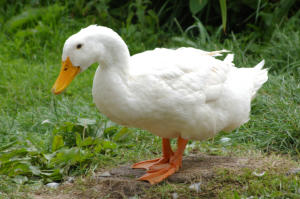
Traditional British breed of domestic duck known for its white plumage, large size, and role in the production of high-quality meat. Named after the town of Aylesbury in Buckinghamshire, this breed has a long history in the UK and was once highly prized for its tender flesh and attractive appearance. Although its popularity has waned with the rise of more commercial breeds, the Aylesbury Duck remains an important part of British agricultural heritage.Habitat:
Found on lakes, garden ponds, and on plates.Diet:
Primarily herbivorous, feeding on aquatic plants.Gadwall (Mareca strepera)
Description:
A subtly coloured duck, with males having grey bodies and a black rear, and females resembling female Mallards but with a more delicate pattern.Habitat:
Found on lakes, marshes, and reservoirs.Diet:
Primarily herbivorous, feeding on aquatic plants.Eurasian Teal (Anas crecca)
Description:
The smallest dabbling duck in the UK, with males having a chestnut head and a green eye patch, while females are mottled brown.Habitat:
Prefers shallow lakes, ponds, and marshes.Diet:
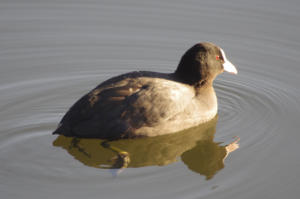
Feeds on seeds, aquatic plants, and invertebrates.Coot (Fulica atra)
Description:
A medium-sized waterbird with black plumage, a white beak, and a distinctive white shield on its forehead. Known for its aggressive behaviour.Habitat:
Common on lakes, rivers, and marshes.Diet:
Omnivorous, feeding on aquatic plants, insects, and small fish.Moorhen (Gallinula chloropus)
Description:
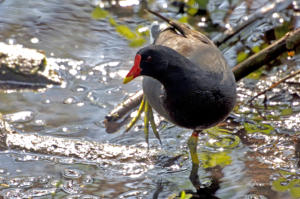
Smaller and more slender than the Coot, with dark plumage, a red bill with a yellow tip, and a red forehead shield. Moorhens are strong swimmers, often seen gliding across the water with a jerky motion.Habitat:
Moorhens are most commonly associated with freshwater wetlands, including ponds, lakes, rivers, and canals. They prefer areas with plenty of vegetation, such as reeds, rushes, and water lilies, which provide both food and cover. In addition to natural wetlands, Moorhens are also found in man-made habitats like farm ponds, drainage ditches, and garden ponds. They are highly adaptable and can thrive in a variety of water- rich environments.Diet:
Omnivorous, eating plants, insects, and small aquatic animals.Greylag Goose (Anser anser)
Description:
A large, grey goose with a pinkish-orange bill and legs. The UK’s only native breeding goose.Habitat:
Common in wetlands, farmland, and urban parks.Diet:
Herbivorous, grazing on grasses and agricultural crops.Great Crested Grebe (Podiceps cristatus)
Description:
A striking waterbird with a distinctive black double crest and ruff around its head during the breeding season. Known for its elaborate courtship dance.Habitat:
Prefers large lakes, reservoirs, and slow-moving rivers.Diet:
Primarily feeds on fish, diving underwater to catch its prey.Common Shelduck (Tadorna tadorna)
Description:
A large, colourful duck with a striking black, white, and chestnut plumage, and a red bill.Habitat:
Often found in coastal areas, estuaries, and mudflats.Diet:
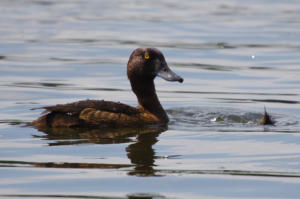
Feeds on invertebrates, particularly mollusks and crustaceans.Pochard (Aythya ferina)
Description:
A diving duck with males having a reddish-brown head, black chest, and grey body. Females are brownish-grey.Habitat:
Prefers deeper lakes, reservoirs, and large rivers.Diet:
Feeds on aquatic plants and invertebrates.Scaup (Aythya marila)
Description:
The Greater Scaup is a medium-sized duck, with a length of about 42-51 cm (16.5-20 inches) and a wingspan of approximately 71-80 cm (28-31 inches). Males are slightly larger than females. As a diving duck, the Scaup is well-adapted for foraging underwater. It dives to feed on molluscs, crustaceans, and aquatic plants, often staying submerged for several seconds while searching for food on the lake or seabed.Habitat:
In the UK, Scaups are primarily winter visitors, arriving from their breeding grounds in northern Europe and Asia. They are most commonly found in coastal estuaries, sheltered bays, and large inland lakes. Key wintering sites include areas along the coast of Scotland, Northern Ireland, and parts of eastern and southern England.Diet:
Scaups are omnivorous, with a diet that includes a variety of aquatic invertebrates, such as molluscs, crustaceans, and insects, as well as plant material. They typically feed by diving and foraging on the bottom of lakes, rivers, and coastal waters.Lapwing (Vanellus vanellus)
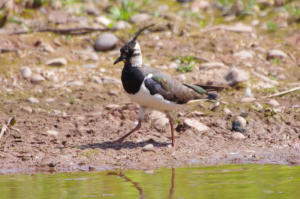
Description:
The Lapwing is a medium-sized wader, measuring about 28-31 cm (11-12 inches) in length, with a wingspan of around 82-87 cm (32-34 inches). One of the most characteristic behaviours of the Lapwing is its spectacular flight display during the breeding season. Males perform dramatic aerial acrobatics, including tumbling, diving, and twisting, to attract a mate and defend their territory. These displays are often accompanied by their distinctive calls.Habitat:
Lapwings typically breed in open fields, grasslands, and wet meadows. They prefer areas with short vegetation and proximity to water, which provides both food and a place for their chicks to hide.Diet:
Lapwings are ground feeders, foraging in fields, wetlands, and mudflats for a variety of invertebrates, including insects, worms, and molluscs. They use their beaks to probe the ground and can often be seen in large flocks, particularly during the winter months.Dipper (Cinclus cinclus)
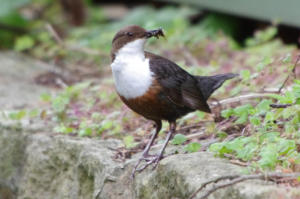
Description:
The Dipper is a small, chunky bird, measuring about 18 cm (7 inches) in length, with a wingspan of around 25-30 cm (10-12 inches). The Dipper’s ability to dive and swim in fast-flowing water is remarkable. They often dive from rocks or the riverbank, and can stay submerged for up to 30 seconds. After feeding, they may be seen perched on a rock or branch, bobbing up and down, a characteristic behaviour that gives them their name.Habitat:
Dippers are most commonly associated with fast-flowing rivers and streams, particularly in upland areas. They prefer clear, unpolluted water with plenty of rocks and riffles where they can find food. They are often found in mountainous or hilly regions, but can also be seen in lowland areas if the water conditions are suitable.Diet:
Dippers are unique among songbirds in their feeding habits. They feed on aquatic invertebrates, such as mayfly larvae, caddisfly larvae, and small fish, which they catch by diving and swimming underwater. They use their wings to "fly" through the water, and their dense plumage helps them stay buoyant. Dippers are also known to walk along the riverbed, searching for food among the rocks.Pied Wagtail (Motacilla alba yarrellii)
Description:
Charming and lively bird, easily recognized by its striking black, white, and grey plumage and characteristic tail-wagging behaviour. It is a familiar sight across the UK, often seen foraging on the ground in open spaces or perched on rooftops. A small, slender bird, measuring around 18 cm (7 inches) in length, with a wingspan of approximately 25-30 cm (10-12 inches).Habitat:
Pied Wagtails are often found in urban and suburban areas, where they can be seen foraging in car parks, gardens, and on rooftops. They are also common in farmland, particularly around barns and outbuildings where insects are plentiful. Pied Wagtails are frequently found near water, such as rivers, lakes, and ponds, where they hunt for insects along the shorelines.Diet:
Pied Wagtails are insectivores, feeding primarily on insects and other small invertebrates. They are often seen foraging on the ground, running and darting after prey, or picking insects off surfaces. In winter, they may also eat seeds and small berries.Conservation
While many waterfowl species in the UK have stable populations, others are under threat due to habitat loss, pollution, and changes in climate. Conservation efforts focus on protecting wetland habitats and ensuring the sustainable management of water resources. Where to See British WaterfowlNature Reserves:
RSPB reserves like Minsmere in Suffolk, Leighton Moss in Lancashire, and the Ouse Washes in Cambridgeshire are excellent places to observe waterfowl.Wetland Centres:
The Wildfowl & Wetlands Trust (WWT) has several wetland centres across the UK, such as Slimbridge in Gloucestershire and Martin Mere in Lancashire, where you can see a wide variety of waterfowl.Urban Parks:
Many urban parks with ponds and lakes, such as London's Hyde Park or St. James's Park, offer opportunities to see common species like Mallards, Swans, and Canada Geese. British waterfowl are a vital part of the country's wildlife, providing a rich diversity of species to observe throughout the year. Whether you're in a coastal estuary, a rural lake, or an urban park, these birds bring life and movement to the water, making them a fascinating group for birdwatchers and nature enthusiasts alike.





 Pubs
Pubs Open Map in New Window
 England
 Scotland
 Wales
Wales Ireland
 County Map
 About Britain
 Pubs
Pubs British Beer
 Perfect Pint
 Beer Glasses
 The Barren Years
 Real Fires
 Breweries
 Brewing
 British Food
 Recipes
 Pub Interiors
 Dog Friendly
 Pub Games
 Strange Pub Names
 Visitor Information
 Oldest Pub
 Pub Signs
 Micropubs
 Buildings
 Cathedrals
 Stately Homes
 Castles
 Listed Buildings
 Scheduled Monuments
 Oak Framing
 Architecture
 Thatching
 Waterways
 Sailing
 Shipbuilding
 Boatbuilding
  Shipping Forecast
 Britain's Coastline
 Coastal Locations
 Piers
Piers Lighthouses
 Harbours
 Beach Safety
 British Beaches
 Canals
 Rivers
 Islands
 Lakes
Lakes Waterfalls
 Historical
 Famous People
 Kings & Queens
 Kings of England
 History of Britain
 Industrial Revolution
 Act of Union
 Beaufort Scale
 British Firsts
 World Heritage Sites
 Historical Periods
 Historical Boundaries
 Tradition & Culture
 Morris Dancing
 Film & Television
 Television
 Calendar of Events
 British Sport
 Scottish Highlands
 Money
Money Dry Stone Walling
 British Wildlife
 Class System
 Geographical
 Pub Boundaries
 Facts 'n' Figures
 British Isles
 Other Areas
 Place Name Origins
 Topography
 Suggest an Inn
 Explanation of symbols
 Why Us?
 Places to Visit
 Long Distance Paths
 National Parks
 Areas of Outstanding Natural Beauty
 Coastal Locations
 Other areas of Britain
 Maps
Maps Our Favourite Locations
 Search
 Focus On...
 News
News Contact
 About Us
 Our History
 Donate