News
Woodpecker
The UK is home to three species of woodpeckers, each with distinct characteristics and behaviours. These woodpeckers are a fascinating part of the country's birdlife, known for their unique ability to drum on trees and their specialized adaptations for foraging and nesting. The three species found in the UK are the Great Spotted Woodpecker, the Lesser Spotted Woodpecker, and the Green Woodpecker.Great Spotted Woodpecker (Dendrocopos major)
Size:
The Great Spotted Woodpecker is the largest of the three UK woodpecker species, measuring about 22-23 cm (8.7-9 inches) in length with a wingspan of 34-39 cm (13.4-15.4 inches).Plumage:
It has a striking black and white plumage with a glossy black head, white cheeks, and large white shoulder patches. The underparts are a creamy white, and the male has a distinctive red patch on the back of the head. Both sexes have a bright red patch under the tail (the vent).Call:
They are known for their loud "kick" call and drumming, which is a rapid tapping sound produced by striking their beak against trees to establish territory or attract mates.Habitat:
Great Spotted Woodpeckers are common across the UK, except in the far north of Scotland. They inhabit a variety of wooded areas, including deciduous and mixed woodlands, parks, and gardens.Diet:
Their diet consists mainly of insects and larvae, which they extract from beneath tree bark by drilling with their strong beaks. They also eat seeds, nuts, and sometimes bird eggs and young chicks during the breeding season.Breeding:
They nest in cavities that they excavate in dead trees or decaying wood. The female lays 4-7 eggs, and both parents take turns incubating the eggs and feeding the chicks.Lesser Spotted Woodpecker (Dryobates minor)
Size:
The Lesser Spotted Woodpecker is the smallest woodpecker in the UK, measuring about 14-15 cm (5.5-5.9 inches) in length, with a wingspan of 25-27 cm (9.8-10.6 inches).Plumage:
This species has a black and white plumage, with a barred pattern on the wings and back. The head is also black and white, with the male sporting a small red cap on the crown. Unlike the Great Spotted Woodpecker, the Lesser Spotted Woodpecker lacks red on the underparts.Call:
The call is a high-pitched "kee-kee-kee," and their drumming is much quieter and faster than that of the Great Spotted Woodpecker.Habitat:
Lesser Spotted Woodpeckers are more elusive and less common than their larger relatives. They are typically found in mature deciduous woodlands, especially those with a mix of deadwood and open spaces. They are also found in orchards and large gardens with old trees.Diet:
They primarily feed on insects, especially small beetles, caterpillars, and spiders. They forage on thin branches, unlike the Great Spotted Woodpecker, which tends to feed on thicker trunks and larger branches.Breeding:
Like other woodpeckers, they nest in tree cavities, which they excavate themselves. The female lays 4-6 eggs, and both parents are involved in raising the chicks.Conservation:
The Lesser Spotted Woodpecker has seen a significant decline in numbers and is now considered a red-listed species in the UK, meaning it is of high conservation concern.Green Woodpecker (Picus viridis)
Size:
The Green Woodpecker is the largest of the UK’s woodpeckers, measuring 30-36 cm (11.8-14.2 inches) in length, with a wingspan of 45-51 cm (17.7-20.1 inches).Plumage:
As the name suggests, it has predominantly green plumage with a bright yellow rump, a red crown, and a black "mask" around the eyes. Males have a red moustache stripe, while females have a black one.Call:
The Green Woodpecker's call is a loud, laughing "yaffle" or "yaff-yaff" sound, which can be heard from a distance. Unlike other woodpeckers, it doesn't drum as frequently.Habitat:
Green Woodpeckers prefer open woodlands, parklands, orchards, and grasslands. They are often seen on the ground, where they search for ants, their primary food source.Diet:
Their diet is mostly made up of ants, which they dig from the ground using their long, sticky tongues. They will also eat other insects and occasionally fruit.Breeding:
They nest in tree cavities, which they excavate in softwood or decaying trees. The female lays 4-6 eggs, and both parents take part in raising the young. UK woodpeckers are fascinating birds, each with their own unique habits and habitats. The Great Spotted Woodpecker is the most commonly seen, often visiting bird feeders, while the Lesser Spotted Woodpecker is a rare and elusive species, increasingly threatened by habitat loss. The Green Woodpecker, with its distinctive laugh-like call and ant-eating habits, is a regular sight in parks and gardens, often spotted on the ground rather than in trees. These woodpeckers add diversity and interest to British birdlife, each playing an important role in their ecosystems.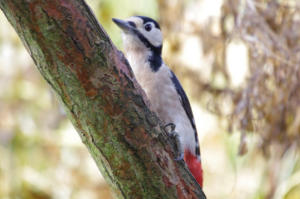
 Pubs
Pubs Open Map in New Window
 England
 Scotland
 Wales
Wales Ireland
 County Map
 About Britain
 Pubs
Pubs British Beer
 Perfect Pint
 Beer Glasses
 The Barren Years
 Real Fires
 Breweries
 Brewing
 British Food
 Recipes
 Pub Interiors
 Dog Friendly
 Pub Games
 Strange Pub Names
 Visitor Information
 Oldest Pub
 Pub Signs
 Micropubs
 Buildings
 Cathedrals
 Stately Homes
 Castles
 Listed Buildings
 Scheduled Monuments
 Oak Framing
 Architecture
 Thatching
 Waterways
 Sailing
 Shipbuilding
 Boatbuilding
  Shipping Forecast
 Britain's Coastline
 Coastal Locations
 Piers
Piers Lighthouses
 Harbours
 Beach Safety
 British Beaches
 Canals
 Rivers
 Islands
 Lakes
Lakes Waterfalls
 Historical
 Famous People
 Kings & Queens
 Kings of England
 History of Britain
 Industrial Revolution
 Act of Union
 Beaufort Scale
 British Firsts
 World Heritage Sites
 Historical Periods
 Historical Boundaries
 Tradition & Culture
 Morris Dancing
 Film & Television
 Television
 Calendar of Events
 British Sport
 Scottish Highlands
 Money
Money Dry Stone Walling
 British Wildlife
 Class System
 Geographical
 Pub Boundaries
 Facts 'n' Figures
 British Isles
 Other Areas
 Place Name Origins
 Topography
 Suggest an Inn
 Explanation of symbols
 Why Us?
 Places to Visit
 Long Distance Paths
 National Parks
 Areas of Outstanding Natural Beauty
 Coastal Locations
 Other areas of Britain
 Maps
Maps Our Favourite Locations
 Search
 Focus On...
 News
News Contact
 About Us
 Our History
 Donate