News
Ocean Sunfish
The ocean sunfish, also known as Mola mola, is one of the most distinctive and unusual fish in the world. It is the heaviest known bony fish, with some individuals weighing up to 2,300 kilograms (5,100 pounds). We only have a small number of photos as the one we saw circled around us as we tried to circle around it and we were above the surface of the sea. If you’ve never seen a photo, it’s worth doing a search on Mola mola as it is a stunning looking creature.Physical Characteristics
Shape and Size:
The ocean sunfish has a distinctive, flattened body that appears almost circular in shape when viewed from the side. Its body lacks a true tail, and instead, it has a truncated, rounded structure called a clavus at the rear. Adult sunfish can reach lengths of 1.8 meters (6 feet) on average, but some can grow as long as 3.3 meters (11 feet).Weight:
The average weight of an ocean sunfish ranges from 247 to 1,000 kilograms (545 to 2,205 pounds), making it the heaviest bony fish. The largest specimens can weigh more than 2,000 kilograms (4,400 pounds).Fins:
The sunfish has large, triangular dorsal and anal fins that it uses to propel itself through the water. Unlike most fish that use their tail fin for propulsion, the sunfish relies on a combination of these fins for movement.Skin:
Its thick, rough skin can harbour various parasites, which it tries to rid itself of by basking at the surface to attract birds or visiting cleaning stations where smaller fish remove the parasites.Habitat
Distribution:
The ocean sunfish is found in both temperate and tropical oceans around the world, making it a cosmopolitan species. It is typically found in the open ocean, although it occasionally ventures into coastal waters.Depth:
Sunfish can be found from the surface to depths of up to 600 meters (2,000 feet). They often come to the surface to bask in the sun, which is thought to help regulate their body temperature after diving into deeper, cooler waters.Diet
Feeding Habits:
The ocean sunfish primarily feeds on jellyfish, which make up a significant portion of its diet. However, it also consumes a variety of other marine organisms, including small fish, squid, crustaceans, and zooplankton.Feeding Adaptations:
Due to the low nutritional value of jellyfish, sunfish must consume large quantities of them to meet their energy needs. Their beak-like mouths are adapted to crush soft-bodied prey.Behaviour
Basking:
One of the most distinctive behaviours of the ocean sunfish is its habit of lying on its side at the surface of the water, appearing to sunbathe. This behaviour, known as basking, may serve several purposes, including thermoregulation and parasite removal.Movement:
Despite their bulky appearance, ocean sunfish are capable swimmers. They use a combination of their dorsal and anal fins to "flap" through the water in a characteristic motion. However, they are generally slow swimmers compared to other fish.Breaching:
Sunfish have been observed breaching, or leaping out of the water, which may be another method of dislodging parasites from their skin.Reproduction
Spawning:
Ocean sunfish are known to produce a staggering number of eggs. Females can release up to 300 million eggs at a time, making them the most prolific egg producers among vertebrates. The eggs are fertilized externally in the open ocean.Larval Stage:
After hatching, sunfish larvae are tiny and look quite different from the adults. They start as small, spiky, and almost transparent creatures, undergoing several transformations as they grow. They eventually lose their spines and take on the distinctive rounded shape of the adult sunfish.Growth:
The growth rate of the ocean sunfish is rapid, and they can reach large sizes within a few years. However, much about their early life stages remains a mystery to scientists.Ecology and Conservation
Predators:
Despite their size, ocean sunfish have several natural predators, including sharks, killer whales, and sea lions. Their thick skin provides some protection, but they are still vulnerable to attacks.Role in Ecosystem:
As jellyfish predators, sunfish play a role in controlling jellyfish populations, which can sometimes explode in numbers and disrupt marine ecosystems.Conservation Status:
The ocean sunfish is listed as Vulnerable on the IUCN Red List. They are sometimes caught as bycatch in commercial fisheries, particularly in drift gillnets. In some regions, they are also targeted for their meat, which is considered a delicacy in some cultures. Additionally, ocean pollution, particularly plastic debris, poses a threat to their survival, as they may mistake plastic for jellyfish.Human Interaction
Bycatch:
The ocean sunfish is often caught unintentionally in fishing nets, particularly in drift nets and longlines. This can lead to significant mortality rates for the species, even though they are not typically targeted by commercial fisheries.Research and Observation:
Due to their unusual appearance and behaviours, ocean sunfish attract interest from both scientists and marine enthusiasts. However, much about their biology, particularly their deep-sea behaviour, remains poorly understood.Cultural Impact
Popular Interest:
The ocean sunfish's unique appearance has made it a subject of fascination in popular culture. They are often featured in documentaries, aquariums, and even internet memes due to their seemingly odd shape and large size. The ocean sunfish is a remarkable and enigmatic species that captures the imagination of those who encounter it. Its unique adaptations, behaviours, and role in the marine ecosystem make it a fascinating subject for study and conservation efforts. Despite its size and presence in oceans around the world, much about the ocean sunfish remains a mystery, making it one of the most intriguing creatures of the sea.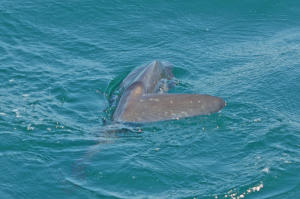
 Pubs
Pubs Open Map in New Window
 England
 Scotland
 Wales
Wales Ireland
 County Map
 About Britain
 Pubs
Pubs British Beer
 Perfect Pint
 Beer Glasses
 The Barren Years
 Real Fires
 Breweries
 Brewing
 British Food
 Recipes
 Pub Interiors
 Dog Friendly
 Pub Games
 Strange Pub Names
 Visitor Information
 Oldest Pub
 Pub Signs
 Micropubs
 Buildings
 Cathedrals
 Stately Homes
 Castles
 Listed Buildings
 Scheduled Monuments
 Oak Framing
 Architecture
 Thatching
 Waterways
 Sailing
 Shipbuilding
 Boatbuilding
  Shipping Forecast
 Britain's Coastline
 Coastal Locations
 Piers
Piers Lighthouses
 Harbours
 Beach Safety
 British Beaches
 Canals
 Rivers
 Islands
 Lakes
Lakes Waterfalls
 Historical
 Famous People
 Kings & Queens
 Kings of England
 History of Britain
 Industrial Revolution
 Act of Union
 Beaufort Scale
 British Firsts
 World Heritage Sites
 Historical Periods
 Historical Boundaries
 Tradition & Culture
 Morris Dancing
 Film & Television
 Television
 Calendar of Events
 British Sport
 Scottish Highlands
 Money
Money Dry Stone Walling
 British Wildlife
 Class System
 Geographical
 Pub Boundaries
 Facts 'n' Figures
 British Isles
 Other Areas
 Place Name Origins
 Topography
 Suggest an Inn
 Explanation of symbols
 Why Us?
 Places to Visit
 Long Distance Paths
 National Parks
 Areas of Outstanding Natural Beauty
 Coastal Locations
 Other areas of Britain
 Maps
Maps Our Favourite Locations
 Search
 Focus On...
 News
News Contact
 About Us
 Our History
 Donate