News
Damselfly
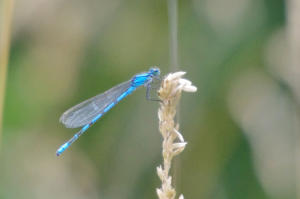
Damselflies are delicate, slender insects closely related to dragonflies, and they are a common sight near freshwater habitats across the UK. Despite their similarities to dragonflies, damselflies have distinct characteristics and behaviours that set them apart.Description
Appearance:
Damselflies have a slender body, typically ranging from 3 to 5 cm (1.2 to 2 inches) in length. Unlike dragonflies, damselflies hold their wings together over their body when at rest, rather than spreading them out to the sides. Their wings are narrow and equal in size, with a translucent and often shimmering quality. Damselflies come in a range of vibrant colours, including blues, greens, reds, and metallic hues.Head:
Their heads are large in proportion to their body, with prominent compound eyes that provide excellent vision for spotting prey and avoiding predators.Species in the UK
There are around 20 species of damselflies in the UK, with some of the most common and recognizable being:Azure Damselfly (Coenagrion puella):
A striking blue damselfly with black markings, commonly found around ponds, lakes, and slow-moving rivers.Large Red Damselfly (Pyrrhosoma nymphula):
One of the first damselflies to emerge in spring, easily identified by its bright red body.Blue-tailed Damselfly (Ischnura elegans):
A common species with a mostly black body and a distinctive blue segment near the tail.Emerald Damselfly (Lestes sponsa):
Named for its metallic green body, this species is often seen resting with its wings partially open.Banded Demoiselle (Calopteryx splendens):
Common in Wales and most of England apart from in the north; however, its range is expanding. Mainly found along slow-flowing lowland streams and rivers, particularly those with muddy bottoms.Beautiful Demoiselle (Calopteryx virgo):
A larger species with striking, iridescent wings and a metallic blue or green body.Habitat
Preferred Habitats:
Damselflies are typically found near freshwater environments such as ponds, lakes, rivers, streams, and marshes. They are especially abundant in areas with still or slow-moving water and plenty of aquatic vegetation, which provides ideal conditions for breeding and hunting.Geographic Range:
Damselflies are widespread throughout the UK, with different species adapted to various habitats, from lowland ponds to upland streams.Life Cycle
Eggs:
Female damselflies lay their eggs on aquatic plants or directly in the water. Some species deposit their eggs underwater, where the eggs hatch into aquatic larvae, known as nymphs.Nymph Stage:
The nymph stage can last from several months to a few years, depending on the species and environmental conditions. Damselfly nymphs are voracious predators, feeding on small aquatic invertebrates. They are equipped with extendable jaws that allow them to catch prey with a rapid strike.Metamorphosis:
When ready to emerge as adults, the nymphs climb out of the water onto a plant or other surface. They undergo metamorphosis, shedding their exoskeleton to reveal the adult damselfly. This process, known as eclosion, usually occurs in spring or summer.Adult Stage:
Adult damselflies live for a few weeks to a few months, during which they focus on feeding, mating, and laying eggs to complete the life cycle.Behaviour
Flight:
Damselflies are agile fliers, capable of hovering, darting, and making rapid changes in direction. However, they are generally slower and more delicate in flight compared to dragonflies.Hunting:
Adult damselflies are predators, feeding on small flying insects such as mosquitoes, midges, and flies. They catch their prey in mid-air, using their legs to form a basket that traps the insect.Mating:
Damselfly mating is a complex and visually striking process. The male typically grasps the female behind the head with his claspers, and the pair forms a heart-shaped "wheel" position while mating. After mating, the female lays her eggs in or near the water.Conservation Status
Population:
While many damselfly species are still common in the UK, some have seen declines due to habitat loss, pollution, and changes in water quality. The loss of wetlands and other freshwater habitats poses a significant threat to damselfly populations.Conservation Efforts:
Conservation measures include protecting and restoring wetland habitats, improving water quality, and raising awareness about the importance of these delicate insects. Organizations like the British Dragonfly Society work to monitor and conserve damselfly populations across the UK.Interesting Facts
Difference from Dragonflies:
Although damselflies and dragonflies are often confused, one of the easiest ways to tell them apart is by their resting position. Damselflies hold their wings together over their bodies, while dragonflies keep their wings spread out to the sides.Mating Wheel:
The heart-shaped wheel formation during mating is one of the most distinctive and beautiful aspects of damselfly behaviour, often photographed by nature enthusiasts.Indicators of Ecosystem Health:
Damselflies are considered bioindicators, meaning their presence and abundance can provide valuable information about the health of freshwater ecosystems. A decline in damselfly populations may signal environmental problems such as pollution or habitat degradation.Where to See Damselflies in the UK
Wetlands and Nature Reserves:
Many nature reserves, especially those with ponds, lakes, and marshes, are excellent places to observe damselflies. Sites like Wicken Fen in Cambridgeshire and the Norfolk Broads are renowned for their damselfly diversity.Gardens with Ponds:
If you have a garden pond, you may attract damselflies, especially if you include native aquatic plants that provide suitable habitats for egg-laying and hunting. Damselflies are enchanting and vital components of the UK's natural environment. Their delicate beauty, fascinating behaviours, and ecological importance make them a beloved sight near water bodies. By protecting their habitats and ensuring clean, healthy water ecosystems, we can help preserve these incredible insects for future generations to enjoy.


 Pubs
 Open Map in New Window
 England
 Scotland
 Wales
 Ireland
 County Map
 About Britain
 Pubs
 British Beer
 Perfect Pint
 Beer Glasses
 The Barren Years
 Real Fires
 Breweries
 Brewing
 British Food
 Recipes
 Pub Interiors
 Dog Friendly
 Pub Games
 Strange Pub Names
 Visitor Information
 Oldest Pub
 Pub Signs
 Micropubs
 Buildings
 Cathedrals
 Stately Homes
 Castles
 Listed Buildings
 Scheduled Monuments
 Oak Framing
 Architecture
 Thatching
 Waterways
 Sailing
 Shipbuilding
 Boatbuilding
 Shipping Forecast
 Britain's Coastline
 Coastal Locations
 Piers
 Lighthouses
 Harbours
 Beach Safety
 British Beaches
 Canals
 Rivers
 Islands
 Lakes
 Waterfalls
 Historical
 Famous People
 Kings & Queens
 Kings of England
 History of Britain
 Industrial Revolution
 Act of Union
 Beaufort Scale
 British Firsts
 World Heritage Sites
 Historical Periods
 Historical Boundaries
 Tradition & Culture
 Morris Dancing
 Film & Television
 Television
 Calendar of Events
 British Sport
 Scottish Highlands
 Money
 Dry Stone Walling
 British Wildlife
 Class System
 Geographical
 Pub Boundaries
 Facts 'n' Figures
 British Isles
 Other Areas
 Place Name Origins
 Topography
 Suggest an Inn
 Explanation of symbols
 Why Us?
 Places to Visit
 Long Distance Paths
 National Parks
 Areas of Outstanding Natural Beauty
 Coastal Locations
 Other areas of Britain
 Maps
 Our Favourite Locations
 Search
 Focus On...
 News
 Contact
 About Us
 Our History
 Donate