News
Pheasant
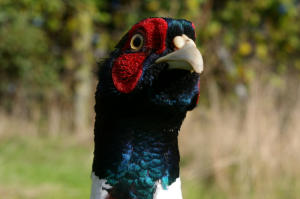
Pheasants are a prominent feature of the British countryside, known for their striking appearance and connection to game shooting. The most common species in the UK is the Common Pheasant (Phasianus colchicus), which has been introduced from Asia and is now widespread across much of the country. Pheasants are believed to be the most stupid birds found in the UK who have absolutely no road sense. We are constantly shouting at them to watch out for the car but that just distracts them even more. No Pheasant has ever won Mastermind. They can also be very inquisitive and often will walk up to you to see what you are up to, which is incredibly stupid for an animal that’s tasty.Common Pheasant (Phasianus colchicus)
Description
• Male: The male pheasant, or cock, is especially colourful, with a coppery-red body, a green or blue head, and a white neck ring. The plumage is iridescent with purple and green tones, and males have long, pointed tails. They also have bright red wattles around the eyes. • Female: The female, or hen, is much more understated, with mottled brown plumage that provides camouflage, especially when nesting. Her tail is shorter than the male's, and her colouration helps her blend into the undergrowth.Size:
Pheasants are relatively large birds, with males measuring about 80-90 cm (31-35 inches) in length, including their tail, and females slightly smaller.Habitat
Woodlands and Farmland:
Pheasants are most commonly found in rural areas, particularly in woodlands, farmland, and hedgerows. They favour areas with a mixture of open ground for feeding and dense cover for protection.Game Estates:
Pheasants are often associated with game estates, where they are bred and released for shooting. Many estates manage the landscape to benefit pheasants and other game birds, providing food, shelter, and protection from predators.Behaviour
Feeding:
Pheasants are omnivorous and have a varied diet that includes seeds, grains, insects, and small invertebrates. They forage on the ground, scratching through leaf litter and soil to find food.Breeding:
During the breeding season, male pheasants become highly territorial and display to attract females. Their displays include puffing out their plumage, raising their tails, and making loud calls. Males often compete for territories and mates.Nesting:
The female builds a simple nest on the ground, usually hidden in dense vegetation. She lays a clutch of about 8-12 eggs, which she incubates for around 23-28 days. After hatching, the chicks are precocial, meaning they can walk and feed themselves almost immediately but still rely on the mother for protection.Flight:
Pheasants are capable of short bursts of flight, but they generally prefer to run when alarmed. If flushed, they will take off with a loud clattering of wings and fly low and fast for a short distance before landing again.Conservation and Population
Widespread Species:
The Common Pheasant is one of the most abundant birds in the UK, largely due to its introduction for shooting purposes. Millions of pheasants are released into the wild each year to maintain populations for game hunting.Impact on the Environment:
While pheasants are not native to the UK, their presence in large numbers can have various ecological impacts. They may compete with native species for food and habitat, and their release in high densities can lead to changes in vegetation and soil structure.Conservation Status:
Despite being widespread, the pheasant's conservation status in the UK is complex. The species is not considered at risk, but the ethics and environmental impact of large-scale releases for shooting are subjects of ongoing debate.Other Pheasant Species in the UK
While the Common Pheasant is by far the most widespread, other pheasant species have been introduced to the UK, though they are less common and often localised.Reeves's Pheasant (Syrmaticus reevesii)
Description:
Known for its spectacularly long tail, which can be over 2 meters (6.5 feet) in males, this species has striking plumage with black, white, and golden-yellow patterns.Habitat:
Originally from China, Reeves's Pheasants have been introduced to some estates in the UK, particularly in southern England, where they may be seen in woodlands.Status:
This species is not widespread and is considered rare in the UK.Golden Pheasant (Chrysolophus pictus)
Description:
The male Golden Pheasant is one of the most colourful birds in the UK, with a bright golden-yellow crest, red and gold plumage, and long tail feathers. Females are brown with a barred pattern.Habitat:
Originally from China, small populations of Golden Pheasants can be found in woodlands, particularly in East Anglia and parts of Wales and Scotland.Status:
They are rare and localised, but their striking appearance makes them a sought-after sight for birdwatchers.Lady Amherst's Pheasant (Chrysolophus amherstiae)
Description:
A highly ornamental bird, the male has a striking combination of white, black, green, and red plumage, with a long, graceful tail. The female is more subdued, with brown and black markings.Habitat:
Native to China and Burma, Lady Amherst's Pheasants were introduced to the UK in the 19th century. They have since established small populations, primarily in southern England.Status:
They are now extremely rare in the wild in the UK, with only a few sightings in recent years.Red-legged Partridge (Alectoris rufa)
Description:
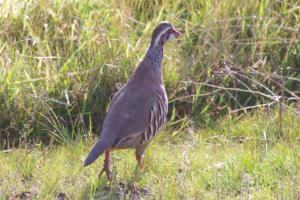
Part of the Pheasant family, the Red-legged Partridge is a medium-sized game bird, measuring about 32-35 cm (12-14 inches) in length, with a wingspan of approximately 45-50 cm (18-20 inches). A striking and attractive bird that is easily recognized by its colourful plumage and distinctive markings.Habitat:
Red-legged Partridges are commonly found in arable farmland, particularly in areas with a mix of open fields, hedgerows, and rough grassland. They favour dry, open landscapes where they can forage for food.Status:
As a popular game bird, Red-legged Partridges are often bred and released in large numbers for shooting, which helps maintain their populations. However, there are concerns about the impact of these releases on local ecosystems and native species.Cultural Significance
Game Shooting:
Pheasants are deeply intertwined with the tradition of game shooting in the UK. The shooting season, known as the "pheasant season," runs from October 1st to February 1st, and pheasant shoots are a significant aspect of rural life in some areas.Culinary Use:
Pheasants are also valued for their meat, and pheasant dishes are a staple of British game cuisine. Pheasant meat is lean and has a distinctive gamey flavour, often roasted or used in pies and stews.Where to See Pheasants in the UK
Countryside:
Pheasants are commonly seen in rural areas across the UK, particularly in farmland, woodland edges, and near game estates.Nature Reserves:
While not typically a focus of conservation efforts, pheasants can be spotted in many nature reserves that include woodland or farmland habitats.Shooting Estates:
Pheasants are often most abundant on shooting estates, where they are managed and protected for hunting purposes. Pheasants are a prominent part of the British countryside, known for their vibrant plumage and association with game shooting. While the Common Pheasant is widespread and familiar, other introduced species add to the diversity of pheasants in the UK, albeit in smaller numbers. Whether you're walking through woodlands or driving along country roads, these birds are a distinctive feature of the UK’s rural landscape.

 Pubs
Pubs Open Map in New Window
 England
 Scotland
 Wales
Wales Ireland
 County Map
 About Britain
 Pubs
Pubs British Beer
 Perfect Pint
 Beer Glasses
 The Barren Years
 Real Fires
 Breweries
 Brewing
 British Food
 Recipes
 Pub Interiors
 Dog Friendly
 Pub Games
 Strange Pub Names
 Visitor Information
 Oldest Pub
 Pub Signs
 Micropubs
 Buildings
 Cathedrals
 Stately Homes
 Castles
 Listed Buildings
 Scheduled Monuments
 Oak Framing
 Architecture
 Thatching
 Waterways
 Sailing
 Shipbuilding
 Boatbuilding
  Shipping Forecast
 Britain's Coastline
 Coastal Locations
 Piers
Piers Lighthouses
 Harbours
 Beach Safety
 British Beaches
 Canals
 Rivers
 Islands
 Lakes
Lakes Waterfalls
 Historical
 Famous People
 Kings & Queens
 Kings of England
 History of Britain
 Industrial Revolution
 Act of Union
 Beaufort Scale
 British Firsts
 World Heritage Sites
 Historical Periods
 Historical Boundaries
 Tradition & Culture
 Morris Dancing
 Film & Television
 Television
 Calendar of Events
 British Sport
 Scottish Highlands
 Money
Money Dry Stone Walling
 British Wildlife
 Class System
 Geographical
 Pub Boundaries
 Facts 'n' Figures
 British Isles
 Other Areas
 Place Name Origins
 Topography
 Suggest an Inn
 Explanation of symbols
 Why Us?
 Places to Visit
 Long Distance Paths
 National Parks
 Areas of Outstanding Natural Beauty
 Coastal Locations
 Other areas of Britain
 Maps
Maps Our Favourite Locations
 Search
 Focus On...
 News
News Contact
 About Us
 Our History
 Donate