News
Bee
The UK is home to a diverse range of bee species, each playing a vital role in pollination and the overall health of ecosystems. The bee species in the UK can be broadly categorized into three groups: bumblebees, solitary bees, and honeybees.Bumblebees
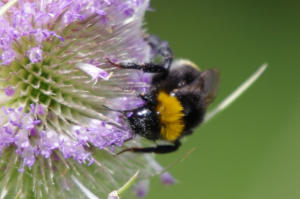
Bumblebees are large, fuzzy bees known for their social behaviour and important role in pollination. There are 24 species of bumblebees in the UK, with some of the most common species listed below:Buff-tailed Bumblebee (Bombus terrestris):
One of the most common bumblebees, recognized by its buff-coloured tail and large size. It is often seen in gardens and can be active even in winter.White-tailed Bumblebee (Bombus lucorum):
Similar to the Buff-tailed Bumblebee, but with a white tail. It is widespread across the UK.Red-tailed Bumblebee (Bombus lapidarius):
A striking black bee with a bright red tail, commonly found in gardens and meadows.Garden Bumblebee (Bombus hortorum):
Known for its long tongue, which allows it to pollinate deep flowers like foxgloves and honeysuckles.Tree Bumblebee (Bombus hypnorum):
A relatively new species in the UK, easily recognized by its ginger thorax, black abdomen, and white tail. It often nests in bird boxes.Common Carder Bee (Bombus pascuorum):
A small bumblebee with a ginger-brown colour, commonly found in gardens and grasslands.Early Bumblebee (Bombus pratorum):
A small, early-flying species with yellow and black bands and a red tail.Solitary Bees
Solitary bees make up the majority of bee species in the UK, with over 250 species. Unlike bumblebees and honeybees, solitary bees do not live in colonies. Each female builds and provisions her own nest. Some common types of solitary bees include:Tawny Mining Bee (Andrena fulva):
A striking ginger-colored bee that nests in the ground, often seen in gardens in spring.Leafcutter Bees (Megachile spp.):
These bees are known for cutting circular pieces of leaves to line their nests, often found in cavities or hollow stems.Mason Bees (Osmia spp.):
Mason bees are excellent pollinators, often nesting in holes in wood or masonry. The Red Mason Bee (Osmia bicornis) is a common species in gardens.Hairy-footed Flower Bee (Anthophora plumipes):
A fast-flying bee that resembles a small bumblebee, often seen visiting early spring flowers. The males have distinctive long, hairy legs.Ashy Mining Bee (Andrena cineraria):
A black and white bee that nests in the ground, often seen in gardens and open habitats in spring.Ivy Bee (Colletes hederae):
A late-flying solitary bee that specializes in collecting pollen from ivy flowers. It is often seen in the autumn.Yellow-faced Bees (Hylaeus spp.):
Small, black bees with distinctive yellow or white facial markings. They nest in hollow stems or holes in wood.Honeybees
Honeybees are social bees that live in large colonies and are managed by beekeepers for honey production and pollination services. In the UK, the most common species of honeybee is:European Honeybee (Apis mellifera):
The only honeybee species in the UK, known for its honey production and vital role in pollination. Honeybees are managed in hives by beekeepers but can also be found in the wild in tree cavities or other sheltered locations.Cuckoo Bees
Cuckoo bees are a type of parasitic bee that lay their eggs in the nests of other bees, particularly bumblebees and solitary bees. The cuckoo bee larvae then take over the nest and feed on the host bee's provisions. Some examples of cuckoo bees in the UK include:Gypsy Cuckoo Bumblebee (Bombus bohemicus):
A cuckoo bumblebee that targets the nests of the Buff-tailed Bumblebee and White-tailed Bumblebee.Red-tailed Cuckoo Bumblebee (Bombus rupestris):
A parasite of the Red-tailed Bumblebee, it mimics the appearance of its host.Field Cuckoo Bumblebee (Bombus campestris):
A cuckoo bumblebee that invades the nests of various bumblebee species.Nomad Bees (Nomada spp.):
These are solitary bee parasites that lay their eggs in the nests of mining bees. Nomad bees are often wasp-like in appearance, with slender bodies and bright yellow or red markings.Rare and Declining Species
Several bee species in the UK are rare or have declining populations due to habitat loss, climate change, and pesticide use. Conservation efforts are underway to protect these species. Some examples include:Great Yellow Bumblebee (Bombus distinguendus):
Once widespread, this bumblebee is now primarily found in the Scottish Highlands and the Outer Hebrides.Shrill Carder Bee (Bombus sylvarum):
A rare bumblebee with a distinctive high-pitched buzz, now limited to a few sites in southern England and Wales.Scabious Bee (Andrena hattorfiana):
A rare mining bee that relies on scabious flowers for pollen, found in a few locations in southern England and Wales.Bee Conservation
Given the importance of bees for pollination, there are many efforts in the UK to conserve bee populations. Actions include creating bee-friendly gardens, reducing pesticide use, and preserving natural habitats. Organizations like the Bumblebee Conservation Trust and the British Beekeepers Association work to protect bees and educate the public on their importance. The UK is home to a wide variety of bees, each with unique behaviours and ecological roles. From the social bumblebees and honeybees to the diverse solitary bees, these insects are vital for pollination and the health of natural ecosystems. Supporting bee populations through conservation efforts is essential for maintaining biodiversity and ensuring the continued availability of many crops and wildflowers.Hoverflies
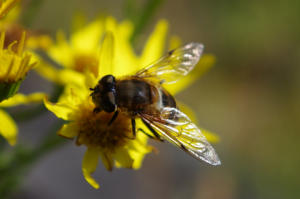
Hoverflies, also known as Syrphid flies or flower flies, belong to the family Syrphidae and are a diverse and fascinating group of insects found throughout the UK. These flies are often mistaken for bees or wasps due to their yellow and black stripes, a clever form of mimicry that helps deter predators. However, hoverflies are harmless and play a crucial role in the ecosystem as pollinators and biological control agents.Hovering Skills:
Hoverflies are named for their ability to hover in one spot, making them easy to spot as they move between flowers. This skill also helps them evade predators and approach flowers with precision.Worldwide Distribution:
There are over 6,000 species of hoverflies worldwide, with around 280 species recorded in the UK alone. This diversity makes them an essential part of many ecosystems.Mimicry and Safety:
Despite their mimicry of stinging insects like bees and wasps, hoverflies are completely harmless and cannot sting. Their mimicry is purely a defence mechanism to protect themselves from predators.
 Pubs
 Open Map in New Window
 England
 Scotland
 Wales
 Ireland
 County Map
 About Britain
 Pubs
 British Beer
 Perfect Pint
 Beer Glasses
 The Barren Years
 Real Fires
 Breweries
 Brewing
 British Food
 Recipes
 Pub Interiors
 Dog Friendly
 Pub Games
 Strange Pub Names
 Visitor Information
 Oldest Pub
 Pub Signs
 Micropubs
 Buildings
 Cathedrals
 Stately Homes
 Castles
 Listed Buildings
 Scheduled Monuments
 Oak Framing
 Architecture
 Thatching
 Waterways
 Sailing
 Shipbuilding
 Boatbuilding
 Shipping Forecast
 Britain's Coastline
 Coastal Locations
 Piers
 Lighthouses
 Harbours
 Beach Safety
 British Beaches
 Canals
 Rivers
 Islands
 Lakes
 Waterfalls
 Historical
 Famous People
 Kings & Queens
 Kings of England
 History of Britain
 Industrial Revolution
 Act of Union
 Beaufort Scale
 British Firsts
 World Heritage Sites
 Historical Periods
 Historical Boundaries
 Tradition & Culture
 Morris Dancing
 Film & Television
 Television
 Calendar of Events
 British Sport
 Scottish Highlands
 Money
 Dry Stone Walling
 British Wildlife
 Class System
 Geographical
 Pub Boundaries
 Facts 'n' Figures
 British Isles
 Other Areas
 Place Name Origins
 Topography
 Suggest an Inn
 Explanation of symbols
 Why Us?
 Places to Visit
 Long Distance Paths
 National Parks
 Areas of Outstanding Natural Beauty
 Coastal Locations
 Other areas of Britain
 Maps
 Our Favourite Locations
 Search
 Focus On...
 News
 Contact
 About Us
 Our History
 Donate