News
Fox
The red fox (Vulpes vulpes) is one of the most widespread and adaptable carnivores in the world. Known for its striking reddish- orange fur and bushy tail, the red fox is found across the Northern Hemisphere, including North America, Europe, Asia, and parts of North Africa. Like Badgers, Foxes have been persecuted for years by the rich and powerful with claims that the fox is a ruthless killer which takes babies out of prams and runs around killing for fun. 98% of a foxes diet is earthworms with mice and voles taking up most of the remainder - urban foxes will take more rubbish from food left lying around by humans but are mostly still wary of not only humans but also cats and dogs.Physical Characteristics
Size:
Red foxes are medium-sized canids, with an average length of 45 to 90 cm (18 to 35 inches), not including the tail, which adds another 30 to 55 cm (12 to 22 inches). They typically weigh between 3 to 14 kg (7 to 31 lbs), with males usually being larger than females.Appearance:
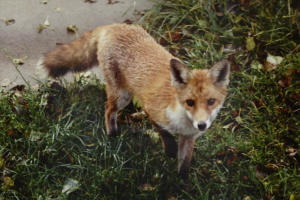
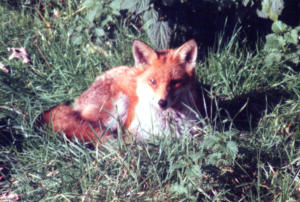
The red fox's most recognizable feature is its reddish-orange coat, though the colour can range from pale yellowish-red to a deep auburn. They also have white underparts, a white-tipped tail, and black markings on their legs, ears, and muzzle. Some red foxes may have melanistic (black) or silver coats due to genetic variations.Tail:
The bushy tail, also known as a "brush," is a defining characteristic. It helps with balance and communication and provides warmth during cold weather when the fox curls up.Habitat
Range:
The red fox has one of the broadest geographic ranges of any terrestrial mammal, living across diverse habitats. They are found in forests, grasslands, mountains, deserts, and urban areas.Adaptability:
Their adaptability to different environments, including cities, has contributed to their success. Red foxes are commonly seen in rural areas, suburban neighbourhoods, and even city centres, where they scavenge for food.Diet
Omnivorous:
Red foxes are opportunistic feeders with a varied diet. They primarily eat earthworms, small mammals like rodents, rabbits, and birds, but they also consume insects, fruits, berries, and carrion. In urban areas, they may scavenge food from garbage bins or take advantage of pet food left outdoors.Hunting Techniques:
Red foxes are skilled hunters known for their agility and sharp senses. They use a combination of stealth and pouncing techniques to catch their prey. One iconic behaviour is their ability to leap into the air and dive head first into snow or vegetation to catch hidden prey.Behaviour and Social Structure
Solitary:
Unlike some other canids, red foxes are generally solitary animals. They prefer to hunt and live alone, although they may form family groups during the breeding season or in resource-rich areas.Territorial:
They are territorial creatures, marking their territory with scent markings from glands on their tail, urine, and faeces. They are known to be vocal, using a variety of sounds to communicate, including barks, screams, and howls.Dens:
Red foxes typically dig dens, also known as "earths," to raise their young and for shelter during extreme weather. These dens can be located in a variety of places, including under tree roots, in burrows, or even under buildings in urban areas.Reproduction
Breeding Season:
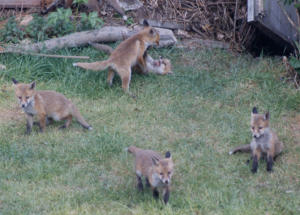
The breeding season for red foxes usually occurs in late winter. After a gestation period of about 49 to 55 days, the female (vixen) gives birth to a litter of 4 to 6 kits (also called pups or cubs) in early spring.Cubs:
The kits are born blind and helpless, relying entirely on their mother for warmth and nourishment. Their eyes open after about two weeks, and they start venturing out of the den at around four to five weeks old. Both parents may be involved in raising the young, with the male often bringing food to the den.Independence:
By autumn, the young foxes are typically independent and ready to disperse to establish their own territories.Lifespan and Predators
Lifespan:
In the wild, red foxes have an average lifespan of 2 to 5 years, although some individuals can live longer. In captivity, they may live up to 10 to 12 years. High mortality rates in the wild are often due to predation, disease, and human-related factors like road traffic.Predators:
While adult red foxes have few natural predators, they can fall prey to larger carnivores such as wolves, coyotes, and eagles. Young kits are particularly vulnerable to predation by birds of prey, larger mammals, and even other foxes.Interaction with Humans
Cultural Significance:
The red fox has a prominent place in folklore and mythology across various cultures. Often depicted as cunning and clever, foxes appear in countless stories, fables, and proverbs, sometimes as tricksters or symbols of intelligence and adaptability.Conservation Status:
The red fox is not considered endangered and is listed as "Least Concern" by the IUCN. Its adaptability has allowed it to thrive in both wild and urban environments. However, in some regions, red foxes are hunted or culled due to their impact on livestock or game animals.Urban Foxes:
In many cities, red foxes have adapted to living in close proximity to humans. While some people enjoy seeing them in urban environments, others view them as pests, particularly when they raid garbage bins or prey on domestic animals like chickens.Behavioural Adaptations
Winter Activity:
Unlike hibernating animals, red foxes remain active throughout the year. They grow a thicker winter coat to protect them from the cold and may change their diet according to seasonal availability.Communication:
Red foxes use a range of vocalizations, body language, and scent markings to communicate with other foxes. Their vocalizations can include barks, screams, and whines, often used to establish territory or during the breeding season. The red fox is a resilient and resourceful species, admired for its beauty and adaptability. Whether living in the wild or among urban landscapes, red foxes continue to captivate people with their intelligence and charisma.

 Pubs
 Open Map in New Window
 England
 Scotland
 Wales
 Ireland
 County Map
 About Britain
 Pubs
 British Beer
 Perfect Pint
 Beer Glasses
 The Barren Years
 Real Fires
 Breweries
 Brewing
 British Food
 Recipes
 Pub Interiors
 Dog Friendly
 Pub Games
 Strange Pub Names
 Visitor Information
 Oldest Pub
 Pub Signs
 Micropubs
 Buildings
 Cathedrals
 Stately Homes
 Castles
 Listed Buildings
 Scheduled Monuments
 Oak Framing
 Architecture
 Thatching
 Waterways
 Sailing
 Shipbuilding
 Boatbuilding
 Shipping Forecast
 Britain's Coastline
 Coastal Locations
 Piers
 Lighthouses
 Harbours
 Beach Safety
 British Beaches
 Canals
 Rivers
 Islands
 Lakes
 Waterfalls
 Historical
 Famous People
 Kings & Queens
 Kings of England
 History of Britain
 Industrial Revolution
 Act of Union
 Beaufort Scale
 British Firsts
 World Heritage Sites
 Historical Periods
 Historical Boundaries
 Tradition & Culture
 Morris Dancing
 Film & Television
 Television
 Calendar of Events
 British Sport
 Scottish Highlands
 Money
 Dry Stone Walling
 British Wildlife
 Class System
 Geographical
 Pub Boundaries
 Facts 'n' Figures
 British Isles
 Other Areas
 Place Name Origins
 Topography
 Suggest an Inn
 Explanation of symbols
 Why Us?
 Places to Visit
 Long Distance Paths
 National Parks
 Areas of Outstanding Natural Beauty
 Coastal Locations
 Other areas of Britain
 Maps
 Our Favourite Locations
 Search
 Focus On...
 News
 Contact
 About Us
 Our History
 Donate