News
Dragonfly
Dragonflies are fascinating and ancient insects that are found near bodies of water worldwide, including across the UK. Known for their vibrant colours, swift flight, and predatory nature, dragonflies are both beautiful and ecologically important. Here's a detailed look at these remarkable insects:Physical Characteristics
Size and Shape:
Dragonflies vary in size, with wingspans ranging from 2 to 5 inches (5 to 13 cm). They have elongated bodies, large multifaceted eyes, and two pairs of strong, transparent wings.Wings:
Unlike butterflies, dragonflies can beat their wings independently, allowing them to hover, fly backward, and change direction rapidly. This agility makes them effective hunters.Eyes:
Dragonflies have large compound eyes that cover most of their heads, providing nearly 360-degree vision. This keen eyesight is crucial for spotting prey and avoiding predators.Colouration:
Dragonflies are known for their striking colours, which can include metallic blues, greens, reds, and yellows. These colours can be more vibrant in males, often used to attract mates.Habitat
Aquatic Environments:
Dragonflies are typically found near ponds, lakes, rivers, and wetlands. They are strongly associated with water because they lay their eggs in or near it, and their larvae (known as nymphs) are aquatic.Range:
Dragonflies are found on every continent except Antarctica. In the UK, they are most active from late spring to early autumn.Life Cycle
Egg:
Female dragonflies lay their eggs in or near water, often on aquatic plants. Some species deposit eggs directly into the water, while others insert them into plant tissue.Nymph:
Dragonfly larvae, called nymphs, live underwater for several months to several years, depending on the species. Nymphs are fierce predators, feeding on small aquatic creatures like insect larvae, tadpoles, and even small fish.Metamorphosis:
Unlike butterflies, dragonflies do not go through a pupal stage. Instead, they undergo incomplete metamorphosis, moulting several times as they grow. When ready to become adults, the nymphs climb out of the water onto a plant stem or other surface, where they shed their final exoskeleton and emerge as winged adults.Adult:
Adult dragonflies live for a few weeks to several months, depending on the species. During this time, they focus on feeding and reproduction.Diet and Hunting
Carnivorous:
Both dragonfly nymphs and adults are carnivorous. As nymphs, they ambush prey in the water, using extendable mouthparts to capture their food. Adult dragonflies are aerial hunters, catching insects like mosquitoes, flies, and moths in mid-air.Hunting Skills:
Dragonflies are incredibly agile fliers, capable of flying at speeds of up to 30 miles per hour (50 kilometres per hour). They can also hover in place and make sudden turns, making them efficient hunters. Their large eyes allow them to track and catch prey with precision.Behaviour
Territorial:
Many dragonfly species are territorial, with males defending specific areas of water where they mate and lay eggs. They often engage in aerial battles with other males to protect their territory.Mating:
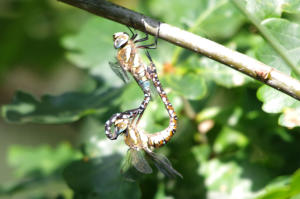
Dragonflies have a unique mating process known as "the wheel." The male grasps the female by the back of the head with specialized claspers, and the female curls her abdomen to connect with the male’s secondary genitalia. After mating, the female lays her eggs in or near water.Sun-Loving:
Dragonflies are most active on warm, sunny days. They rely on external heat to raise their body temperature, which is essential for flight.Species in the UK
Common Darter (Sympetrum striolatum):
One of the most widespread dragonflies in the UK, this species is often seen near ponds and lakes. It is small to medium-sized with a reddish-brown body.Emperor Dragonfly (Anax imperator):
The largest dragonfly in the UK, the Emperor has a striking blue and green body and is a powerful flier. It is often seen patrolling over water.Southern Hawker (Aeshna cyanea):
A large, colourful dragonfly with green and blue markings, the Southern Hawker is common in gardens and woodlands.Four-Spotted Chaser (Libellula quadrimaculata):
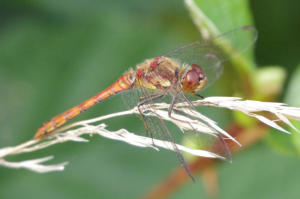
Recognizable by the dark spots on its wings, this species is commonly found in wetlands and around ponds.Migrant Hawker (Aeshna mixta):
Widespread across much of England and Wales, apart from the far north of England, although its range is increasing. First recorded in Scotland in 2003, the Migrant Hawker has since colonised multiple new sites. The species has increased its range dramatically northwards in recent decades.Conservation
Habitat Loss:
Dragonflies are sensitive to environmental changes, particularly the loss of wetlands, ponds, and clean water sources. Pollution and habitat destruction are major threats to their populations.Conservation Efforts:
Protecting and restoring wetland habitats is crucial for dragonfly conservation. In the UK, several conservation programs focus on maintaining and improving aquatic environments to support dragonfly populations.Monitoring:
Dragonflies are often used as indicators of environmental health because of their sensitivity to water quality. Monitoring dragonfly populations can provide valuable insights into the state of aquatic ecosystems.Cultural Significance
Symbolism:
In various cultures, dragonflies are symbols of change, transformation, and adaptability. They are often associated with water, purity, and the spirit world. In Japan, dragonflies are seen as symbols of strength, courage, and happiness.In Art and Literature:
Dragonflies have been depicted in art, literature, and folklore for centuries. Their delicate beauty and intriguing behaviour have inspired poets, artists, and storytellers around the world.Interesting Facts
Ancient Lineage:
Dragonflies are among the oldest insects, with ancestors dating back over 300 million years, long before dinosaurs roamed the Earth. Fossil dragonflies from the Carboniferous period had wingspans of over 2 feet (60 cm).Flight Speed:
Dragonflies are among the fastest flying insects, with some species capable of reaching speeds of up to 30 mph (50 km/h). Their ability to fly in all directions makes them exceptional hunters.Eyesight:
A dragonfly’s compound eyes are made up of around 30,000 individual lenses, giving them incredible vision. They can detect movement and see a wide range of colours, including ultraviolet light.Encouraging Dragonflies
Creating Habitats:
If you want to attract dragonflies to your garden, creating a pond or water feature can help. Ensure there are aquatic plants for laying eggs and rocks or stems where dragonflies can perch.Avoiding Pesticides:
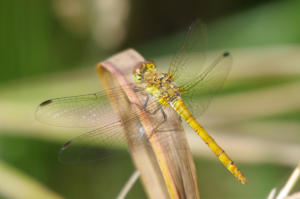
Reducing or eliminating pesticide use will help protect dragonfly populations, as these chemicals can harm both adult dragonflies and their aquatic larvae. In summary, dragonflies are remarkable insects with impressive hunting skills, beautiful colouration, and ancient lineage. They play a crucial role in controlling insect populations and are valuable indicators of environmental health. Observing dragonflies in their natural habitats can be a rewarding experience, offering a glimpse into the fascinating world of these aerial acrobats.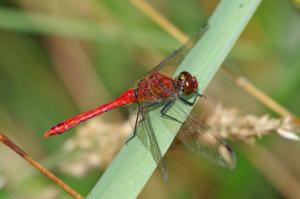


 Pubs
 Open Map in New Window
 England
 Scotland
 Wales
 Ireland
 County Map
 About Britain
 Pubs
 British Beer
 Perfect Pint
 Beer Glasses
 The Barren Years
 Real Fires
 Breweries
 Brewing
 British Food
 Recipes
 Pub Interiors
 Dog Friendly
 Pub Games
 Strange Pub Names
 Visitor Information
 Oldest Pub
 Pub Signs
 Micropubs
 Buildings
 Cathedrals
 Stately Homes
 Castles
 Listed Buildings
 Scheduled Monuments
 Oak Framing
 Architecture
 Thatching
 Waterways
 Sailing
 Shipbuilding
 Boatbuilding
 Shipping Forecast
 Britain's Coastline
 Coastal Locations
 Piers
 Lighthouses
 Harbours
 Beach Safety
 British Beaches
 Canals
 Rivers
 Islands
 Lakes
 Waterfalls
 Historical
 Famous People
 Kings & Queens
 Kings of England
 History of Britain
 Industrial Revolution
 Act of Union
 Beaufort Scale
 British Firsts
 World Heritage Sites
 Historical Periods
 Historical Boundaries
 Tradition & Culture
 Morris Dancing
 Film & Television
 Television
 Calendar of Events
 British Sport
 Scottish Highlands
 Money
 Dry Stone Walling
 British Wildlife
 Class System
 Geographical
 Pub Boundaries
 Facts 'n' Figures
 British Isles
 Other Areas
 Place Name Origins
 Topography
 Suggest an Inn
 Explanation of symbols
 Why Us?
 Places to Visit
 Long Distance Paths
 National Parks
 Areas of Outstanding Natural Beauty
 Coastal Locations
 Other areas of Britain
 Maps
 Our Favourite Locations
 Search
 Focus On...
 News
 Contact
 About Us
 Our History
 Donate